

The raw dog food diet is one of the most talked-about, most debated, and most misunderstood approaches to canine nutrition in the modern pet world. Depending on who you ask, it is either the most natural and biologically appropriate way to feed a domestic dog or a dangerous and unnecessary risk that offers no proven benefit over a high-quality commercial diet. The reality, as with most things in dog nutrition, sits somewhere in the middle and depends enormously on how the diet is planned, prepared, and implemented.
If you are curious about the raw dog food diet and want a clear, honest, evidence-informed guide that respects both the genuine benefits and the legitimate risks without pushing you in either direction based on ideology, you have found the right resource. This complete beginner guide walks you through everything you need to know before making a single decision about whether raw feeding is right for your dog.
You will learn exactly what the raw dog food diet is and where it came from, the two main approaches to raw feeding, the real benefits that raw feeding advocates report and the science behind them, the genuine risks that every raw feeder must understand and manage, which ingredients form a balanced raw diet, a complete beginner-friendly raw meal plan, safe food handling practices, how to transition your dog, and which dogs should not be fed a raw diet under any circumstances.
What the Raw Dog Food Diet Is and Where It Came From
The raw dog food diet, most commonly known as the BARF diet, is a feeding approach built around the principle that domestic dogs are best nourished by food that closely resembles what their wild canine ancestors would have eaten before domestication. The acronym BARF stands for two related meanings that are used interchangeably within the raw feeding community: Biologically Appropriate Raw Food and Bones and Raw Food.
The BARF diet was proposed in 1993 by Australian veterinarian Ian Billinghurst, who suggested that adult dogs would thrive on an evolutionary diet based on what canines ate before they became domesticated, specifically raw meaty bones and vegetable scraps, and that grain-based commercial pet foods were harmful to a dog’s health. Balance It
The core philosophy behind the raw dog food diet is straightforward: a dog’s digestive system, despite thousands of years of living alongside humans, retains the physiological characteristics of a carnivore. Raw feeders argue that the high-heat processing used in commercial kibble production destroys natural enzymes, denatures proteins, reduces the bioavailability of certain nutrients, and introduces artificial additives that the canine body was never designed to process. By feeding raw, minimally processed whole foods, proponents believe dogs receive nutrition in the form their bodies are most equipped to absorb and use.
It is important to acknowledge from the start that this philosophy is not universally accepted by the veterinary community. The American Veterinary Medical Association does not recommend raw diets, and the disadvantages of feeding dogs raw food are considered by many veterinary professionals to usually outweigh any potential advantages. This guide presents both sides honestly so you can make an informed decision for your specific dog. It Doesn’t Taste Like Chicken
The Two Main Approaches to Raw Dog Food
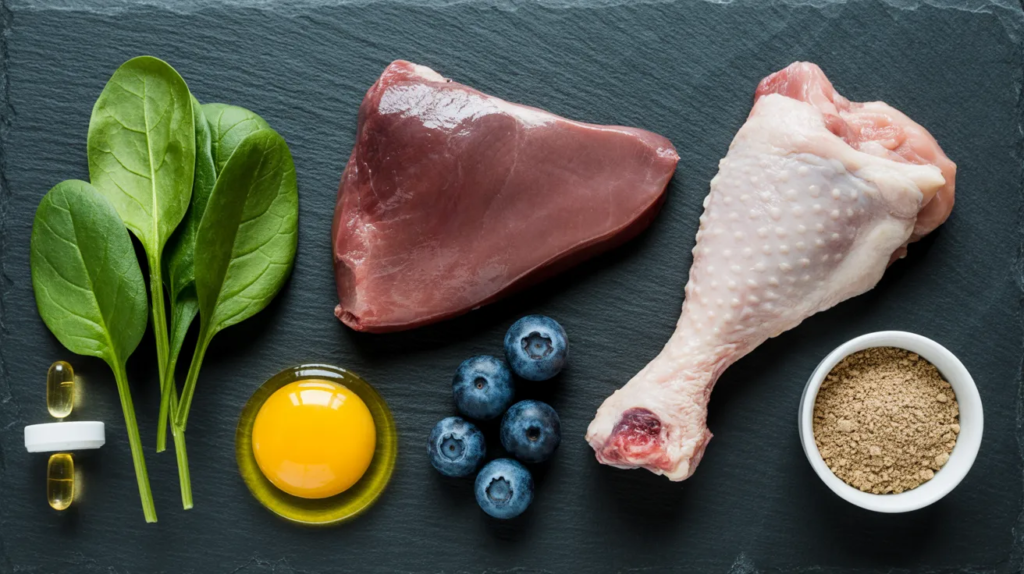
Before diving into ingredients and recipes, understanding the two primary frameworks within the raw dog food diet helps you choose the approach that best suits your dog’s needs, your lifestyle, and your comfort level with raw feeding preparation.
The BARF Method
The BARF method is the more inclusive and widely practiced of the two raw feeding approaches. The BARF diet allows for the inclusion of vegetables and fruits alongside raw meats, making it a more complete and varied approach to raw feeding. A typical BARF diet combines raw muscle meat, raw meaty bones, organ meats, raw eggs, dog-safe vegetables, fruit, and targeted supplements. The inclusion of plant-based ingredients makes nutritional balancing more manageable and provides a broader range of vitamins, antioxidants, and fiber than a purely meat-based approach. Bob’s Red Mill
The BARF method is generally considered the more beginner-friendly of the two raw feeding approaches because its ingredient diversity makes it easier to achieve nutritional balance and because the inclusion of vegetables and fruits provides familiar, easy-to-source ingredients alongside the raw meat components.
The Prey Model Raw Diet
The Prey Model Raw diet focuses strictly on animal-based ingredients, closely resembling a wild wolf’s diet and consisting predominantly of muscle and organ meats with some bones. Vegetables, fruits, and grains are excluded entirely from the Prey Model approach on the basis that wild canines do not consume plant matter in meaningful quantities and therefore do not require it nutritionally. Bob’s Red Mill
The Prey Model Raw diet is considered more advanced because achieving complete nutritional balance from animal sources alone requires significantly more knowledge, variety in protein sources, and careful attention to organ meat ratios. It is generally not recommended for beginners to raw feeding without substantial research and ideally veterinary nutritionist guidance.
This guide focuses primarily on the BARF method as the most balanced, accessible, and nutritionally sound approach for dog owners beginning their raw feeding journey.
The Real Benefits of the Raw Dog Food Diet
Dog owners who feed the raw dog food diet consistently report a distinctive set of improvements in their dogs that motivate them to continue raw feeding despite the additional preparation involved. While the scientific evidence base for raw feeding is still developing and many claimed benefits have not yet been studied in controlled trials, the following benefits are reported widely enough and with sufficient consistency to take seriously.
Improved Coat Quality and Skin Health
This is the benefit that raw feeding advocates mention most consistently and most enthusiastically. Dogs transitioned to a raw dog food diet frequently develop noticeably shinier, thicker, and softer coats within four to eight weeks of starting raw feeding. The improvement is attributed to the higher concentration of natural fatty acids, particularly omega-3 fatty acids from raw fish and raw meat, that are present in unprocessed animal products and partially destroyed during the high-heat processing of commercial kibble. Improved skin and coat health is one of the most consistently reported benefits among owners who switch to raw feeding. Wyse Guide
Smaller and Less Odorous Stools
One of the most immediately noticeable changes dog owners report after switching to a raw dog food diet is a significant reduction in stool volume and odor. This observation is consistent with the nutritional logic behind raw feeding: a diet with higher ingredient digestibility and lower filler content produces less waste. When a dog’s digestive system efficiently absorbs and utilizes a higher proportion of what they eat, less undigested material passes through as stool. Normalized digestion and reduced stool volume are among the commonly reported benefits of raw feeding, with raw food absorbed more efficiently by the digestive system. Wyse Guide
Higher Energy Levels and Improved Body Composition
Many raw feeding advocates report that their dogs show noticeably higher energy levels, better stamina, and improved lean muscle mass after transitioning to a raw dog food diet. The higher protein concentration and more bioavailable amino acid profile of raw meat compared to heavily processed kibble provides a plausible nutritional explanation for these observations. Dogs that were previously sluggish or overweight often show improvements in vitality and body composition within the first few months of raw feeding.
Cleaner Teeth and Better Oral Health
Raw meaty bones, which form a central component of the BARF diet, provide a natural mechanical tooth-cleaning action that significantly reduces plaque and tartar buildup compared to soft commercial food or even standard dry kibble. Dogs that regularly consume appropriately sized raw meaty bones develop cleaner teeth, healthier gums, and fresher breath over time. This is one of the most evidence-supported benefits of the raw dog food diet, with the mechanical action of chewing raw bone providing dental cleaning that no commercial dental treat can fully replicate.
Reduced Allergic Reactions and Food Sensitivities
Since almost no part of a raw diet is processed, there are no unnecessary filler ingredients present, and therefore there is a far lower chance of a dog having an allergic reaction, developing a food intolerance, or gaining weight from excess carbohydrates and fat. For dogs with confirmed food allergies or sensitivities to common commercial pet food ingredients, a carefully designed raw dog food diet using novel proteins and minimal ingredients can eliminate exposure to the specific triggers causing the reaction. It Doesn’t Taste Like Chicken
The Real Risks of the Raw Dog Food Diet
Intellectual honesty requires presenting the risks of the raw dog food diet with the same clarity and depth as the benefits. These are real risks that require real management strategies, not concerns to be dismissed.
Bacterial Contamination
Raw meat can harbor harmful bacteria such as Salmonella and E. coli, which can make both humans and dogs sick. These pathogens pose a risk during food preparation and handling. They can also remain a concern after feeding, as dogs may shed bacteria in their saliva or stool and potentially spread them to their owners and the environment, even if the dog shows no symptoms. Dog Treat Kitchen
This is the most significant practical risk of the raw dog food diet and the one that requires the most rigorous management. Households with immunocompromised individuals, young children, elderly family members, or pregnant women face a meaningfully higher risk from the bacterial exposure associated with raw meat handling and raw-fed dogs. In these household situations, the raw dog food diet requires extremely careful hygiene protocols or should be reconsidered entirely.
Nutritional Imbalance
A poorly planned raw dog food diet is one of the most common causes of serious nutritional deficiencies in dogs whose owners have good intentions but insufficient knowledge. Feeding raw meat alone without the correct ratios of bone, organ meat, and plant-based ingredients produces a diet that is dangerously deficient in calcium, phosphorus, vitamins D, E, and A, and various trace minerals. Over weeks and months, these deficiencies cause bone density loss, immune suppression, organ dysfunction, and other serious health consequences.
Achieving genuine nutritional balance in a homemade raw dog food diet requires knowledge, variety, and careful attention to ingredient ratios. It is not something that can be achieved by simply feeding a dog raw chicken breast every day and calling it natural.
Bone Safety Risks
Raw meaty bones are a valuable and important component of the BARF diet, but they must be selected and given with care. Raw bones that are appropriately soft and sized for the dog pose minimal risk and provide dental and nutritional benefits. However, bones that are too hard for the specific dog, too small to prevent swallowing whole, or given to a dog that gulps food without chewing can cause tooth fractures, choking, esophageal obstruction, or intestinal perforation. Weight-bearing bones from large animals such as beef femur and marrow bones are too dense and hard for most dogs and should be avoided. Raw poultry bones including chicken necks, wings, and frames are generally safe for most dogs because they are soft enough to chew and digest without splintering.
Risk of Parasites
Raw meat, particularly pork, wild game, and some freshwater fish, can contain parasites including Toxoplasma gondii and Trichinella that pose health risks to both dogs and the humans who handle the raw meat. Freezing raw meat at minus 20 degrees Celsius for a minimum of three days before use kills the majority of common parasites and is a standard food safety practice in raw feeding that should never be skipped.
Not Appropriate for All Dogs
The raw dog food diet is not suitable for every dog. Puppies under six months, dogs with compromised immune systems, dogs undergoing chemotherapy, dogs with pancreatitis or a history of fat intolerance, and dogs with certain digestive disorders require diets that cannot be safely provided through a standard raw feeding approach without specific veterinary nutritionist guidance.
The Key Components of a Balanced BARF Raw Dog Food Diet
A properly balanced raw dog food diet following the BARF method is built around specific ingredient categories in carefully considered proportions. Understanding these categories and their correct ratios is the foundation of safe raw feeding.
Muscle Meat: 65 to 70 Percent of the Diet
Muscle meat forms the majority of the raw dog food diet and provides the primary source of protein, amino acids, natural fat, B vitamins, zinc, iron, and phosphorus. Appropriate muscle meat sources include chicken thighs and drumsticks, beef mince at moderate fat content, turkey thigh and breast, lamb shoulder, rabbit, venison, and sardines or mackerel. Variety across protein sources is strongly recommended rather than relying on a single protein, as different meats provide different amino acid profiles and micronutrient contributions that together create a more complete nutritional picture.
Raw Meaty Bones: 10 to 15 Percent of the Diet
Raw meaty bones provide calcium, phosphorus, and the mechanical dental cleaning benefits discussed earlier. The most commonly used and safest raw meaty bones for the BARF diet include chicken necks, chicken wings, chicken frames, duck necks, turkey necks, and rabbit portions. These softer bones are appropriate for most adult dogs and provide a safe and nutritious bone component. Always supervise your dog while they eat raw meaty bones and ensure the bone is an appropriate size for your dog’s breed and jaw strength.
Organ Meat: 10 to 15 Percent of the Diet
Organ meats are among the most nutrient-dense foods on the planet and are a critical component of the raw dog food diet. Liver in particular is required and must make up approximately five percent of the total diet. Liver provides vitamin A, B12, folate, copper, iron, and zinc in concentrations that no other food source matches. Additional organ meats including kidney, spleen, heart, and lung provide further concentrated nutrition. Heart is technically a muscle meat from a classification perspective but functions nutritionally more like an organ and is an excellent source of taurine, coenzyme Q10, and B vitamins. Feed liver in appropriate amounts only, as excess vitamin A from overconsumption of liver causes toxicity over time.
Vegetables and Fruits: 10 to 15 Percent of the Diet
The BARF method includes a vegetable and fruit component that provides antioxidants, vitamins, dietary fiber, and phytonutrients not found in animal products. Dog-safe vegetables including leafy greens, broccoli, zucchini, carrots, and green beans should be lightly pureed or finely grated before serving as dogs cannot efficiently digest the cellulose cell walls of whole raw vegetables. Dog-safe fruits including blueberries, apple slices without seeds, and watermelon without rind add antioxidants and natural sweetness. Raw eggs, including the shell, can be included in this portion of the diet and contribute additional complete protein, healthy fats, and calcium from the shell.
Supplements: Essential Additions
Even a carefully balanced BARF diet benefits from targeted supplementation to cover nutritional gaps. Fish oil added fresh at each mealtime provides consistent omega-3 support for coat, joint, and cardiovascular health. A vitamin E supplement protects the additional unsaturated fats in a raw diet from oxidizing in the dog’s body. Kelp powder provides iodine for thyroid function. If raw meaty bones are not included in every meal, a calcium supplement or finely ground eggshell powder must be added to prevent calcium deficiency. A dog-specific probiotic supports the gut microbiome, which may shift during the transition from commercial food to raw feeding.
A Beginner Weekly Raw Dog Food Diet Meal Plan
This sample meal plan is designed for a healthy adult medium-sized dog weighing approximately 25 to 35 pounds. Daily food amount should equal approximately two to three percent of your dog’s current body weight, so a 30-pound dog receives approximately 9.6 to 14.4 ounces of food per day split across two meals.
Monday: Morning: raw chicken thigh with bone, finely grated zucchini and carrot, one teaspoon fish oil. Evening: raw beef mince, beef liver portion equal to five percent of the daily amount, blueberries, one raw egg including shell.
Tuesday: Morning: raw turkey neck as the bone component, pureed leafy greens and broccoli, fish oil. Evening: raw sardines in water with no salt, kidney portion, pureed pumpkin.
Wednesday: Morning: raw rabbit portions, grated apple without seeds, carrot, fish oil. Evening: raw chicken heart and gizzard, leafy greens, raw egg.
Thursday: Morning: raw beef mince, chicken frame as bone component, finely grated spinach and blueberries, fish oil. Evening: raw mackerel, lamb liver portion, green beans.
Friday: Morning: raw duck neck, pureed sweet potato, carrot, fish oil. Evening: raw chicken thigh, spleen portion, raw egg including shell, broccoli.
Saturday: Morning: raw turkey mince, raw beef kidney, grated zucchini and apple, fish oil. Evening: raw chicken frame, chicken heart, blueberries, leafy greens.
Sunday: Morning: raw lamb shoulder mince, raw liver portion, pureed carrot and pumpkin, fish oil. Evening: raw sardines, chicken gizzard, spinach, raw egg.
Rotating through different protein sources throughout the week provides a naturally varied amino acid profile and prevents the development of nutritional gaps that arise from relying on a single protein. Always introduce new proteins one at a time and observe your dog for any digestive reaction before adding them to the regular rotation.
Safe Food Handling Practices for the Raw Dog Food Diet
Safe food handling is non-negotiable in a raw feeding household. These practices protect both your dog and every human member of your household from the bacterial risks associated with raw meat.
Always source raw meat from human-grade suppliers rather than pet-food-grade suppliers when possible, as human-grade meat is subject to stricter safety testing and quality controls. Store all raw dog food in sealed containers in a dedicated section of your refrigerator or in a separate mini-fridge used exclusively for dog food. Never allow raw dog food to come into contact with surfaces or utensils used for human food preparation.
Freeze all raw meat for a minimum of 72 hours at minus 20 degrees Celsius before feeding to eliminate the majority of parasites. Thaw individual meal portions in the refrigerator overnight rather than on the counter at room temperature. Never refreeze meat that has already been fully thawed.
Wash all food preparation surfaces, bowls, and utensils with hot soapy water after every meal preparation and after removing your dog’s empty food bowl. Wash your hands thoroughly for a minimum of 20 seconds with soap after handling any raw meat or raw dog food components.
Clean your dog’s food bowl after every single meal without exception. Never leave raw dog food sitting at room temperature for more than 20 to 30 minutes. If your dog does not finish their meal within this window, refrigerate the remainder immediately or discard it.
How to Transition Your Dog to a Raw Dog Food Diet
Transitioning to the raw dog food diet requires a careful, gradual approach that gives your dog’s digestive system time to adjust to a fundamentally different type of food. Dogs that have eaten commercial kibble their entire lives have a gut microbiome calibrated for processed food, and switching abruptly to raw creates significant digestive disruption.
The most widely recommended transition method is a gradual one spanning seven to fourteen days. Start by feeding your dog their current commercial food for their morning meal and a small raw meal for their evening meal. The raw meal should begin as a single simple protein such as plain raw chicken mince without bone for the first three days. If your dog tolerates this with normal stools, good energy, and no vomiting, introduce the raw meaty bone component on day four.
From day seven, move to feeding raw for both meals if your dog is tolerating the transition well. Continue rotating proteins and introducing organ meats and vegetables gradually over the following two weeks, adding one new component at a time and observing your dog’s response before adding the next new element.
Some dogs experience a detox-like period during the first one to three weeks of raw feeding that can include looser stools, slightly increased shedding, or mild mucus in the stool. These symptoms are generally temporary and resolve on their own as the gut microbiome adjusts to the new diet. Persistent vomiting, complete loss of appetite, blood in the stool, or significant lethargy during the transition are signals to slow the process and consult your veterinarian.
Dogs That Should Not Be Fed a Raw Dog Food Diet
Regardless of how committed you are to the raw feeding philosophy, there are specific categories of dogs for whom the raw dog food diet poses unacceptable risks that no amount of careful preparation can eliminate.
Puppies under six months of age have immune systems that are not yet fully developed and are significantly more vulnerable to the bacterial pathogens present in raw meat than healthy adult dogs. The calcium and phosphorus ratios in raw feeding are also extremely difficult to calibrate correctly for the rapid bone development occurring in puppies, and errors in these ratios during the growth phase can cause permanent skeletal damage.
Dogs with compromised immune systems due to illness, medication, chemotherapy, or autoimmune conditions cannot safely manage the bacterial load of a raw diet. The same applies to very elderly dogs whose immune function has declined with age.
Dogs with a history of pancreatitis or significant fat intolerance require carefully controlled dietary fat content that is extremely difficult to manage consistently in a raw feeding framework where fat content varies widely between different cuts of meat.
Households with immunocompromised human members, infants under two years old, pregnant women, or elderly individuals face elevated bacterial transmission risks from a raw-fed dog that may make the raw dog food diet an inappropriate choice for the entire household regardless of the dog’s own health status.
In all of these situations, consulting a board-certified veterinary nutritionist before beginning raw feeding is not optional. It is the responsible and necessary first step.
Final Thoughts
The raw dog food diet is a legitimate and potentially beneficial feeding approach for healthy adult dogs in households where it can be implemented safely, thoughtfully, and with genuine knowledge of both its requirements and its risks. It is not a magical cure for every health issue, not automatically superior to every commercial diet, and not appropriate for every dog or every household. But for the right dog in the right household, managed by an owner committed to doing it correctly, raw feeding can produce genuinely impressive results in coat quality, digestion, energy, and overall vitality.
Go into it with your eyes open, your hands clean, your supplier trusted, your veterinarian consulted, and your dog’s individual health needs firmly at the center of every decision you make. That is how raw feeding works at its best, and that is how it can work for your dog.