If there is one addition to your dog’s daily diet that offers more nutritional return per teaspoon than almost anything else you can make at home, it is homemade bone broth for dogs. Rich in collagen, amino acids, minerals, and joint-supporting compounds, bone broth has been used as a healing and nourishing food for thousands of years across human cultures, and the same properties that make it so valuable for people translate directly and powerfully to dogs.
This is not a food trend. This is one of the most nutrient-dense, bioavailable, and universally beneficial things you can add to your dog’s bowl regardless of their age, breed, or current health status. Whether you have a bouncing young pup, a working adult dog, a senior with stiff joints, a rescue with a damaged gut, or a picky eater who turns their nose up at everything, homemade bone broth for dogs addresses something meaningful for every one of them.
This guide walks you through everything. What bone broth actually is and how it differs from regular stock, the specific science-backed benefits for your dog, which bones and ingredients to use, a complete step by step recipe using both slow cooker and stovetop methods, serving guidelines by dog size, creative ways to use broth beyond just pouring it in a bowl, storage instructions, and critical safety rules you must follow every time you make a batch.
What Homemade Bone Broth for Dogs Actually Is
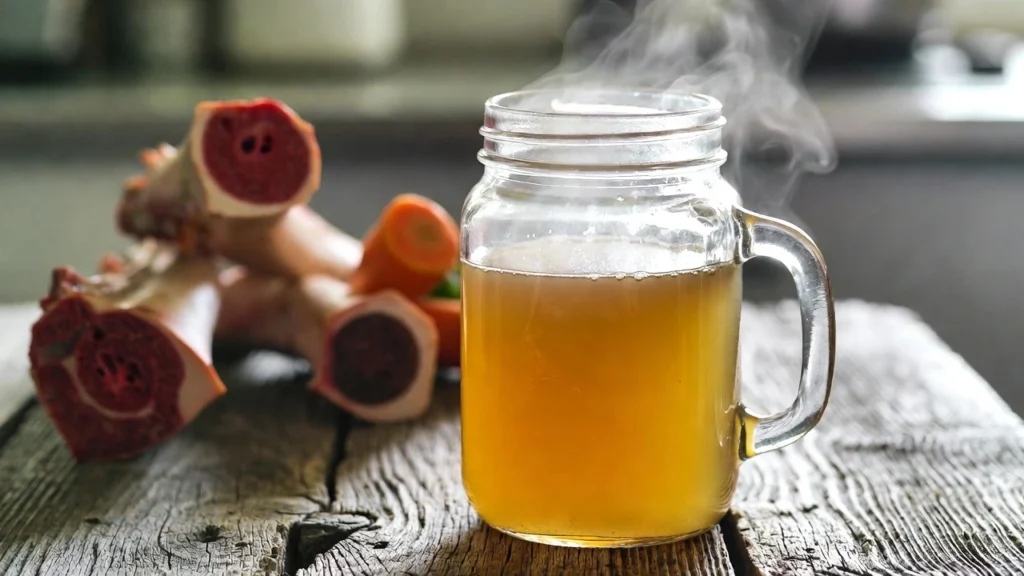
Bone broth is a rich, deeply nourishing liquid made by slowly simmering animal bones along with connective tissue, cartilage, and dog-safe vegetables in water over a long period of time. The key phrase here is long period of time. True bone broth for dogs simmers for a minimum of 12 hours and ideally for 24 to 48 hours at a low, gentle heat. This extended cooking time is what separates genuine bone broth from ordinary soup stock, which typically simmers for only 2 to 4 hours and extracts a fraction of the available nutrients.
During those long hours of slow cooking, several remarkable things happen inside the pot. The collagen found in bones, cartilage, tendons, and connective tissue breaks down into gelatin, a highly bioavailable form that your dog’s body can use immediately. Minerals including calcium, phosphorus, magnesium, potassium, and trace minerals are slowly drawn out of the bones and into the liquid. Amino acids like glycine and glutamine are released in significant concentrations. Glucosamine, chondroitin, and hyaluronic acid, the same compounds found in expensive joint supplements, are extracted naturally and in a form that is incredibly easy for your dog’s body to absorb.
You know a batch of bone broth has been made correctly when it turns gelatinous in the refrigerator after cooling. That wobble and jiggle is the visible sign of a high-gelatin broth packed with collagen and joint-supporting compounds. A batch that remains completely liquid after refrigerating has not simmered long enough or did not contain enough collagen-rich bones.
The Real Benefits of Homemade Bone Broth for Dogs
Understanding why bone broth is worth adding to your dog’s daily routine requires looking at each benefit individually and understanding the mechanism behind it.
Joint Health and Mobility Support
This is the benefit most dog owners hear about first, and it is completely legitimate. Homemade bone broth for dogs is naturally rich in glucosamine, chondroitin, and hyaluronic acid, three compounds that play a direct and well-documented role in joint health. Glucosamine supports the production and repair of cartilage, the cushioning tissue between joints. Chondroitin helps cartilage retain water, keeping it hydrated, flexible, and resistant to compression. Hyaluronic acid lubricates the joint space itself, reducing friction and improving ease of movement.
For senior dogs with arthritis or early signs of joint stiffness, daily bone broth provides a consistent, gentle, and completely natural source of these compounds in a form the body can use immediately. For younger dogs, starting bone broth early may help maintain joint cartilage quality and delay the onset of age-related joint degeneration.
Gut Healing and Digestive Support
The gelatin in homemade bone broth for dogs is one of the most powerful gut-healing substances available through food. Gelatin lines and soothes the gut wall, reduces intestinal inflammation, and strengthens the mucosal barrier that prevents harmful substances from crossing into the bloodstream. This is particularly important for dogs suffering from a condition commonly called leaky gut syndrome, where small gaps in the gut lining allow toxins, bacteria, and undigested food particles to escape into the body, triggering chronic inflammation and food sensitivities.
Two amino acids in bone broth, glycine and glutamine, work alongside gelatin to support gut repair. Glycine protects the gut lining against oxidative stress and helps regulate stomach acid levels. Glutamine is the primary fuel source for the cells that line the intestinal wall, directly feeding the gut lining and accelerating its ability to repair and regenerate after damage or inflammation.
For dogs with chronic loose stools, irritable bowel issues, inflammatory bowel disease, or food sensitivities, adding homemade bone broth to daily meals can produce meaningful, visible improvements in digestive comfort and stool quality over time.
Immune System Strengthening
Approximately 70 to 80 percent of a dog’s immune system resides in and around the gut. A healthy, intact gut lining is one of the most important factors in overall immune function. Because homemade bone broth for dogs directly supports gut wall integrity, it indirectly but powerfully supports the immune system at the same time. The minerals in bone broth, particularly zinc and magnesium, also play direct roles in immune cell production and function. A dog with a strong gut lining and well-supported mineral status is a dog with a resilient immune system.
Liver Detoxification Support
The liver is your dog’s primary detoxification organ, filtering blood and neutralizing harmful compounds continuously. Glycine, one of the most abundant amino acids in bone broth, plays a direct role in supporting liver detoxification by aiding in the production of glutathione, the body’s master antioxidant. For dogs exposed to environmental toxins, those on long-term medications, or dogs recovering from illness, the liver support provided by regular bone broth consumption is a meaningful and gentle benefit.
Skin and Coat Health
Collagen is the structural protein that keeps skin elastic, hydrated, and healthy. As dogs age, their natural collagen production decreases, which can lead to drier skin, a duller coat, and reduced skin barrier integrity. Homemade bone broth for dogs provides a rich dietary source of collagen that supports skin hydration from the inside out. Dog owners who add bone broth to their dog’s diet consistently report noticeable improvements in coat shine, thickness, and softness within four to six weeks of starting regular use.
Hydration and Appetite Support
Many dogs, especially seniors, do not drink enough water throughout the day. Dehydration in dogs can contribute to digestive sluggishness, kidney strain, reduced energy, and poor coat condition. Adding bone broth to your dog’s food provides a significant boost of flavorful hydration that most dogs consume eagerly. For picky eaters, dogs recovering from illness, or dogs that have lost interest in their food, the rich aroma of warm bone broth poured over a meal can reignite appetite and encourage eating when nothing else works.
What Bones to Use for Homemade Dog Bone Broth
The quality and type of bones you use determines the quality of the final broth. For the richest, most gelatin-dense homemade bone broth for dogs, prioritize bones that contain a high proportion of cartilage, connective tissue, and marrow.
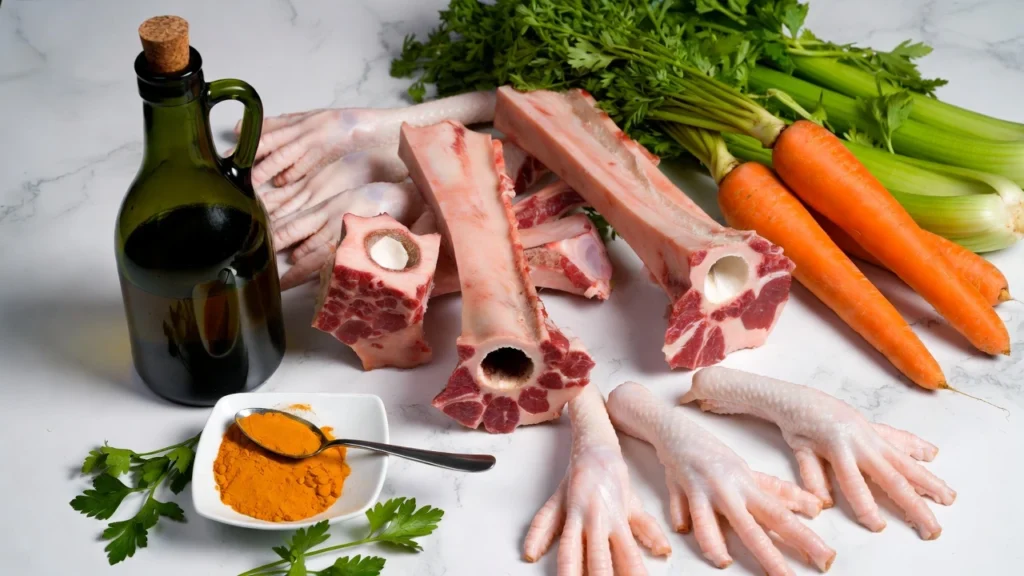
Chicken feet are one of the single best bone choices for dog bone broth. They are exceptionally high in collagen and cartilage relative to their size and produce a deeply gelatinous broth that practically wobbles out of the jar when cold. Chicken necks, backs, and carcasses are also excellent and widely available from butchers or farmers markets.
Beef marrow bones and beef knuckle bones provide a richer, more savory broth with a higher mineral content than chicken. They work especially well for large breed dogs and senior dogs with significant joint concerns. Oxtail is another outstanding beef option that is loaded with collagen and produces a beautifully rich broth.
Turkey necks and backs are a great alternative protein for dogs that are slightly sensitive to chicken, providing similar collagen and gelatin content with a different protein profile.
Always use raw bones rather than cooked bones for making bone broth. Cooked bones can splinter and create sharp fragments. When making broth, even cooked bones that soften during the long simmering process can still pose risks if any fragments end up in the broth. Start with raw bones every time and you eliminate this concern entirely. Always strain the finished broth thoroughly before serving to remove any bone fragments, no matter how small.
Source bones from grass-fed, pasture-raised, or organic animals whenever possible. Higher quality bones from healthier animals produce broth with a better nutritional profile and fewer concerns about accumulated environmental toxins.
Full Recipe: Homemade Bone Broth for Dogs
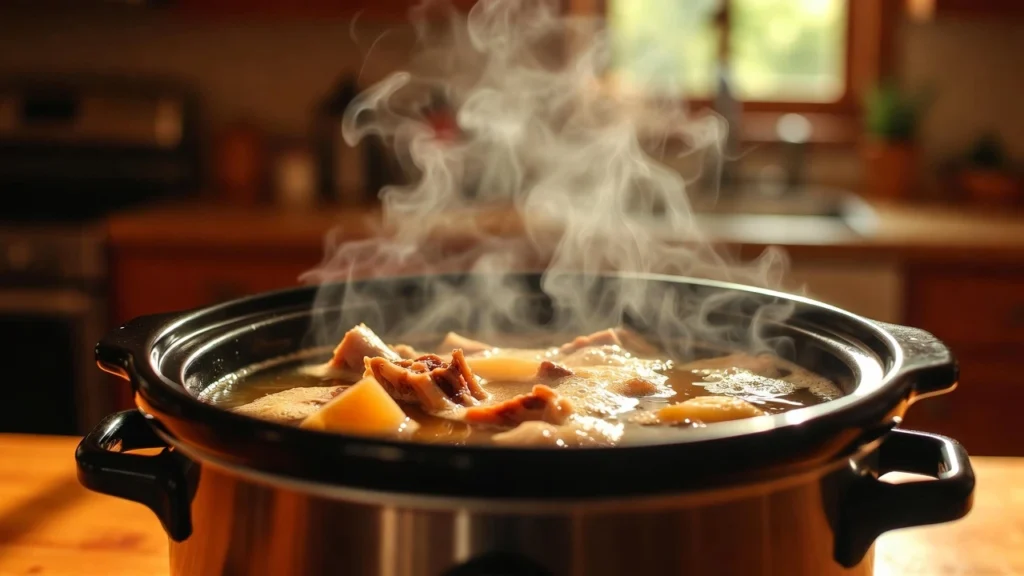
This recipe works equally well in a slow cooker, a regular large pot on the stovetop, or an Instant Pot. The slow cooker method is the most hands-off and produces the richest, most gelatinous results.
Ingredients:
- 2 to 3 pounds raw bones (chicken feet, beef marrow bones, beef knuckles, or a combination)
- 2 tablespoons raw apple cider vinegar
- 2 medium carrots, roughly chopped
- 2 stalks of celery, roughly chopped
- A small bunch of fresh flat-leaf parsley
- Quarter teaspoon ground turmeric
- Enough cold filtered water to cover everything by 2 to 3 inches
What you must never add:
Onion, garlic, leeks, chives, grapes, raisins, salt, artificial flavoring, or any spice blend. These are either toxic to dogs or nutritionally unnecessary and potentially harmful.
Slow Cooker Method (Recommended):
Step 1: Prepare the bones
Place the raw bones directly into your slow cooker. No pre-roasting is needed for a dog-safe broth, though briefly roasting beef bones in a 400 degree Fahrenheit oven for 20 minutes before adding to the slow cooker develops a deeper, richer flavor if you prefer.
Step 2: Add apple cider vinegar and cold water
Pour in the raw apple cider vinegar. This is not optional. The acidity of the vinegar is what draws minerals out of the bones and into the liquid during the cooking process. Without it, the mineral extraction is significantly reduced and the final broth is nutritionally weaker. Add enough cold filtered water to cover the bones by at least two to three inches.
Step 3: Let it sit before heating
Allow the bones to soak in the water and vinegar at room temperature for 30 to 60 minutes before turning on the heat. This pre-soak allows the vinegar more time to begin working on the bone surface before the heat starts.
Step 4: Cook low and slow
Set your slow cooker to low and cook for a minimum of 24 hours. For the richest, most gelatinous broth with maximum mineral extraction, cook for 36 to 48 hours. Add the carrots, celery, parsley, and turmeric during the last 4 to 6 hours of cooking. Adding them too early can make the vegetables overly mushy and potentially release sulfurous compounds from the celery that affect flavor.
Step 5: Skim the surface
During the first few hours of cooking, a grey or brown foam may form on the surface of the broth. Use a spoon or ladle to skim this off and discard it. This foam is primarily impurities and proteins from the bones and removing it produces a cleaner, clearer final broth.
Step 6: Strain thoroughly
Once cooking is complete, turn off the slow cooker and allow the broth to cool slightly. Pour the entire contents through a fine mesh strainer or cheesecloth into a large heat-safe bowl or pot, discarding all bones, bone fragments, and cooked vegetables. Never serve the cooked vegetables or bones to your dog.
Step 7: Refrigerate and remove fat
Allow the strained broth to cool completely, then transfer to glass jars or containers and refrigerate overnight. A solid layer of fat will form on the surface as it chills. Remove and discard this fat layer before serving or freezing. The broth underneath should be gelatinous at refrigerator temperature, which confirms it is rich in gelatin and collagen.
Stovetop Method:
Follow exactly the same steps using a large heavy-bottomed pot on your stovetop. Bring the water just barely to a simmer over medium heat, then reduce to the lowest possible heat setting to maintain a gentle simmer throughout. Never allow the broth to boil vigorously as high heat degrades collagen and can produce a cloudy, less nutritious broth.
Instant Pot Method:
For a faster batch, add all ingredients to the Instant Pot, seal the lid, and cook on high pressure for 3 to 4 hours. Allow the pressure to release naturally. The Instant Pot method produces a good broth in a fraction of the time, though it will typically be slightly less gelatinous than a 24 to 48 hour slow cooker batch.
How Much Bone Broth to Give Your Dog Daily
Homemade bone broth for dogs is a supplement and food topper, not a complete meal replacement. Use it as an addition to your dog’s regular food or as a standalone treat between meals.
A practical daily serving guide based on body weight:
Dogs under 20 pounds: 1 to 2 tablespoons per day. Dogs between 20 and 40 pounds: 3 to 4 tablespoons per day. Dogs between 40 and 70 pounds: 4 to 6 tablespoons per day. Dogs over 70 pounds: up to half a cup per day.
Always introduce bone broth gradually over the first week to allow your dog’s digestive system to adjust. Start with one teaspoon mixed into food and increase daily over 5 to 7 days until you reach the full serving size for your dog’s weight.
Creative Ways to Use Homemade Bone Broth for Dogs
Pouring broth directly over your dog’s food is the simplest approach, but there are several other effective and fun ways to use homemade bone broth for dogs in your daily routine.
Frozen bone broth cubes make excellent cooling summer treats. Pour the finished broth into silicone ice cube trays or paw-shaped molds and freeze. Pop one or two cubes out as a refreshing reward during warm weather.
Use broth instead of water when cooking your dog’s rice, oats, or sweet potato. The broth infuses the food with a rich, savory flavor that even the pickiest eater finds irresistible and adds nutrition to every bite.
Pour a small amount of warm broth over dry kibble to transform it into a more aromatic, hydrating, and appealing meal for dogs that have started losing enthusiasm for their regular food.
For dogs recovering from illness or surgery who are reluctant to eat solid food, warmed bone broth served alone in a shallow bowl can provide nutrition, hydration, and appetite stimulation during the recovery period.
Storing Homemade Bone Broth for Dogs Safely
Refrigerator: Store in sealed glass jars for up to 5 days. Always remove the fat layer from the top before storing. Label each jar with the date it was made.
Freezer: Pour into ice cube trays first, freeze solid, then transfer frozen cubes into freezer bags for up to 6 months of storage. This portion-by-portion approach means you thaw only what you need each day without waste.
Never microwave bone broth to serve it to your dog. The uneven heating of a microwave creates hot spots that can burn your dog’s mouth and also degrades some of the delicate nutrients in the broth. Instead, thaw overnight in the refrigerator and warm by placing the jar in a bowl of hot water for a few minutes, or simply serve at room temperature.
Safety Rules to Follow Every Single Time
Never give your dog the cooked bones from the broth. While they soften during cooking, they can still splinter when chewed and pose a choking or intestinal perforation risk. Always discard all bones after straining.
Never use human commercial broth or stock as a substitute for homemade bone broth for dogs. Commercial broths marketed for human consumption almost always contain onion, garlic, high sodium levels, and various seasonings that are harmful to dogs. Even broths labeled as natural or low-sodium are formulated for human palates, not canine safety.
If your dog has kidney disease, speak with your veterinarian before introducing regular bone broth. The phosphorus content in bone broth, while nutritionally valuable for healthy dogs, can be contraindicated for dogs with compromised kidney function.
Final Thoughts
Homemade bone broth for dogs is one of the most rewarding, versatile, and genuinely impactful additions you can make to your dog’s nutrition routine. It takes a little time and planning, but a single large batch made every week or two provides daily nutritional support that pays dividends in your dog’s joint comfort, digestive health, coat quality, immune resilience, and overall vitality.
Set up your slow cooker before bed, wake up to a kitchen that smells incredible, and give your dog something in their bowl that they will sprint toward with enthusiasm every single day. Real food, real nourishment, real love. That is what homemade bone broth for dogs is all about.