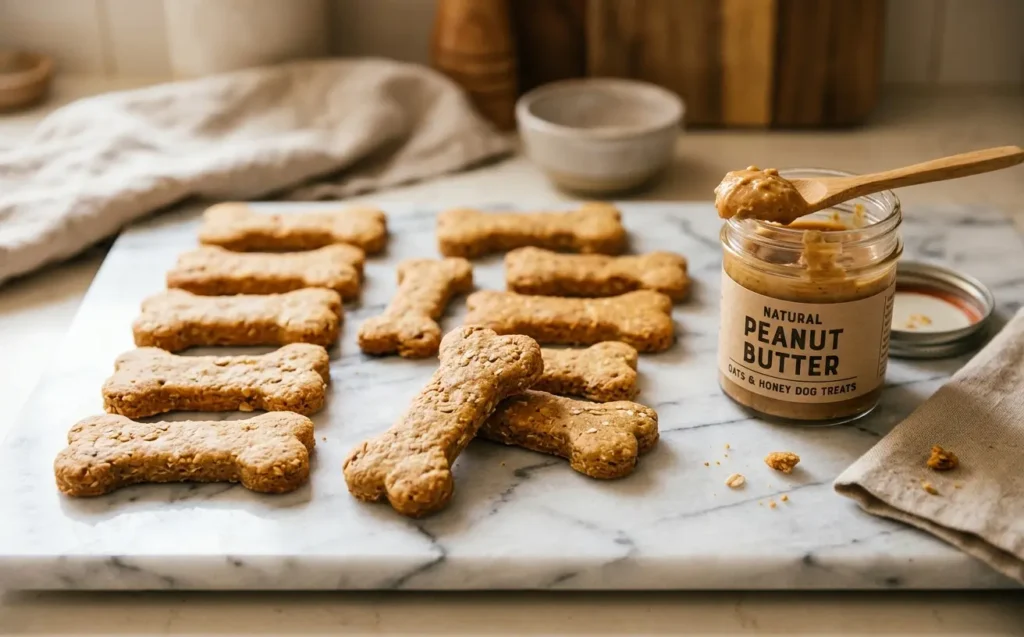
Every dog owner has been there. You reach for a bag of store-bought treats, flip it over, and stare at a list of ingredients that reads like a chemistry exam. Preservatives, artificial colors, unrecognizable fillers, and enough sodium to make any pet owner pause. The good news is that making homemade peanut butter dog treats with oats is easier than you think, takes less than 30 minutes from start to finish, and produces a treat your dog will lose their mind over every single time.
This article covers everything you need: why these treats are a genuinely healthy choice, which ingredients to use and which to avoid, a detailed step-by-step recipe, multiple flavor variations, how to store them properly, how many to give your dog per day, and how to adapt the recipe for dogs with specific dietary needs. By the end, you will wonder why you ever bought treats from a shelf.
Why Homemade Peanut Butter Dog Treats with Oats Are Better Than Store-Bought
The market for commercial dog treats is enormous, and not all products are created equal. Many popular treats contain added sugar, high levels of sodium, artificial flavors, and low-quality protein sources that offer very little nutritional value. Some are so heavily processed that the original ingredients are barely recognizable by the time they reach your dog’s bowl.
When you make homemade peanut butter dog treats with oats at home, you control every single ingredient that goes into each biscuit. You know exactly what your dog is eating, where it came from, and how it was prepared. There are no mystery additives, no synthetic preservatives, and no sneaky fillers stretching the recipe while offering zero nutrition.
Beyond quality control, homemade treats are remarkably budget-friendly. A batch of 40 to 50 biscuits costs a fraction of what you would pay for a premium store-bought bag, and you can make them fresh whenever you need them. Most of the ingredients are things you probably already have sitting in your kitchen right now.
Understanding the Key Ingredients and Why They Work
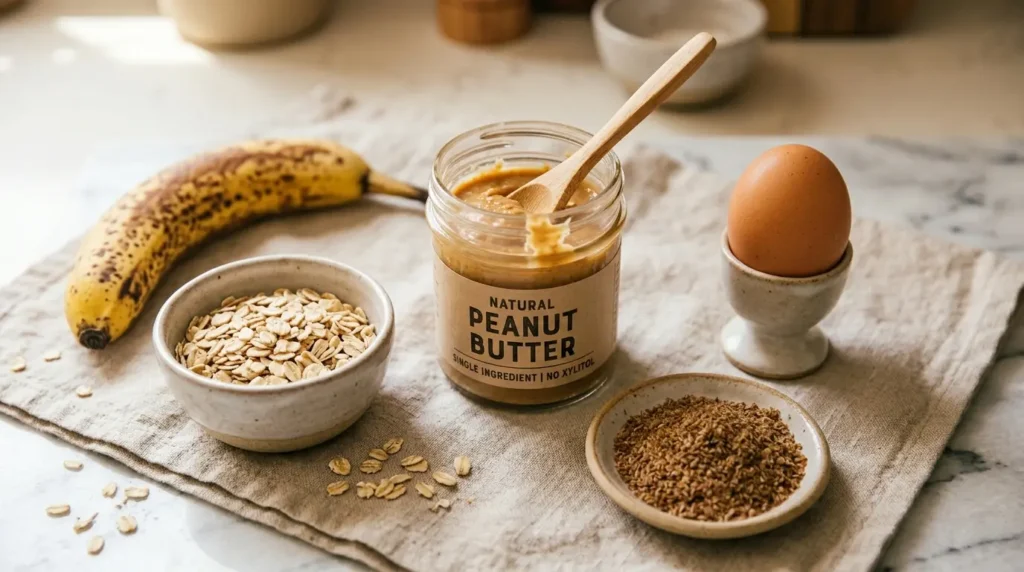
Before jumping into the recipe, it helps to understand what each ingredient brings to the table and why these choices are smart for your dog’s health.
Oats
Oats are a nutritional powerhouse for dogs. They are naturally rich in fiber, which supports healthy digestion and helps dogs feel satisfied after eating. Oats also contain B vitamins, iron, manganese, and zinc, all of which play a role in maintaining energy levels, coat quality, and immune function. For dogs with wheat sensitivities, oats are an excellent grain alternative because they are naturally gluten-free when sourced from certified gluten-free facilities. When ground into oat flour, they create a tender, slightly chewy texture that holds the treat together without needing any harsh binding agents.
Always use plain rolled oats or old-fashioned oats with no added sugar, artificial flavoring, or flavored varieties like cinnamon raisin. Plain is the only acceptable option for your dog.
Peanut Butter
Peanut butter is one of the most beloved flavors in the dog world, and the attraction is not just the smell. Natural peanut butter provides dogs with healthy monounsaturated fats, protein, niacin, and vitamins B and E. It acts as a binder in the recipe, helping the dough hold its shape, and adds enough natural sweetness that no additional sugar is needed.
The single most important rule with peanut butter is this: always check the label for xylitol. Xylitol is an artificial sweetener found in some peanut butter brands that is highly toxic to dogs, even in very small amounts. It causes a rapid release of insulin that can lead to hypoglycemia, liver failure, and in severe cases, death. Stick with natural peanut butter that lists only peanuts, and sometimes a small amount of salt, as the ingredients. If salt is present, choose a low-sodium variety or a salt-free option.
Banana
Ripe banana adds natural moisture to the dough without requiring water or oil, and it brings potassium, magnesium, vitamin C, and vitamin B6 along for the ride. These nutrients support muscle function, nerve health, and immune system strength in dogs. Banana also makes the treats taste naturally sweet, which dogs find incredibly appealing. Use a ripe banana with plenty of brown spots because the natural sugars are more pronounced and the texture mashes more easily into the dough.
Egg
One egg acts as a binding agent that holds the biscuits together through baking. Eggs are also a complete protein source and supply your dog with amino acids, riboflavin, and selenium. They are one of the most bioavailable protein sources available and a welcome addition to any homemade dog treat.
Ground Flaxseed (Optional)
Ground flaxseed is a simple add-on that packs a big nutritional punch. It is rich in omega-3 fatty acids, which support skin health, reduce inflammation, and keep your dog’s coat thick and shiny. Flaxseed is also a great source of plant-based fiber and lignans, which have antioxidant properties. It has virtually no flavor, so it blends into the dough invisibly. Add a tablespoon per batch and your dog gets a daily omega boost with every treat.
Full Recipe: Homemade Peanut Butter Dog Treats with Oats
This recipe makes approximately 40 to 50 small to medium treats depending on the size of your cookie cutter. Preparation time is around 10 minutes and baking time is 25 minutes.
Ingredients:
- 2 cups old-fashioned rolled oats (ground into flour, plus extra for dusting)
- Half a cup of natural peanut butter, no xylitol
- 1 ripe banana, mashed
- 1 large egg
- 1 tablespoon ground flaxseed (optional)
- 1 tablespoon unsweetened applesauce (optional, adds moisture and a light apple flavor dogs love)
Equipment you need:
- Food processor or blender
- Large mixing bowl
- Rolling pin
- Cookie cutters in bone or paw shapes
- Baking sheet lined with parchment paper
- Wire cooling rack
Instructions:
Step 1: Preheat your oven
Set your oven to 350 degrees Fahrenheit (175 degrees Celsius) and line a baking sheet with parchment paper. This prevents sticking and makes cleanup much easier.
Step 2: Make oat flour
Add the rolled oats to your food processor and pulse for 30 to 45 seconds until they reach a fine, powdery consistency similar to regular flour. Set aside a small amount of this oat flour for dusting your work surface later.
Step 3: Mash the banana
In a large mixing bowl, mash the ripe banana thoroughly with a fork until smooth and free of large lumps. The riper the banana, the easier this step is and the better the flavor.
Step 4: Combine everything
Add the peanut butter, egg, and optional flaxseed or applesauce to the mashed banana. Stir well until everything is evenly combined. Add the oat flour gradually, mixing as you go, until a soft but workable dough forms. The dough should hold together without sticking to your hands. If it feels too sticky, add a little more oat flour one tablespoon at a time.
Step 5: Roll and cut
Lightly dust your work surface with oat flour and turn the dough out onto it. Use a rolling pin to roll the dough to about one quarter inch thick. Press your cookie cutters firmly into the dough and lift each shape cleanly onto the prepared baking sheet. Space them about half an inch apart.
Step 6: Bake
Place the baking sheet in the preheated oven and bake for 22 to 28 minutes, until the treats are golden brown on the edges and dry to the touch on top. The exact time will depend on the size of your cutouts. Smaller treats may be done closer to 20 minutes while larger ones may need a full 30 minutes.
Step 7: Cool completely
This step is non-negotiable. Transfer the treats to a wire cooling rack and allow them to cool for at least 30 minutes before giving one to your dog. As they cool, the oats firm up and the treats become pleasantly crunchy. Serving them hot can burn your dog’s mouth and the texture will be soft rather than biscuit-like.
Flavor Variations to Keep Things Interesting
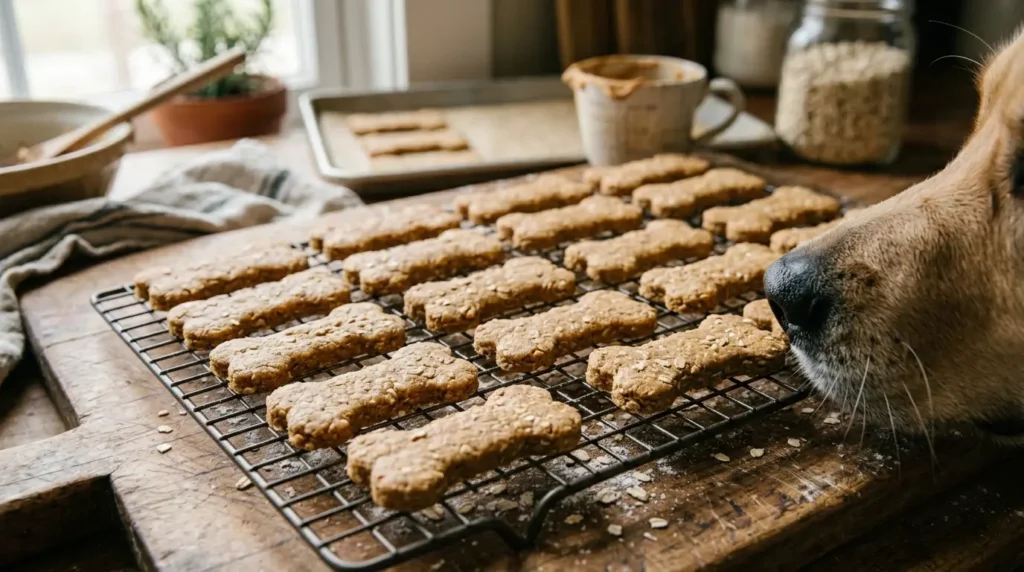
Once you have the base recipe down, it is fun and easy to switch things up and keep your dog excited about treat time.
Pumpkin and Peanut Butter: Replace the banana with half a cup of plain canned pumpkin puree. Pumpkin is excellent for digestive health, rich in fiber and beta-carotene, and dogs absolutely love the taste. Make sure you use plain pumpkin, not pumpkin pie filling, which contains spices and sugar.
Apple and Peanut Butter: Grate half a medium apple, without the seeds or core, and fold it into the dough instead of the banana. The natural sweetness and crunch of apple pieces make these treats a favorite for dogs that love variety.
Blueberry and Peanut Butter: Add a quarter cup of fresh or thawed frozen blueberries to the dough. Blueberries are packed with antioxidants, vitamin C, and vitamin K, making them one of the best fruit additions for dogs. They create small pockets of natural sweetness inside each biscuit.
Carrot and Peanut Butter: Finely grate one medium carrot and mix it into the dough. Carrots support eye health with their high beta-carotene content and add a subtle sweetness that pairs perfectly with peanut butter.
How Many Treats to Give Your Dog Per Day
Homemade peanut butter dog treats with oats are wholesome and nutritious, but treats should still make up no more than 10 percent of your dog’s total daily calorie intake. This is known as the 10 percent rule and is a guideline most veterinarians recommend.
For a small dog under 15 pounds: 1 to 2 small treats per day is plenty. For a medium dog between 15 and 40 pounds: 3 to 4 treats per day is appropriate. For a large dog over 40 pounds: 4 to 6 treats depending on the size of each biscuit.
If your dog is on a weight management plan or has a health condition, check with your veterinarian before introducing any new treats, homemade or otherwise.
Storing Your Homemade Dog Treats
At room temperature: Store in an airtight container or sealed glass jar on the counter for up to 5 days. Keep away from direct sunlight and heat.
In the refrigerator: These treats stay fresh for up to 2 weeks in a sealed container in the fridge. The cool environment prevents any moisture from building up and causing mold.
In the freezer: Freeze baked treats in a zip-lock bag or freezer-safe container for up to 3 months. Pull out a few at a time and let them thaw at room temperature for 20 to 30 minutes before giving them to your dog. You can also freeze the raw dough, tightly wrapped in plastic, for up to 60 days. Thaw it overnight in the fridge before rolling and baking.
Adapting the Recipe for Dogs with Special Dietary Needs
Grain-sensitive dogs: Although oats are naturally gluten-free, dogs with severe grain sensitivities may react to them. In this case, substitute oat flour with coconut flour, using about three quarters of the amount since coconut flour absorbs more moisture. You may need to add an extra tablespoon of peanut butter to balance the dough.
Dogs with nut allergies: If your dog reacts to peanut butter, substitute with plain pumpkin puree or mashed sweet potato as your binding and flavor ingredient. Both work beautifully and provide excellent nutrition.
Senior dogs: For older dogs or dogs with dental issues, bake the treats for slightly less time, around 18 to 20 minutes, so they stay softer and easier to chew. You can also break them into smaller pieces for easier handling.
Puppies: These treats are safe for puppies over 8 weeks old as long as there are no known ingredient sensitivities. Keep portions small and introduce them one at a time to monitor any reactions.
A Note on Using Treats for Training
Homemade peanut butter dog treats with oats are an ideal training reward because they are small enough to portion easily, aromatic enough to hold your dog’s attention, and nutritious enough that you do not have to feel guilty about using several during a training session. Break each biscuit into quarters for high-repetition training sessions and keep a small pouch or jar nearby for quick access during practice.
Consistent training with high-value treats like these builds trust, reinforces positive behavior, and strengthens the bond between you and your dog in a way that no commercial treat can replicate.
Final Thoughts
Making homemade peanut butter dog treats with oats at home is one of those habits that once you start, you will never stop. It costs less, takes almost no time, and gives you the satisfaction of knowing exactly what your dog is eating. More importantly, it makes your dog genuinely happy, and that is always worth the extra 30 minutes in the kitchen.
Bookmark this recipe, try one of the flavor variations next week, and share a photo of your pup enjoying their very first homemade biscuit. It will quickly become one of the best things you do for them every week.