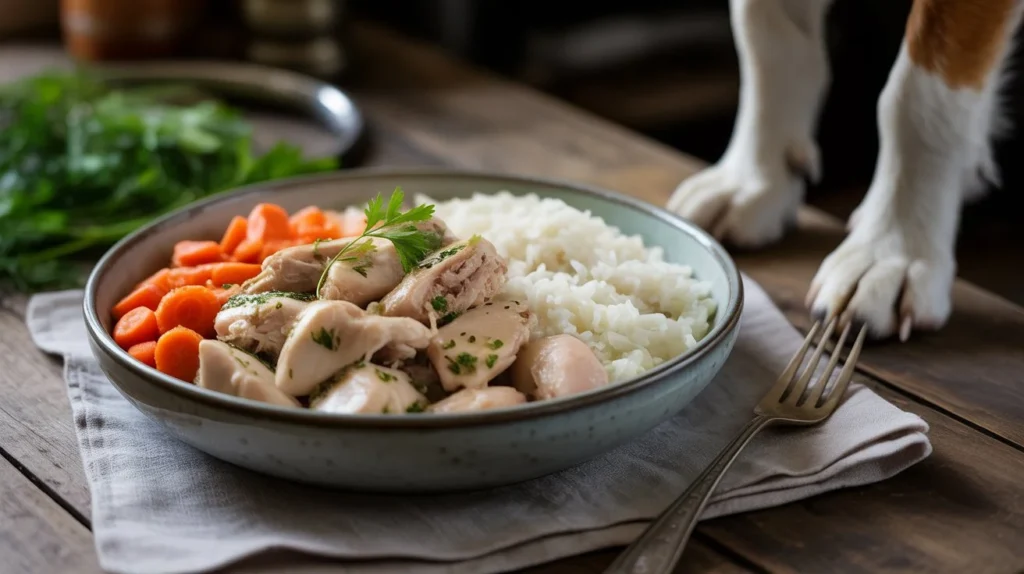
If you have been thinking about switching your dog to homemade food, homemade chicken and rice dog food is the perfect place to start. It is one of the most trusted, vet-friendly meals you can make at home, and dogs absolutely love it. Whether your pup has a sensitive stomach, needs a break from commercial kibble, or you simply want to know exactly what goes into every bite, this guide walks you through everything you need to know.
From ingredients and nutrition to step-by-step preparation, storage tips, and how to customize the recipe for different dog sizes and health needs, you will find everything here. This is not a random recipe from the internet. This is a complete lifestyle guide for feeding your dog better, starting today.
Why Homemade Chicken and Rice Dog Food Works So Well
Chicken and rice has been a go-to meal for dogs with digestive issues for decades, and veterinarians still recommend it today when dogs have upset stomachs, diarrhea, or are recovering from illness. But the truth is, this combination is not just for sick dogs. It is an excellent everyday meal that provides real nutrition in a simple, digestible format.
Here is why it works so well:
Chicken is a lean, high-quality protein source that supports muscle development, immune function, and energy levels. Dogs thrive on animal protein, and cooked chicken is one of the most bioavailable proteins you can give them. Rice provides easily digestible carbohydrates that fuel your dog through the day without overloading their digestive system. White rice is gentler on the gut, while brown rice adds more fiber and nutrients for dogs that tolerate it well.
Together, chicken and rice form a balanced base that you can build on with vegetables and supplements to create a complete daily meal your dog will beg for every time.
What You Need to Make Homemade Chicken and Rice Dog Food
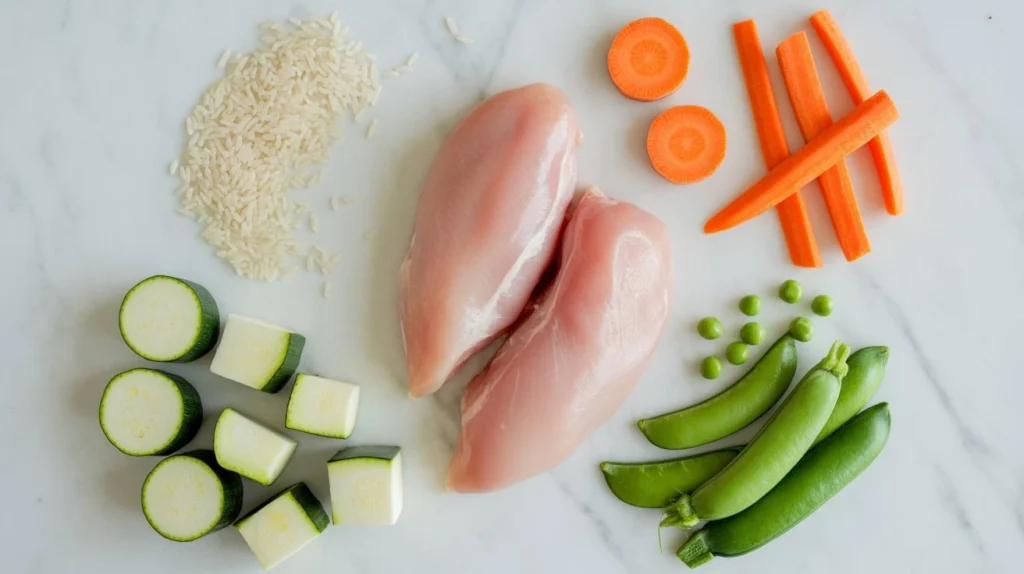
Before you start, gather your ingredients. This recipe is designed for a medium-sized dog weighing around 25 to 40 pounds and makes approximately 4 to 5 days of meals. You can scale it up or down based on your dog’s size.
Ingredients:
- 2 pounds boneless, skinless chicken breast or thighs
- 1 and a half cups white or brown rice
- 1 large carrot, peeled and diced
- 1 cup zucchini, chopped
- Half a cup of green peas (fresh or frozen, never canned with salt)
- 4 cups of water or low-sodium, no-garlic, no-onion chicken broth
- 1 tablespoon fish oil (optional but excellent for coat health)
- A pinch of ground turmeric (optional, anti-inflammatory support)
What to avoid completely:
Never add onion, garlic, grapes, raisins, xylitol, macadamia nuts, chocolate, or excessive salt. These are toxic to dogs and must stay out of every meal you prepare.
Step-by-Step: How to Make Homemade Chicken and Rice Dog Food
Step 1: Cook the chicken
Place the raw chicken breasts or thighs in a large pot and cover with water or low-sodium chicken broth. Bring to a boil over medium-high heat, then reduce to a simmer. Cook for 20 to 25 minutes, or until the chicken is fully cooked through with no pink remaining. Remove the chicken and set it aside to cool. Do not add any seasoning at this stage.
Step 2: Cook the rice
Using the leftover broth in the pot (this is flavorful and nutritious for dogs), add the rice and cook according to the package instructions. If using white rice, it typically takes 15 to 18 minutes. Brown rice takes around 35 to 40 minutes. The broth gives the rice a mild, savory flavor your dog will love.
Step 3: Cook the vegetables
While the rice is cooking, steam or lightly boil the carrots, zucchini, and peas until they are soft enough to mash slightly. You want them tender so they are easy for your dog to digest. Avoid frying or sauteing vegetables in oil or butter.
Step 4: Shred the chicken
Once the chicken has cooled enough to handle, shred it into bite-sized pieces using two forks or your hands. Remove any cartilage or bone fragments if you used thighs. The pieces do not need to be perfect, just manageable for your dog’s size.
Step 5: Mix and cool
In a large mixing bowl, combine the shredded chicken, cooked rice, and soft vegetables. Stir everything together thoroughly. If you are using fish oil or turmeric, add it at this stage and mix well. Let the food cool completely to room temperature before serving or storing. Never serve hot food to your dog as it can burn their mouth and cause discomfort.
How Much to Feed Your Dog

Portion size is one of the most important things to get right when switching to homemade dog food. The general guideline is to feed your dog about 2 to 3 percent of their body weight in food per day, split into two meals.
For a 25-pound dog: approximately 8 to 12 ounces of food per day, split into two servings. For a 40-pound dog: approximately 13 to 19 ounces per day. For a 60-pound dog: approximately 19 to 29 ounces per day.
These are starting points. Monitor your dog’s weight, energy, and digestion over the first few weeks and adjust portions accordingly. If your dog is gaining weight, reduce slightly. If they seem low on energy or are losing weight, increase portions.
Puppies, senior dogs, and very active dogs have different nutritional demands. Always consult your veterinarian before making homemade chicken and rice dog food the sole source of nutrition, especially for dogs with existing health conditions.
Storing Homemade Chicken and Rice Dog Food
One of the best things about this recipe is how meal-prep friendly it is. You do not have to cook fresh food every day.
In the refrigerator: Store the food in an airtight container for up to 4 to 5 days. Use glass containers if possible, as they are safer and easier to clean than plastic.
In the freezer: Portion the food into daily servings using freezer-safe containers or zip-lock bags and freeze for up to 3 months. The night before you need a portion, transfer it from the freezer to the refrigerator to thaw slowly. Never refreeze thawed food.
Always warm refrigerated food slightly before serving since cold food straight from the fridge can be unappealing and harder to digest. You can warm it with a small splash of warm water stirred through.
Nutritional Add-Ons to Make This a Complete Meal
Homemade chicken and rice dog food is a wonderful foundation, but for dogs eating it as their primary diet every day, it benefits from a few additions to ensure nutritional completeness.
Calcium: Homemade meals are often low in calcium compared to commercial kibble. You can add a small amount of plain, crushed eggshell powder (about half a teaspoon per pound of food) or a vet-recommended calcium supplement.
Omega-3 fatty acids: Fish oil is one of the simplest ways to support your dog’s coat, skin, joints, and brain health. Add one teaspoon of fish oil per day for small to medium dogs, and up to one tablespoon for large breeds.
Leafy greens: A small handful of cooked spinach or kale stirred into the food adds iron, folate, and antioxidants. Keep portions modest because too much can affect calcium absorption.
Probiotic support: A plain, unsweetened spoonful of yogurt or a dog-specific probiotic powder supports healthy gut bacteria, especially helpful if your dog is transitioning from commercial food.
Customizing the Recipe for Special Needs
One of the biggest advantages of homemade chicken and rice dog food is how easy it is to adapt.
For dogs with sensitive stomachs: Stick to plain white rice and plain boiled chicken with no vegetables initially. Gradually introduce vegetables one at a time to identify any triggers.
For dogs with weight issues: Reduce the rice portion and increase the vegetable portion. Add more leafy greens and fiber-rich vegetables like pumpkin puree, which also supports healthy digestion.
For senior dogs: Shred the chicken very finely and mash the vegetables for easier chewing and digestion. Add fish oil for joint support and consider a glucosamine supplement after checking with your vet.
For puppies: Puppies need more calories and higher levels of certain nutrients like calcium and phosphorus. This recipe alone is not complete for puppies without veterinary guidance on appropriate supplementation.
Transitioning from Kibble to Homemade Food
Switching your dog’s diet too quickly can cause digestive upset, gas, loose stools, or vomiting. Always transition slowly over 7 to 10 days using this schedule:
Days 1 to 3: 75 percent kibble, 25 percent homemade chicken and rice dog food Days 4 to 6: 50 percent kibble, 50 percent homemade Days 7 to 9: 25 percent kibble, 75 percent homemade Day 10 onward: 100 percent homemade if your dog is tolerating it well
Watch your dog closely during the transition. Healthy signs include firm stools, good energy, shiny coat, and consistent appetite. If you notice prolonged loose stools, vomiting, lethargy, or loss of appetite, slow the transition and consult your vet.
Final Thoughts
Homemade chicken and rice dog food is one of the most rewarding things you can do for your dog’s health. It is affordable, made with ingredients you recognize, and gives you total control over what your pup eats. Once you get into the routine of batch cooking a few times a week, it becomes second nature, and the difference you see in your dog’s coat, energy, and digestion will keep you motivated.
Start with this recipe, get comfortable with it, then explore adding new proteins, vegetables, and seasonal ingredients to keep meals exciting and nutritionally varied. Your dog deserves food made with love, and this is the best place to begin.