

Receiving a diagnosis of chronic kidney disease for your dog is one of the most emotionally challenging moments in a dog owner’s life. The questions come fast and they feel urgent: what can my dog still eat, what must I avoid, how do I slow this down, and what can I actually do right now to help? The answer to that last question, the one thing you can do every single day that has the most direct and measurable impact on your dog’s kidney health and quality of life, is to feed them correctly.
Diet has an enormous effect on the progression of canine kidney disease since the kidneys play a role in processing food and nutrients in your dog’s body. By feeding your dog a balanced diet approved for dogs with renal disease, you can help prevent the disease from progressing more quickly and treat symptoms to give your dog a happier, healthier life. The Cookie Rookie®
Making homemade dog food for kidney disease gives you a level of control over your dog’s nutritional intake that no commercial food, even prescription renal kibble, can match. You choose every ingredient, you control every nutrient level, and you can adjust the recipe based on your dog’s changing lab results over time. This complete guide walks you through exactly how to do that safely, correctly, and with confidence.
You will learn how kidney disease affects your dog’s nutritional needs, which nutrients must be controlled and why, which ingredients are safe and beneficial, which must be strictly avoided, a full step-by-step recipe with two additional variations, a daily feeding schedule, critical supplement guidance, safe storage practices, and when veterinary involvement is not just recommended but absolutely essential.
How Kidney Disease Changes Your Dog’s Nutritional Needs
To feed a dog with kidney disease correctly, you first need to understand what the kidneys do and what happens when they stop working properly. The kidneys are remarkable organs that perform several critical functions simultaneously. They filter waste products from the bloodstream, regulate the balance of fluids and electrolytes throughout the body, control blood pressure, stimulate the production of red blood cells, and activate vitamin D for calcium and bone metabolism.
When the kidneys are compromised, they struggle to filter waste products from the blood, particularly byproducts from protein metabolism and the mineral phosphorus. A carefully formulated diet aims to minimize these substances, thereby easing the strain on the kidneys and helping your dog feel better and potentially slowing disease progression. Wild Wild Whisk
Chronic kidney disease, also referred to as CKD or chronic renal failure, is progressive and currently incurable. However, the rate at which it progresses is significantly influenced by diet. Dogs fed an appropriate renal diet consistently experience slower disease progression, better quality of life, reduced symptoms, and longer survival times compared to dogs managed on standard commercial food. This is why homemade dog food for kidney disease is not just a wellness choice but a meaningful medical intervention when implemented correctly under veterinary supervision.
The four most critical nutritional modifications in a kidney disease diet are controlled phosphorus, moderate high-quality protein, increased omega-3 fatty acids, and increased hydration. Understanding each of these modifications and why they matter is the foundation of feeding your dog correctly throughout their kidney disease journey.
The Four Pillars of Homemade Dog Food for Kidney Disease
Pillar One: Low Phosphorus
Phosphorus management is the single most important dietary modification in a kidney disease diet and the one with the strongest evidence base for slowing disease progression. Healthy kidneys filter excess phosphorus from the bloodstream efficiently. Diseased kidneys cannot perform this function adequately, causing phosphorus to accumulate in the blood. Elevated blood phosphorus levels, a condition called hyperphosphatemia, directly damages remaining functional kidney tissue, accelerates the progression of kidney disease, contributes to bone density loss, and causes cardiovascular complications.
A therapeutic renal diet works by reducing the workload on the kidneys by minimizing phosphorus intake through food, thereby easing kidney strain significantly. The goal in homemade dog food for kidney disease is to select protein and carbohydrate sources that are naturally lower in phosphorus than typical dog food ingredients while still providing complete nutrition. Wild Wild Whisk
High-phosphorus ingredients to strictly limit or avoid in a kidney disease diet include organ meats, fish, dairy products including cheese and yogurt, bones and bone meal, soy products, whole grains, legumes in large amounts, and commercial broths made with bone. These are all nutritionally valuable in a healthy dog’s diet but place excessive phosphorus load on kidneys that are already struggling to manage what they have.
Pillar Two: Moderate High-Quality Protein
Protein management in kidney disease is nuanced and requires careful understanding to avoid two common and opposite mistakes. The old veterinary advice was to significantly restrict protein in kidney disease diets because protein metabolism produces waste products including urea and creatinine that diseased kidneys struggle to eliminate. While this logic is sound, severe protein restriction causes its own serious problems including muscle wasting, immune suppression, and nutritional deficiency.
A dog with renal disease still needs protein, but high-protein diets including raw diets should be avoided. The current evidence-based approach is to feed moderate amounts of very high-quality, highly digestible protein rather than large amounts of lower-quality protein. High-quality protein produces less metabolic waste per gram than lower-quality protein because a higher proportion of each gram is actually utilized by the body rather than processed as waste. Lean white chicken breast, egg whites, and turkey breast are among the highest-quality, most digestible protein sources available and are the ideal foundations for homemade dog food for kidney disease. The Cookie Rookie®
Pillar Three: Increased Omega-3 Fatty Acids
The omega-3 fatty acids in fish oil may reduce inflammation throughout the body and could slow kidney disease progression. These fats also support heart and brain health in aging dogs. The EPA and DHA forms of omega-3 fatty acids found in fish oil have specific anti-inflammatory effects on kidney tissue that have been documented in veterinary research. Dogs with kidney disease benefit from significantly higher omega-3 intake than healthy dogs, making fish oil a critical daily supplement in every homemade kidney disease recipe. Add fish oil fresh to each meal rather than cooking it into the batch, as heat degrades the delicate fatty acids. PixExtender
Pillar Four: Increased Hydration
Dogs with kidney disease lose the ability to concentrate urine effectively, meaning they excrete more water than a healthy dog and are at constant risk of dehydration. Dehydration in a kidney disease dog accelerates kidney damage directly and rapidly. Homemade dog food for kidney disease naturally supports better hydration than dry kibble because it contains significantly more moisture. Adding a small amount of warm water, low-sodium broth made without onion or garlic, or homemade bone broth that is certified phosphorus-appropriate to each meal further increases fluid intake and supports kidney perfusion throughout the day.
Always ensure your dog with kidney disease has access to fresh, clean water at all times. Some dogs benefit from a pet water fountain that keeps water circulating and appealing, which encourages them to drink more consistently throughout the day.
Best Ingredients for Homemade Dog Food for Kidney Disease
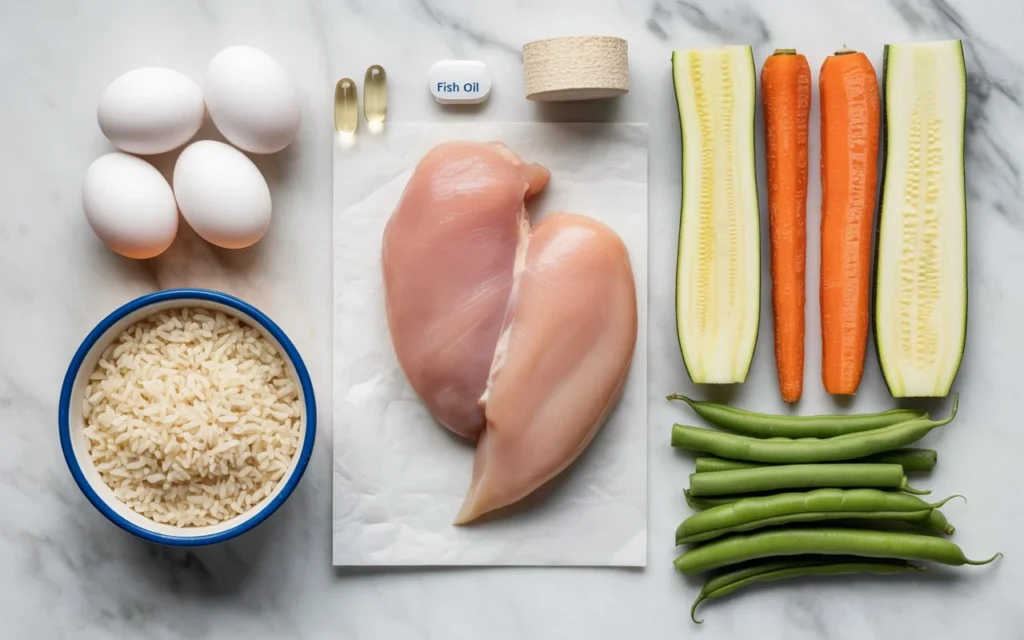
Every ingredient in a kidney disease recipe must earn its place by providing genuine nutritional value in a form that does not overburden the compromised kidney. The following ingredients have been identified as the most appropriate and beneficial foundations for homemade dog food for kidney disease.
Egg Whites
Egg whites are the single highest-quality protein source available for dogs with kidney disease. They provide a complete amino acid profile with an exceptional biological value score, meaning the body utilizes a higher proportion of the protein in egg whites compared to any other common protein source. Critically, egg whites contain very little phosphorus compared to whole eggs, making them a superb protein source for a low-phosphorus kidney diet. Always cook egg whites fully before serving. Raw egg whites contain avidin, an enzyme that blocks biotin absorption, and cooking eliminates this concern while maintaining the protein quality.
Lean Chicken Breast
Boneless, skinless chicken breast provides high-quality protein with moderate phosphorus content that is significantly lower than organ meats, fish, or red meat. It is highly digestible, easily shredded to a soft texture appropriate for senior dogs, and universally accepted even by dogs with reduced appetite from kidney disease. Use chicken breast only and avoid dark meat, skin, and any bone content which carries much higher phosphorus levels.
White Rice
White rice is the preferred carbohydrate source for homemade dog food for kidney disease because it is extremely low in phosphorus, very easily digestible, and provides clean energy without placing metabolic demands on already stressed kidneys. It is also exceptionally gentle on the digestive system, which is important because kidney disease frequently causes nausea and digestive discomfort that reduces a dog’s willingness to eat. Brown rice, while nutritionally superior in a healthy dog diet, contains significantly more phosphorus than white rice and should be avoided in kidney disease recipes.
Sweet Potato
Sweet potato provides energy, vitamin A from beta-carotene, potassium, vitamin C, and gentle dietary fiber in a form that is relatively low in phosphorus. Sweet potato is a good source of the antioxidant beta-carotene and is also rich in prebiotic fiber, making it a valuable kidney-friendly ingredient. Always cook sweet potato until completely soft and serve mashed or cubed without the skin. The skin contains higher concentrations of fiber and some nutrients that are less appropriate for dogs with compromised kidney function. Fayestrangedigital
Green Beans and Zucchini
Both green beans and zucchini are excellent low-phosphorus vegetables that add vitamins, fiber, and volume to kidney diet meals without adding meaningful phosphorus load. Steamed green beans provide vitamin C, vitamin K, and magnesium. Zucchini adds vitamin B6, potassium, and significant water content that contributes to daily hydration. Both should be cooked until very soft and either finely chopped or mashed to maximize digestibility for a dog whose entire system is under physiological stress.
Steamed Carrots
Plain steamed carrots provide beta-carotene, vitamin K, and potassium in a gentle, easily digestible form. They are naturally low in phosphorus, have a mild sweetness that most dogs find appealing, and contribute hydration through their water content. Carrots are particularly valuable in kidney diet recipes because they add color, flavor variety, and antioxidant support without placing any meaningful additional burden on the kidneys.
Cabbage in Small Amounts
Broccoli contains sulforaphane, which has been shown to slow disease progression in kidney disease, making it a genuinely therapeutic vegetable choice for dogs with CKD. Keep portions modest as large amounts of cruciferous vegetables can cause gas, but a small amount of steamed broccoli or cabbage incorporated into a kidney diet recipe provides meaningful protective benefit over time. Fayestrangedigital
Ingredients to Strictly Avoid in Kidney Disease Recipes
Managing homemade dog food for kidney disease requires strict avoidance of several ingredient categories that are perfectly appropriate for healthy dogs but deeply harmful for dogs with compromised kidney function.
Organ meats including liver, kidney, heart, and gizzard are all extremely high in phosphorus and must be excluded entirely from a kidney disease diet. This is a significant departure from standard homemade dog food advice where organ meats are celebrated for their nutritional density.
Dairy products including cheese, yogurt, and milk are high in phosphorus and must be avoided despite their protein contribution. Even plain yogurt, which is recommended in many of the other recipes on this site, is inappropriate for dogs with kidney disease.
Fish and seafood, while excellent for healthy dogs and senior dogs, carry high phosphorus loads that make them inappropriate as primary protein sources in a kidney disease diet. Small amounts of fish oil as an omega-3 supplement are appropriate, but fish flesh should not be the protein foundation of kidney diet meals.
Whole grains including brown rice, oats, barley, and whole wheat contain significantly higher phosphorus levels than white rice and should be replaced with white rice in all kidney disease recipes.
Bones and bone broth made by simmering bones are high in phosphorus and must be avoided. The homemade bone broth recipe featured in Article #5 of this site, while excellent for healthy dogs, is not appropriate for dogs with diagnosed kidney disease without specific veterinary guidance on phosphorus content.
High-sodium ingredients including commercial broths, seasoning blends, salt, and processed foods place additional strain on kidney function and blood pressure regulation and must be excluded completely.
Onion, garlic, and the entire Allium family remain toxic to dogs regardless of kidney health status and must never appear in any dog recipe.
Full Recipe: Homemade Dog Food for Kidney Disease
This recipe is designed for a medium-sized dog weighing approximately 25 to 35 pounds in early to mid-stage chronic kidney disease. It is a structural guideline and must be reviewed and approved by your veterinarian or a board-certified veterinary nutritionist before use as your dog’s primary diet. Your dog’s specific stage of kidney disease, current bloodwork, and individual health profile will determine the exact protein level and phosphorus restriction appropriate for them.
Ingredients:
- 1 pound boneless, skinless chicken breast
- 4 egg whites, fully cooked as a soft scramble with no oil
- 2 cups white rice, uncooked
- 1 medium sweet potato, peeled, cubed, and boiled until completely soft
- 1 cup green beans, steamed and finely chopped
- 1 cup zucchini, diced and steamed until tender
- Half a cup of steamed carrots, finely diced
- 4 cups of water
- 1 teaspoon fish oil per serving, added fresh at mealtime
- Veterinary-approved calcium supplement as directed by your vet
- Veterinary-approved renal vitamin and mineral supplement as directed by your vet
Step 1: Cook the chicken
Place the chicken breast in a large pot and cover with plain water. Bring to a gentle boil over medium heat, reduce to a simmer, and cook for 20 to 25 minutes until fully cooked through with no pink remaining. Remove the chicken, allow to cool, and shred into very small, soft pieces. Reserve the cooking liquid and set aside.
Step 2: Cook the white rice
Using the reserved chicken cooking water plus additional plain water to equal four cups total, bring to a gentle boil and add the white rice. Reduce heat to a low simmer, cover, and cook for 15 to 18 minutes until completely soft and all liquid is absorbed. The rice should be very tender, almost slightly overcooked by standard human food preferences, as this maximizes digestibility for a dog with kidney disease.
Step 3: Scramble the egg whites
In a non-stick pan over medium-low heat with no oil or butter, gently scramble four egg whites until fully set with no runny portions. Break into small pieces and allow to cool. Cook the egg whites gently rather than at high heat to preserve protein quality.
Step 4: Prepare the vegetables
Boil the cubed sweet potato in plain water for 15 minutes until completely soft, then drain and mash. Steam the green beans, zucchini, and carrots until very tender, approximately 10 to 12 minutes. Chop all vegetables very finely after cooking to maximize digestibility.
Step 5: Combine all ingredients
In a large mixing bowl, combine the shredded chicken, cooked white rice, scrambled egg whites, mashed sweet potato, and all finely chopped steamed vegetables. Mix thoroughly until all ingredients are evenly distributed. Allow the mixture to cool completely to room temperature before adding supplements or portioning for storage.
Step 6: Add supplements at mealtime
Add your veterinarian-prescribed calcium supplement and renal vitamin and mineral supplement to each individual portion at mealtime according to your vet’s dosing instructions. Add one teaspoon of fish oil per serving fresh at mealtime. Never add supplements to the bulk batch as this makes it impossible to control dosing accurately across individual meals.
Recipe Variation 1: Egg White and Sweet Potato Bowl
For dogs in more advanced kidney disease where protein must be more significantly restricted, this egg-white-forward variation reduces the chicken protein load while maintaining high-quality bioavailable protein through the egg white base.
- 6 egg whites, cooked as a gentle scramble
- 2 cups white rice, cooked
- 2 medium sweet potatoes, cooked and mashed
- 1 cup zucchini, steamed and mashed
- Half a cup of steamed carrots, finely diced
- 1 teaspoon fish oil per serving at mealtime
- Veterinary-prescribed supplements at mealtime
This variation is very soft, very gentle on the digestive system, and highly palatable for dogs with reduced appetite that is common in more advanced kidney disease.
Recipe Variation 2: Turkey and White Rice Kidney Bowl
For dogs that have developed a reduced interest in chicken after eating it regularly, this turkey variation provides a different flavor profile using an equally appropriate lean protein source.
- 1 pound lean ground turkey, 93 percent lean minimum, fully cooked and drained of fat
- 2 cups white rice, cooked
- 1 medium sweet potato, mashed
- 1 cup green beans, steamed and finely chopped
- Half a cup of steamed zucchini, diced
- 1 teaspoon fish oil per serving at mealtime
- Veterinary-prescribed supplements at mealtime
Cook the ground turkey in a non-stick pan over medium heat, breaking it up finely. Once fully cooked, drain thoroughly on paper towels to remove all excess fat. High fat content in a kidney disease diet strains the pancreas and digestive system. Combine with all other ingredients once cooled.
Daily Feeding Schedule for Dogs with Kidney Disease
Dogs with kidney disease benefit significantly from more frequent, smaller meals rather than one or two larger meals per day. Smaller meals reduce the metabolic waste load processed by the kidneys at any one time, maintain more stable blood nutrient levels throughout the day, and are more manageable for dogs experiencing the nausea and reduced appetite that often accompanies kidney disease.
A practical daily feeding schedule for a kidney disease dog is three meals per day of equal size. Divide the total daily food amount into three equal portions served in the morning, at midday, and in the evening. This three-meal schedule reduces the peak post-meal waste load on the kidneys and gives a nauseous dog smaller, less overwhelming meals that they are more likely to eat completely.
Daily food amounts follow the same general weight-based guidelines used for standard homemade dog food, approximately two to two and a half percent of current body weight per day, though your veterinarian may recommend a different caloric target based on your dog’s weight trends, muscle condition, and appetite. Dogs with kidney disease that are losing weight need caloric support even if that requires slightly more protein than the minimum kidney-safe level, and this balance must be managed with veterinary guidance rather than by general guideline alone.
Warming each meal gently before serving by stirring a small amount of warm water through the food releases aroma and improves palatability significantly. Dogs with kidney disease often experience nausea and reduced appetite, and a warm, aromatic meal is substantially more likely to be eaten completely than cold food served straight from the refrigerator.
Essential Supplements for a Kidney Disease Diet
Homemade dog food for kidney disease requires specific supplementation that goes beyond the supplements appropriate for a healthy homemade diet. These additions are not optional and must be managed in close consultation with your veterinarian.
Phosphorus Binder
If your dog’s bloodwork shows elevated blood phosphorus levels despite dietary phosphorus restriction, your veterinarian may prescribe a phosphorus binder medication given with meals. These medications bind dietary phosphorus in the gut before it can be absorbed into the bloodstream, providing additional phosphorus management beyond what dietary restriction alone can achieve. Never use a phosphorus binder without veterinary prescription as incorrect dosing disrupts calcium and phosphorus balance in dangerous ways.
Calcium Supplement
Calcium is often added to balance the phosphorus in the meat and to fill nutritional gaps without adding phosphorus to a kidney disease diet. Because the low-phosphorus protein sources in a kidney disease diet also tend to be lower in calcium than organ-meat-rich standard dog food, supplemental calcium is frequently required. Your veterinarian will prescribe the correct form and dose based on your dog’s bloodwork. Wild Wild Whisk
B Vitamins
Kidney disease dogs lose water-soluble B vitamins through increased urination at a faster rate than healthy dogs. B vitamin deficiency contributes to reduced appetite, lethargy, and poor coat quality. A veterinary-approved B vitamin supplement or a renal-specific multivitamin formulated for kidney disease dogs addresses this depletion and supports energy metabolism, appetite, and neurological function.
Omega-3 Fatty Acids from Fish Oil
As discussed in the pillar section above, fish oil is one of the most evidence-supported supplements for slowing kidney disease progression. Use a high-quality, purified fish oil product and add it fresh to each meal. The dose for kidney disease dogs is typically higher than for healthy dogs and should be confirmed with your veterinarian.
Potassium
Kidney disease often causes potassium depletion through increased urinary excretion. Low potassium levels cause muscle weakness, lethargy, and cardiac irregularities. Your veterinarian will monitor potassium levels through regular bloodwork and may prescribe a potassium supplement if levels fall below normal range.
Storing Homemade Kidney Disease Dog Food
Safe storage of homemade dog food for kidney disease follows the same principles as standard homemade dog food storage but requires extra attention to freshness given that kidney disease dogs often have reduced immune function.
Refrigerator storage: Store in sealed airtight glass containers for a maximum of three days. Label each container clearly with the preparation date. Never use containers that show any signs of odor, discoloration, or residue from previous batches.
Freezer storage: Portion into individual meal-sized amounts in freezer-safe containers or bags and freeze for up to six weeks. Thaw each portion overnight in the refrigerator. Never thaw kidney disease dog food at room temperature as the increased moisture content of this recipe creates a higher bacterial growth risk than lower-moisture standard homemade recipes.
Always warm refrigerated or freshly thawed kidney diet food gently by adding a small splash of warm water and stirring through before serving. Never microwave kidney disease dog food as uneven heating destroys heat-sensitive B vitamins and omega-3 supplements that have been added to the portion.
The Critical Role of Regular Veterinary Monitoring
Managing homemade dog food for kidney disease without regular veterinary oversight is not safe and cannot be recommended. Kidney disease is a progressive condition whose trajectory changes over time, and the dietary modifications appropriate for early-stage kidney disease are different from those required at mid-stage or advanced-stage disease.
Regular bloodwork, typically every three to six months depending on disease stage and stability, provides the data your veterinarian needs to assess how well the current diet is managing phosphorus levels, protein waste accumulation, electrolyte balance, and overall kidney function markers. These results directly inform adjustments to protein levels, phosphorus restrictions, supplement dosing, and overall caloric targets in your homemade recipe.
A specific vitamin and mineral supplement formulated for renal disease is essential to fill nutritional gaps without adding phosphorus, and consistency and safety are key to the success of a homemade kidney disease diet. Your veterinarian or a board-certified veterinary nutritionist is the right person to help you achieve that consistency based on your individual dog’s bloodwork, weight trends, and clinical response to the diet over time. Wild Wild Whisk
Weight monitoring at home every two weeks alongside professional veterinary check-ins every three months gives you the most complete picture of how your kidney disease dog is responding to their homemade diet. A dog that is maintaining stable weight, eating consistently, and showing stable or improving bloodwork markers is a dog whose diet is working. A dog that is losing weight rapidly, refusing food, or showing worsening lab values needs immediate veterinary reassessment of their dietary plan.
Signs That Your Dog’s Kidney Disease Diet Is Working
Positive responses to homemade dog food for kidney disease are observable both in your dog’s daily behavior and in their laboratory results over time. At home, you are looking for consistent appetite and enthusiastic meal engagement, stable or improving energy levels and activity, firm and consistent stools, good coat condition, and stable body weight without significant muscle loss.
The most meaningful validation of a kidney disease diet comes from bloodwork. Stable or declining blood urea nitrogen and creatinine levels, controlled blood phosphorus within the therapeutic target range set by your veterinarian, normal or managed potassium levels, and stable packed cell volume indicating adequate red blood cell production are all markers that confirm the diet is achieving its therapeutic goals.
Even when these markers stabilize rather than dramatically improve, stabilization in kidney disease is itself a significant achievement. Slowing the progression of a disease that would otherwise advance without dietary management extends your dog’s quality life stage meaningfully and gives you more time together.
Final Thoughts
Making homemade dog food for kidney disease is one of the most dedicated and impactful things a dog owner can do for a companion facing this diagnosis. It requires more knowledge, more careful ingredient selection, and more consistent veterinary collaboration than standard homemade dog food. But the return on that effort is a dog that feels better, eats better, maintains their vitality longer, and faces a difficult diagnosis with the best possible nutritional support at every meal.
Work closely with your veterinarian from the very beginning. Use this guide as your educational foundation and your veterinarian’s specific dietary recommendations as your precise clinical target. Feed every meal with care, monitor every response with attention, and know that each bowl you prepare is a genuine act of love that makes a measurable difference in your dog’s life.