A diabetes diagnosis in a dog is always a moment that changes everything. The questions come immediately and feel overwhelming: what can my dog still eat, what will spike their blood sugar, how do I keep them stable, and what do I actually do at every single mealtime from this point forward? The answer to all of those questions leads back to the same place: the food in your dog’s bowl.
Diet is the single most powerful daily management tool available for canine diabetes. Once diagnosed, diet becomes one of the most important tools to manage diabetes in dogs, and carefully planned homemade meals can make a significant difference in stabilizing blood sugar levels and improving quality of life. Making homemade dog food for diabetic dogs gives you complete control over every ingredient, every carbohydrate source, every fiber content, and every calorie your dog consumes at every meal, a level of precision that no commercial pet food, however well formulated, can fully match. Dessert Done Light
This complete guide gives you everything you need. You will learn exactly how diabetes affects your dog’s nutritional requirements, the four nutritional pillars of a safe diabetic dog diet, the best and worst ingredients for blood sugar management, two full step-by-step recipes with variations, a critical daily feeding schedule, how to monitor your dog’s response to the diet, essential supplement guidance, safe storage practices, and when veterinary involvement is not optional but essential.
How Diabetes Affects Your Dog’s Nutritional Needs
Understanding what is happening inside your diabetic dog’s body is the foundation of feeding them correctly. Canine diabetes mellitus occurs when the pancreas either fails to produce sufficient insulin or when the body’s cells fail to respond to insulin appropriately. Insulin is the hormone responsible for moving glucose from the bloodstream into the body’s cells where it is used as fuel. Without adequate insulin function, glucose accumulates in the bloodstream to dangerously high levels while the body’s cells are simultaneously starved of the energy they need to function.
The consequences of unmanaged blood glucose accumulation include damage to blood vessels, the nervous system, the kidneys, and the eyes. Diabetic cataracts develop rapidly in many dogs with poorly controlled diabetes and are one of the most visible and distressing complications of the condition. Urinary tract infections become more frequent because excess glucose in the urine creates an ideal growth environment for bacteria. Weight loss and muscle wasting occur because the body breaks down muscle tissue for energy when cells cannot access glucose normally.
The nutritional goal of homemade dog food for diabetic dogs is to provide meals that deliver steady, sustained energy without causing the rapid blood glucose spikes that damage organs and destabilize insulin requirements. Every food choice, from the type of carbohydrate to the amount of fiber to the timing of each meal, directly influences how well your dog’s blood glucose is managed throughout the day.
The Four Nutritional Pillars of a Diabetic Dog Diet
Pillar One: Low Glycemic Carbohydrates
The glycemic index measures how quickly a carbohydrate source raises blood glucose after consumption. High glycemic foods cause rapid, sharp blood glucose spikes that are dangerous for diabetic dogs and make insulin dosing unpredictable and difficult to manage. Low glycemic foods release glucose slowly and steadily into the bloodstream, producing a gentle, controlled rise and fall in blood glucose that is far safer and far easier to manage with insulin.
Low glycemic carbohydrates such as sweet potatoes, brown rice, and barley are preferred over white rice or potatoes in diabetic dog recipes because they release energy slowly and prevent rapid blood sugar spikes. Brown rice has a significantly lower glycemic index than white rice. Barley has one of the lowest glycemic indexes of any grain commonly used in dog food. Sweet potato, while containing natural sugars, releases them slowly due to its fiber content and is a far better choice than white potato or corn. Dog Treat Kitchen
High glycemic carbohydrates to avoid in a diabetic dog diet include white potatoes, corn, peas, and most fruits with high sugar content, as these cause rapid glucose spikes that destabilize blood sugar management. Bread, pasta, white rice, and any product containing added sugar or simple carbohydrates must be entirely excluded from homemade dog food for diabetic dogs. Wyse Guide
Pillar Two: High Dietary Fiber
Fiber is one of the most valuable tools in managing canine diabetes through diet. Fiber slows digestion and glucose absorption, which smooths out blood sugar fluctuations and supports digestive health while also aiding weight management by promoting fullness. Soluble fiber forms a gel-like substance in the digestive tract that slows the rate at which carbohydrates are broken down and glucose enters the bloodstream. This fiber-mediated slowing of glucose absorption directly reduces the height of post-meal blood glucose peaks and makes the overall glucose curve flatter and more predictable. Wyse Guide
Low carbohydrate vegetables such as green beans, broccoli, and spinach can be added to homemade diabetic dog food recipes to provide essential nutrients without raising blood sugar levels, while starchy vegetables should be used in moderation. Plain pumpkin puree is one of the most concentrated and effective fiber sources available for diabetic dogs, providing soluble fiber that slows glucose absorption while also supporting digestive regularity and contributing to a feeling of fullness that helps manage the appetite changes common in diabetic dogs. Chewy
Pillar Three: Lean High-Quality Protein
Lean meats like chicken or fish are preferred protein sources for diabetic dogs because they are easily digestible and do not cause rapid spikes in blood sugar levels. Protein is essential for maintaining muscle mass, supporting immune function, and providing sustained energy, but the source and fat content of the protein matters enormously in a diabetic dog diet. High-fat protein sources like lamb, fatty ground beef, and pork add caloric density that contributes to the weight gain that worsens insulin resistance. Lean proteins provide all the amino acids a diabetic dog needs without the excess fat that complicates blood glucose and weight management. Bob’s Red Mill
Protein does not raise blood glucose directly in the way carbohydrates do, but excess protein that exceeds the body’s immediate needs can be converted to glucose through a process called gluconeogenesis. Feeding moderate, appropriate amounts of lean protein rather than very high protein meals maintains the metabolic stability that diabetic dogs require.
Pillar Four: Meal Timing Consistency
It is crucial for a diabetic dog to consume the same amount of food at the same time every day, as this is the only way to control blood sugar and adjust insulin dosing appropriately, particularly for dogs with insulin-dependent diabetes. This pillar is behavioral and logistical rather than strictly nutritional, but it is just as important as any ingredient choice. Insulin administration in diabetic dogs is timed to coincide with meals. If meals are late, early, larger than usual, or smaller than usual, the insulin dose becomes mismatched to the actual glucose load from the meal, causing potentially dangerous blood glucose swings in either direction. Balance It
Consistency is the discipline at the heart of managing a diabetic dog’s diet successfully. Same ingredients, same portions, same timing, every single day. This is not a diet where variety and rotation are encouraged. It is a diet where predictability is the primary virtue.
Best Ingredients for Homemade Dog Food for Diabetic Dogs
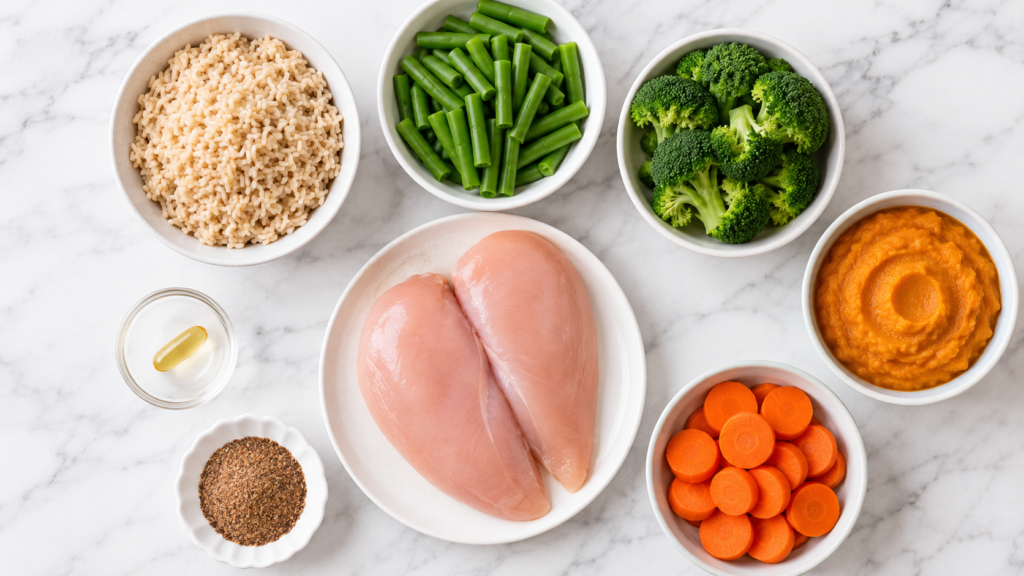
Every ingredient in a diabetic dog’s homemade food must contribute to stable blood glucose, high satiety, and complete nutrition without adding simple carbohydrates, excess fat, or unnecessary caloric density.
Lean Chicken Breast
Boneless, skinless chicken breast is the ideal primary protein for homemade dog food for diabetic dogs. Its exceptionally low fat content, high-quality complete amino acid profile, and universal palatability make it the most reliable protein foundation for a diabetic diet. It does not contribute to blood glucose elevation, is highly digestible, and provides consistent protein quality batch after batch. Always use breast meat rather than thighs or drumsticks to keep fat content as low as possible.
Turkey Breast
Lean turkey breast provides the same high-quality protein and low fat content as chicken breast with a different flavor profile that prevents flavor fatigue in dogs managed on a long-term therapeutic diet. Rotating between chicken and turkey across batches keeps the diet palatability high while maintaining the lean protein standard required for diabetic management.
Brown Rice
Brown rice is the preferred grain-based carbohydrate for homemade dog food for diabetic dogs. Its lower glycemic index compared to white rice, combined with its higher fiber and B vitamin content, makes it a meaningfully better choice for blood glucose management. Complex carbohydrates like brown rice release energy slowly, providing steady fuel without causing the rapid blood glucose spikes associated with simple carbohydrates. Cook brown rice until completely soft to maximize digestibility. It Doesn’t Taste Like Chicken
Barley
Barley has one of the lowest glycemic indexes of any grain used in dog food and is an outstanding carbohydrate choice for diabetic dogs. Studies have shown that a diet based on barley leads to a lower average mean interstitial glucose compared to one in which corn was used, making barley a genuinely evidence-supported choice for blood glucose management in diabetic dogs. Pearl barley is the most practical form to use in homemade recipes and cooks to a soft, easily digestible consistency. Balance It
Green Beans
Green beans are among the most valuable vegetables for homemade dog food for diabetic dogs. They are extremely low in both calories and carbohydrates, very high in fiber, and filling enough that they significantly increase meal volume without adding meaningful glucose-raising carbohydrate load. Adding a generous portion of steamed green beans to every diabetic dog meal increases fiber intake, promotes satiety, and contributes vitamins C, K, and magnesium without any meaningful impact on blood glucose.
Broccoli
Fiber-rich vegetables such as broccoli help regulate digestion and prevent sudden glucose spikes, making them ideal additions to a diabetic dog food recipe. Broccoli also provides sulforaphane, a compound with anti-inflammatory properties, alongside vitamin C, vitamin K, and chromium, a trace mineral that supports insulin sensitivity in multiple species. Steam broccoli until completely soft and chop finely before adding to the recipe. Dog Treat Kitchen
Plain Canned Pumpkin
Plain pumpkin puree is a fiber powerhouse that belongs in every batch of homemade dog food for diabetic dogs. Its high soluble fiber content directly slows glucose absorption from the meal, producing a gentler and more manageable post-meal blood glucose curve. It also supports digestive regularity, contributes beta-carotene and potassium, and is accepted enthusiastically by most dogs. Always confirm the label shows plain pumpkin with no added sugar, spice, or flavoring.
Ground Flaxseed
Ground flaxseed provides plant-based omega-3 fatty acids, soluble fiber, and lignans that contribute to anti-inflammatory support and digestive regularity. Its soluble fiber content adds to the overall fiber load of the meal, contributing to blood glucose stabilization. Use ground rather than whole flaxseed as the outer shell of whole flaxseed passes through the digestive system largely undigested, making the nutritional content unavailable.
Fish Oil
Fish oil provides EPA and DHA omega-3 fatty acids that support insulin sensitivity, reduce systemic inflammation, and maintain skin and coat health. Fats provide essential fatty acids that promote skin and coat health and support energy balance, and fat does not raise blood sugar directly but should be managed carefully to avoid excess weight gain in diabetic dogs. Fish oil from a purified, quality source is the most appropriate fat addition for a diabetic dog diet. Add it fresh to each portion at mealtime. Wyse Guide
Ingredients to Strictly Avoid in Diabetic Dog Recipes
Managing homemade dog food for diabetic dogs requires absolute exclusion of several ingredient categories that cause dangerous blood glucose spikes or otherwise complicate diabetes management.
White rice, white potato, sweet corn, and pasta all have high glycemic indexes that cause rapid blood glucose elevation incompatible with stable diabetic management. These ingredients are appropriate in healthy dog recipes on this site but must be completely excluded from every diabetic dog recipe without exception.
Simple sugars in any form including honey, maple syrup, fruit juice, and any commercially sweetened ingredient must be excluded entirely. Even natural sweeteners cause blood glucose spikes that are dangerous for diabetic dogs.
High-sugar fruits including banana, mango, grapes, and watermelon add significant simple sugar load that disrupts blood glucose management. Small amounts of low-sugar fruits like blueberries and apple slices without seeds are acceptable in modest amounts as treat additions but should not be incorporated into regular diabetic meals.
High-fat protein sources including fatty ground beef, lamb, pork, and chicken skin add caloric density that promotes the weight gain worsening insulin resistance and that puts additional strain on the pancreas.
Organ meats including liver, kidney, and heart are nutritionally dense but high in calories and some micronutrients that are difficult to manage in the precise nutritional balance required for a diabetic dog diet. Use them rarely and in very small amounts if at all.
Commercial treats, table scraps, and any food item given outside of the scheduled mealtimes all disrupt the glucose management that structured diabetic feeding achieves. Zero exceptions to scheduled, measured, consistent feeding is the standard for a well-managed diabetic dog.
Full Recipe: Homemade Dog Food for Diabetic Dogs
This recipe is designed for a medium-sized dog weighing approximately 25 to 40 pounds with a diabetes diagnosis managed under veterinary supervision. It is a structural guideline that must be reviewed by your veterinarian or a board-certified veterinary nutritionist before becoming your dog’s primary diet, as insulin dosing is calibrated to specific meal composition and any recipe change requires veterinary review.
Ingredients:
- 1.5 pounds boneless, skinless chicken breast
- 1 cup brown rice, uncooked
- Half a cup of pearl barley, uncooked
- 1 cup green beans, fresh or frozen, steamed until very soft
- 1 cup broccoli florets, steamed and finely chopped
- Half a cup of plain canned pumpkin puree
- Half a cup of steamed carrots, finely diced
- 1 tablespoon ground flaxseed
- 4 cups of water
- 1 teaspoon fish oil per serving, added fresh at mealtime
- Veterinary-approved vitamin and mineral supplement as directed
Step 1: Cook the chicken
Place the raw chicken breast in a large pot and cover with plain water. Bring to a gentle boil over medium high heat, reduce to a steady simmer, and cook for 20 to 25 minutes until fully cooked through with no pink remaining. Remove the chicken, reserve the cooking liquid in the pot, and allow the chicken to cool before shredding into very small, fine pieces using two forks.
Step 2: Cook the brown rice and barley
Using the reserved chicken cooking liquid plus additional water to total four cups, bring to a gentle boil. Add the brown rice and pearl barley together, reduce heat to a low simmer, cover, and cook for approximately 40 to 45 minutes until both are completely soft and all liquid is absorbed. The combination of brown rice and barley creates a lower overall glycemic load than brown rice alone and provides a richer texture that most dogs find appealing.
Step 3: Steam the vegetables
Steam the green beans and broccoli together in a steamer basket for 10 to 12 minutes until very tender. Steam the diced carrots separately for 12 minutes until completely soft. Chop all vegetables very finely after cooking to maximize digestibility and make the overall texture consistent throughout the batch.
Step 4: Combine with pumpkin and flaxseed
In a large mixing bowl, combine the shredded chicken, cooked brown rice and barley mixture, steamed green beans, broccoli, and carrots. Add the plain pumpkin puree and ground flaxseed and stir everything thoroughly until all ingredients are completely and evenly combined. The pumpkin adds fiber and binds the mixture slightly. The flaxseed blends invisibly and contributes fiber and omega-3s to every portion.
Step 5: Cool completely before portioning
Allow the entire mixture to cool to room temperature completely before portioning into individual meal servings or transferring to storage containers. Never seal warm food in airtight containers. Label every storage container with the preparation date and the exact portion weight of each serving, which must remain consistent at every meal.
Step 6: Add fish oil and supplements at mealtime
Add the veterinarian-prescribed vitamin and mineral supplement and one teaspoon of fish oil directly to each individual meal portion at mealtime. Never mix supplements into the bulk batch as this makes consistent per-meal dosing impossible to verify.
Recipe Variation 1: Turkey and Barley Blood Sugar Bowl
For dogs that have become less enthusiastic about chicken after weeks on a consistent recipe, this turkey-based variation provides identical nutritional characteristics with a different protein and flavor profile.
- 1.5 pounds lean ground turkey, 93 percent lean minimum, fully cooked and drained of all fat
- 1 cup pearl barley, cooked until completely soft
- Half a cup of brown rice, cooked
- 1 cup green beans, steamed and finely chopped
- Half a cup of plain pumpkin puree
- 1 cup broccoli, steamed and finely chopped
- 1 tablespoon ground flaxseed
- 1 teaspoon fish oil per serving at mealtime
Cook the ground turkey in a non-stick pan over medium heat, breaking it up very finely as it cooks. Once fully browned, drain thoroughly on paper towels to remove all excess fat before combining with other ingredients. Fat removal from ground turkey is an important step for diabetic dogs to prevent excess caloric intake that worsens insulin resistance.
Recipe Variation 2: Chicken and Pumpkin High Fiber Bowl
This variation maximizes the fiber content of the recipe for dogs that need additional digestive regulation alongside their diabetes management, or for dogs whose blood glucose curves are still showing post-meal spikes that need further dampening through increased fiber intake.
- 1.5 pounds chicken breast, cooked and shredded
- 1 cup plain canned pumpkin puree, doubled from the main recipe
- Three quarters of a cup of brown rice, cooked
- Half a cup of pearl barley, cooked
- 1.5 cups green beans, steamed and finely chopped
- Half a cup of spinach, steamed and finely chopped
- 1 tablespoon ground flaxseed
- 1 teaspoon fish oil per serving at mealtime
The doubled pumpkin portion significantly increases the soluble fiber load of this variation, producing a noticeably flatter post-meal blood glucose curve compared to the standard recipe. This variation is particularly useful in the first weeks of dietary management when blood glucose stability is being established.
The Critical Daily Feeding Schedule for Diabetic Dogs
The feeding schedule for a diabetic dog is not flexible and is not negotiable. It is a clinical protocol as much as it is a meal plan, and deviating from it has direct consequences for blood glucose stability and insulin safety.
Most diabetic dogs are managed with insulin injections given twice daily, typically once in the morning and once in the evening. These injections are timed to coincide with meals because insulin begins working to lower blood glucose immediately after administration. If a meal is delayed, the insulin lowers blood glucose without the buffering effect of incoming dietary glucose, potentially causing dangerously low blood sugar, a condition called hypoglycemia. If a meal is larger than usual, the insulin dose may be insufficient to manage the additional glucose load, causing hyperglycemic complications.
The standard schedule for a twice-daily insulin diabetic dog is as follows:
Morning meal: served at the same time every morning, immediately before or with the morning insulin injection as directed by your veterinarian. The meal must be the full prescribed portion.
Evening meal: served at the same time every evening, twelve hours after the morning meal, immediately before or with the evening insulin injection as directed by your veterinarian. The evening meal must also be the full prescribed portion.
No additional food, treats, table scraps, or unscheduled snacks between these two meals under any circumstances. Even a small amount of additional food given between scheduled meals disrupts the insulin-to-glucose balance that twice-daily injection management depends on.
If your dog refuses to eat their meal at the scheduled time, do not administer insulin until they have eaten. A dog that receives insulin without eating faces a serious hypoglycemia risk. Contact your veterinarian immediately if your diabetic dog is consistently refusing meals, as this is an important clinical symptom that requires veterinary assessment.
How to Monitor Your Diabetic Dog’s Response to the Homemade Diet
Transitioning to homemade dog food for diabetic dogs requires close monitoring in the initial weeks because changes in diet composition directly affect blood glucose levels and insulin requirements. A recipe change that increases fiber content, for example, may lower post-meal blood glucose peaks enough to require a reduction in insulin dose. Making this change without veterinary guidance and monitoring creates a hypoglycemia risk.
Work with your veterinarian to establish a monitoring schedule that includes home glucose monitoring if you have a glucometer appropriate for dogs, urine glucose testing strips for daily home assessment, veterinary glucose curves performed at the clinic every two to four weeks during the initial dietary transition period, and HbA1c equivalent testing every three months to assess longer-term glucose management trends.
At home, watch your dog daily for the behavioral and physical signs that indicate blood glucose is outside the safe range. Signs of hypoglycemia, which is dangerously low blood sugar, include sudden weakness, trembling, disorientation, glassy eyes, uncoordinated movement, and collapse. These signs require immediate emergency veterinary attention. Signs of hyperglycemia, which is high blood sugar, include excessive thirst and urination, lethargy, loss of appetite, and a sweet or fruity smell to the breath. Persistent hyperglycemia despite diet and insulin management requires veterinary reassessment of the insulin dose and dietary plan.
Keep a daily log of your dog’s meal times, portion weights, insulin doses and times, water intake observations, and any behavioral or physical changes you notice. This log becomes an invaluable clinical tool for your veterinarian when reviewing how well the current dietary and insulin management plan is working and what adjustments might improve outcomes.
Transitioning to Homemade Food as a Diabetic Dog
Changing a diabetic dog’s diet requires even more gradual transition management than changing a healthy dog’s diet because every dietary change has a direct effect on blood glucose and insulin requirements. Never switch a diabetic dog’s food abruptly.
Discuss the planned dietary transition with your veterinarian before beginning. Your vet may want to perform a glucose curve before and after the transition to document the effect of the dietary change on your dog’s blood glucose profile and adjust insulin dosing accordingly.
Begin the transition over a minimum of ten to fourteen days using a gradual ratio shift: 80 percent current food and 20 percent homemade for the first three days, then 60 and 40 for three days, then 40 and 60 for three days, then 20 and 80 for two days, then full homemade if your dog is tolerating the transition well with stable blood glucose monitoring results.
Monitor blood glucose more frequently during the transition period than during stable maintenance. Daily urine glucose testing or home glucometer readings during the transition phase gives you and your veterinarian the data needed to detect any insulin dosing adjustment requirement before it becomes a clinical problem.
Essential Supplements for a Diabetic Dog Diet
Homemade dog food for diabetic dogs requires specific supplementation to ensure complete nutritional coverage and to support the specific metabolic challenges of a diabetic dog’s body.
A veterinary-approved complete vitamin and mineral supplement formulated for homemade diets ensures that the B vitamins, trace minerals, and fat-soluble vitamins not covered at therapeutic levels by the recipe ingredients are provided consistently at every meal. This is not optional for a dog whose entire diet comes from homemade food.
Fish oil at a veterinary-confirmed appropriate dose for your dog’s weight and condition provides EPA and DHA that support insulin sensitivity, reduce systemic inflammation, and maintain coat and skin health throughout the long-term dietary management of diabetes.
Chromium is a trace mineral that plays a role in insulin sensitivity and glucose metabolism. While it appears in small amounts in several of the ingredients in these recipes, a chromium supplement at a veterinary-confirmed dose may provide additional benefit for some diabetic dogs. Always confirm with your veterinarian before adding any new supplement to a diabetic dog’s regimen.
Fiber supplementation using plain psyllium husk powder, one quarter to one half teaspoon added fresh to each meal for a medium-sized dog, provides additional soluble fiber that further smooths blood glucose curves. Introduce fiber supplementation gradually over one week to avoid digestive cramping or gas.
Safe Storage of Homemade Diabetic Dog Food
Safe storage follows the same principles as standard homemade dog food but with particular attention to portion consistency. Every stored portion must be pre-weighed to the exact gram specified in your dog’s dietary plan before storage, as consistent portion weight at every meal is clinically important for insulin management.
Refrigerator storage: Store pre-weighed portions in individual sealed glass containers labeled with the preparation date and portion weight for up to four days. Glass containers are preferable to plastic for the cleaner surface that is easier to verify is completely clean between uses.
Freezer storage: Pre-weigh individual meal portions, seal in freezer-safe containers or bags with preparation date and portion weight labels, and freeze for up to eight weeks. Thaw each portion overnight in the refrigerator. Never thaw at room temperature or in a microwave as temperature inconsistency affects meal texture and makes it harder to serve the exact portion weight consistently.
Warm each refrigerated or thawed portion gently before serving by placing the sealed container in a bowl of warm water for five minutes. A meal that is slightly warm and aromatic is more appealing to a dog whose appetite may be variable due to the metabolic effects of diabetes.
Final Thoughts
Making homemade dog food for diabetic dogs is one of the most demanding and most rewarding dietary commitments a dog owner can make. It requires consistency, precision, veterinary collaboration, and a daily discipline that many other aspects of dog care do not. But the return on that discipline is a dog whose blood glucose is better managed, whose symptoms are better controlled, whose quality of life is meaningfully better, and who faces their diagnosis with the best possible nutritional support at every meal.
Start by having a thorough conversation with your veterinarian about your intention to transition to homemade food. Use this guide as your educational framework and your vet’s specific recommendations as your precise clinical targets. Feed every meal on time, in the right amount, with the right ingredients, and monitor your dog’s response with the attention their condition deserves.
Your diabetic dog can live a full, comfortable, and genuinely happy life with the right dietary management. Every meal you prepare is a step toward that life.