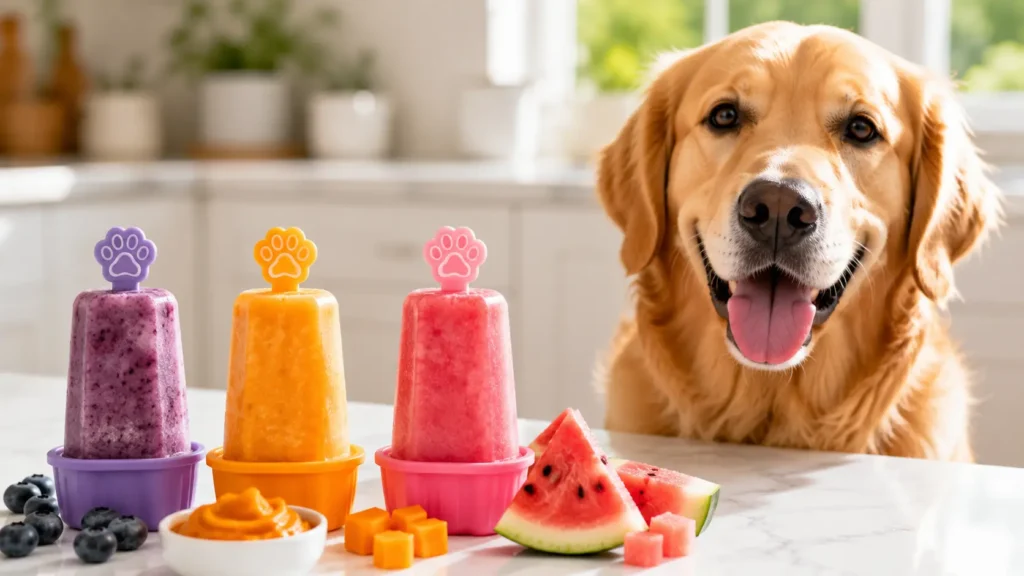
When the temperature climbs and your dog starts panting in front of the fan, few things bring more joy to a dog owner than pulling a homemade frozen treat out of the freezer and watching their pup’s eyes light up with pure excitement. Homemade frozen dog treats are one of the simplest, most affordable, and most genuinely nutritious things you can make for your dog, and the entire process from blending ingredients to popping the finished treats out of the mold takes less than fifteen minutes of actual hands-on time.
Unlike commercial frozen dog treats, which often contain added sugars, artificial flavors, synthetic preservatives, and mystery thickeners to extend shelf life, homemade frozen dog treats are made entirely from whole, natural, dog-safe ingredients that you can see, recognize, and trust. Every ingredient in the five recipes in this guide serves a genuine purpose, whether providing protein, antioxidants, fiber, hydration, or digestive support, and none of them contain anything your dog does not need.
This guide covers everything from why frozen treats are genuinely beneficial for dogs beyond just being fun, which ingredients make the best frozen treats and why, critical safety rules you must follow, five complete recipes from basic to creative, portion guidelines by dog size, serving tips, freezer storage instructions, and fun ways to use frozen treats beyond simple snack time. Whether you are new to making dog treats at home or you are an experienced homemade dog food maker looking to add something special to your dog’s warm-weather routine, these five recipes will become a beloved part of your dog’s life from the first lick.
Why Homemade Frozen Dog Treats Are More Than Just a Fun Snack
It would be easy to dismiss frozen dog treats as a seasonal novelty with no real nutritional significance, but the reality is that a thoughtfully made homemade frozen dog treat provides genuine health benefits alongside its obvious entertainment value.
Hydration is one of the most consistent challenges of keeping dogs healthy during warm weather. Many dogs, particularly senior dogs and toy breeds, do not drink enough water throughout the day and are at a chronic low-level risk of dehydration that contributes to digestive sluggishness, kidney strain, reduced energy, and poor coat condition. A frozen treat made with high-water-content ingredients like watermelon, cucumber, or yogurt provides a meaningful supplement to daily water intake in a form that most dogs consume enthusiastically even when they have been ignoring their water bowl.
Cooling support is equally practical. When a dog eats a frozen treat, the cold temperature of the food lowers their internal body temperature slightly, providing relief from heat that complements the dog’s own natural cooling mechanisms of panting and seeking shade. For brachycephalic breeds like Bulldogs, Pugs, and French Bulldogs that struggle to regulate body temperature efficiently, frozen treats provide a cooling boost that can make a meaningful difference in comfort on very hot days.
Mental enrichment is another genuine benefit of frozen treats that goes beyond nutrition. A dog that has to lick, work, and maneuver a frozen treat is engaging their brain in a focused task that reduces boredom, decreases anxiety, and produces the calm, satisfied state that comes from purposeful activity. For dogs left alone during the day, a frozen treat given before the owner leaves provides both physical comfort and mental occupation that can meaningfully reduce separation-related anxiety behaviors.
The fiber, probiotics, antioxidants, and vitamins in the ingredients used in these recipes add to your dog’s daily nutritional intake in a way that no commercial frozen treat can replicate. Every recipe in this guide is built around ingredients that contribute something real to your dog’s health, making homemade frozen dog treats one of the most rewarding intersections of nutrition and joy available in your dog-parenting toolkit.
Ingredients That Make the Best Homemade Frozen Dog Treats
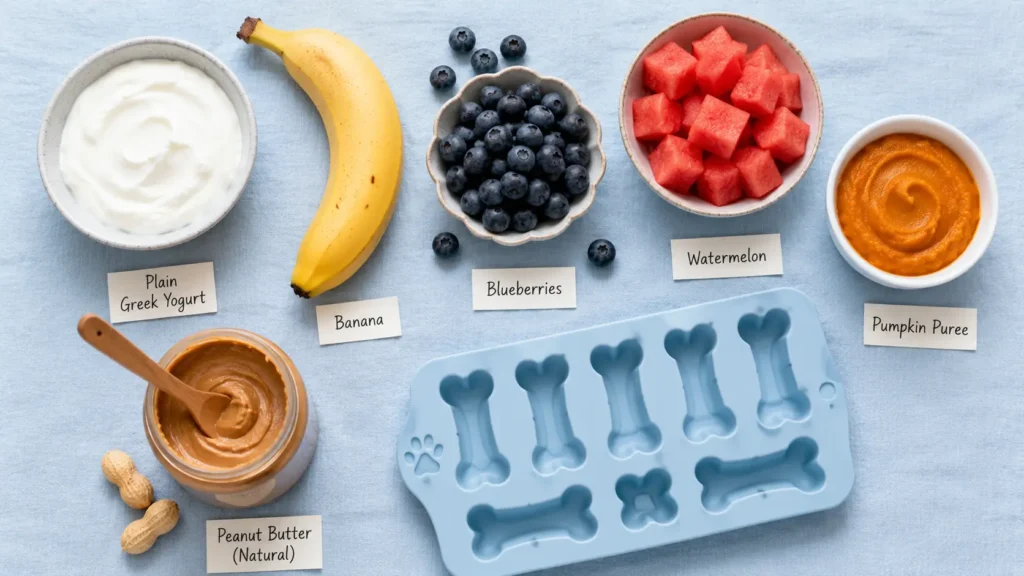
Understanding which ingredients work best in frozen treats and why helps you go beyond these five recipes to create your own variations confidently and safely.
Plain Greek Yogurt – Homemade Frozen Dog Treats
Plain, unsweetened, full-fat Greek yogurt is the single most versatile and valuable base ingredient for homemade frozen dog treats. Its thick, creamy consistency holds other ingredients suspended throughout the treat as it freezes, producing a smooth, ice-cream-like texture that dogs find highly satisfying to lick. Nutritionally, Greek yogurt provides complete protein, calcium for bone health, and live probiotic cultures that support healthy gut flora and digestive function. Its natural tanginess enhances the flavor of every fruit ingredient it is combined with, making the finished treat more aromatic and appealing.
Always confirm the label shows no xylitol, artificial sweeteners, added sugar, or flavorings of any kind. Greek yogurt is appropriate for the vast majority of dogs, though dogs with known dairy sensitivity should use coconut milk as a dairy-free alternative. Full-fat yogurt freezes with a creamier texture than low-fat varieties and is the better choice for treat-making.
Ripe Banana – Homemade Frozen Dog Treats
Ripe banana provides natural sweetness, potassium, vitamin B6, and vitamin C in a form that freezes beautifully and creates a creamy, smooth texture when blended. The natural sugars in ripe banana are appropriate for healthy dogs in normal treat-sized portions and contribute enough sweetness that no additional sugar is needed in any recipe that includes banana. The riper the banana, the sweeter and more aromatic the frozen treat will be.
Blueberries – Homemade Frozen Dog Treats
Fresh or frozen blueberries are one of the most nutritionally powerful ingredients available for homemade frozen dog treats. Packed with antioxidants including anthocyanins and vitamin C, blueberries support immune function, cognitive health, and cellular protection from oxidative stress. Their deep purple color creates visually striking frozen treats and their natural tartness balances the sweetness of banana and yogurt beautifully. Both fresh and frozen blueberries work equally well in these recipes.
Plain Pumpkin Puree – Homemade Frozen Dog Treats
Plain canned pumpkin puree provides soluble dietary fiber that supports healthy digestion, beta-carotene for immune and eye health, and potassium for heart and muscle function. Its thick consistency makes it an excellent base for frozen treats, and its mild, slightly sweet flavor is universally accepted by dogs. The digestive benefits of pumpkin are particularly valuable in frozen treats because the gentle fiber support it provides continues to work even when the treat is consumed as an occasional cooling snack rather than a daily supplement.
Natural Peanut Butter – Homemade Frozen Dog Treats
Natural peanut butter, confirmed xylitol-free, is one of the most beloved dog treat ingredients in existence. Its rich aroma, satisfying flavor, and thick consistency make it a powerful treat ingredient that creates the highest possible level of excitement in dogs of every breed and size. Nutritionally, natural peanut butter provides protein, healthy monounsaturated fats, niacin, and vitamins B and E. In frozen treats, peanut butter creates a rich layer or base that firms beautifully when frozen and stays slightly softer than fruit-based layers, creating an enjoyable textural contrast.
Always read the label before using any peanut butter in a dog recipe. Xylitol, an artificial sweetener sometimes added to peanut butter for reduced-calorie human products, is highly toxic to dogs even in very small amounts. Choose natural peanut butter with peanuts as the only or primary ingredient.
Watermelon – Homemade Frozen Dog Treats
Watermelon is one of the most hydrating fruits available for dogs and one of the best summer frozen treat ingredients because of its exceptional water content and appealing flavor. Watermelon provides vitamins A, B6, and C, lycopene for cardiovascular health, and potassium for heart and muscle function. Its natural sweetness requires no additional ingredients to produce a treat that dogs find irresistible.
Always remove the rind and all seeds before using watermelon in any dog recipe. The rind is difficult to digest and the seeds, while not acutely toxic, can cause intestinal blockage in large amounts and are best eliminated entirely.
Coconut Milk – Homemade Frozen Dog Treats
Unsweetened, full-fat canned coconut milk is the ideal dairy-free alternative for dogs that are sensitive to lactose. It creates a rich, creamy frozen treat base with a mild tropical flavor that complements fruit ingredients beautifully. Coconut milk provides medium-chain triglycerides that support energy and coat health. Always use unsweetened canned coconut milk with no added sugar, flavoring, or preservatives. Coconut milk from cartons is too thin and watery for frozen treat recipes and does not produce the right consistency.
Critical Safety Rules for Every Homemade Frozen Dog Treats
Before making any of the five recipes in this guide, these safety rules must be firmly established as non-negotiable standards that apply to every batch you ever make.
Always check every peanut butter label for xylitol before use. This check must happen every single time you buy a new jar, even of a brand you have used before, as formulations can change without prominent labeling changes. Xylitol in any amount is immediately life-threatening to dogs and its presence in peanut butter is the single most common accidental poisoning risk in homemade dog treat preparation.
Never use grapes, raisins, or currants in any frozen treat recipe. These fruits cause kidney failure in dogs even in small amounts and have no safe threshold.
Never use chocolate, cocoa powder, or coffee in any form in any dog treat recipe. The theobromine and caffeine in these ingredients accumulate to toxic levels in dogs and can be fatal.
Always remove seeds and rind from fruits before use. Apple seeds contain cyanogenic compounds, watermelon rind is indigestible, and most stone fruit pits including peach, plum, and cherry pits contain amygdalin that converts to hydrogen cyanide when metabolized.
Never add sugar, honey, maple syrup, or any artificial sweetener to frozen dog treat recipes. The natural sweetness of fruit and the mild sweetness of yogurt and peanut butter provide all the palatability these treats need without adding glucose load that is inappropriate for dogs, especially those managing weight or blood sugar concerns.
Always supervise your dog with their first experience of any new frozen treat to observe their response and confirm they are managing the cold temperature and texture comfortably.
Recipe One: Classic Blueberry and Yogurt Pupsicles
This is the most universally beloved frozen dog treat recipe and the ideal starting point for any dog owner making frozen treats for the first time. It requires only three ingredients, produces beautiful deep purple treats, and is accepted enthusiastically by virtually every dog.
Ingredients:
- 1 cup plain unsweetened Greek yogurt
- Half a cup of fresh or frozen blueberries, thawed if frozen
- 2 tablespoons plain pumpkin puree
Instructions:
Place all three ingredients in a blender and blend on medium speed for 30 to 45 seconds until completely smooth and evenly combined with no visible blueberry pieces remaining. The mixture should be thick, pourable, and a deep purple color throughout.
Pour the mixture carefully into silicone molds in your preferred shape. Bone-shaped, paw-shaped, or simple round molds all work equally well. Fill each mold cavity to within a few millimeters of the top to allow for slight expansion during freezing. Place the filled mold tray on a flat baking sheet for stability and transfer carefully to the freezer.
Freeze for a minimum of four hours, though overnight freezing produces the firmest, most stable treats that hold their shape longest when served. Once fully frozen, pop each treat out of the mold by pressing gently from the base and transfer to a labeled zip-lock freezer bag for storage.
Store in the freezer for up to three months. Remove one treat at a time and allow to sit at room temperature for two to three minutes before giving to your dog, particularly for smaller dogs and puppies, to take the immediate hard edge off the frozen surface.
Recipe Two: Peanut Butter and Banana Frozen Treats
This recipe produces rich, creamy, deeply satisfying frozen treats that create the maximum possible dog excitement at treat time. The combination of peanut butter and banana is one of the most universally appealing flavor combinations for dogs and produces a naturally sweet, protein-rich treat with a smooth, ice-cream-like consistency.
Ingredients:
- 1 cup plain unsweetened Greek yogurt
- 2 tablespoons natural peanut butter, confirmed xylitol-free
- 1 ripe banana, peeled and broken into pieces
- 1 tablespoon plain pumpkin puree
Instructions:
Place the Greek yogurt, peanut butter, banana pieces, and pumpkin puree in a blender. Blend on medium high speed for 45 seconds until the mixture is completely smooth, creamy, and uniform in color with no banana lumps remaining. Taste the mixture yourself if you wish since all the ingredients are safe for human consumption, and you will immediately understand why dogs respond to these treats with such enthusiasm.
Pour into silicone molds, filling each cavity evenly, place on a flat baking sheet, and freeze for a minimum of six hours. Peanut butter and banana treats benefit from slightly longer freezing time than fruit-only treats because the higher fat content of the peanut butter takes longer to freeze fully solid.
Once frozen solid, transfer to a labeled zip-lock bag and store in the freezer for up to two months. Peanut butter treats have a slightly shorter optimal freezer life than fruit and yogurt-only treats due to their fat content, though they remain safe and palatable beyond two months if stored correctly.
Recipe Three: Watermelon and Coconut Milk Pupsicles
This dairy-free recipe is the ideal choice for dogs with lactose sensitivity and for households that want a lighter, more refreshing frozen treat option that highlights the natural hydrating properties of watermelon during peak summer heat.
Ingredients:
- 2 cups seedless watermelon flesh, rind completely removed, cubed
- Half a cup of unsweetened full-fat canned coconut milk
- 1 tablespoon plain pumpkin puree
- 4 to 6 fresh mint leaves, optional, safe for dogs in small amounts and excellent for breath freshness
Instructions:
Place the cubed watermelon, coconut milk, pumpkin puree, and optional mint leaves in a blender. Blend on high speed for 30 seconds until the mixture is completely smooth and a beautiful pale pink color with a light, pourable consistency. The watermelon provides enough natural liquid that this recipe produces a slightly icier, more popsicle-like texture than the yogurt-based recipes, which many dogs find especially refreshing on hot days.
Pour into molds, place on a flat baking sheet, and freeze for at least four hours. These treats freeze faster than yogurt-based recipes due to their higher water content. Store in labeled freezer bags for up to two months.
For an extra hydrating variation, reserve a small amount of the blended mixture and stir it into your dog’s water bowl on hot days for a lightly flavored, enticing hydration boost.
Recipe Four: Pumpkin and Peanut Butter Layered Frozen Treats
This recipe introduces the layering technique, which creates visually stunning two-tone treats with distinct flavor layers that dogs encounter as they lick through from the outside in. The warm orange pumpkin layer and the rich cream peanut butter layer complement each other beautifully both visually and nutritionally.
Ingredients for the pumpkin layer:
- Three quarters of a cup of plain canned pumpkin puree
- Quarter cup of plain Greek yogurt
- 1 tablespoon unsweetened applesauce
Ingredients for the peanut butter layer:
- Half a cup of plain Greek yogurt
- 2 tablespoons natural peanut butter, confirmed xylitol-free
- Half a ripe banana
Instructions:
Prepare the pumpkin layer first by combining the pumpkin puree, yogurt, and applesauce in a small bowl and stirring until smooth. Fill each mold cavity halfway with the pumpkin mixture. Place the filled molds in the freezer for approximately one and a half hours until the pumpkin layer is firm enough to hold the second layer without the two mixing together.
While the pumpkin layer firms, blend the peanut butter layer ingredients until smooth. Once the pumpkin layer is firm, remove the molds from the freezer and carefully pour the peanut butter layer over the frozen pumpkin layer, filling each cavity to the top. Return to the freezer for a minimum of four hours until completely solid.
The result is a layered frozen treat with a beautiful two-tone appearance that reveals itself as your dog licks through. Store in labeled freezer bags for up to two months.
Recipe Five: Berry Boost Antioxidant Frozen Treats
This recipe maximizes the antioxidant content of a frozen treat by combining three of the most antioxidant-rich dog-safe fruits in a single high-nutrition treat. It is particularly valuable for senior dogs, dogs recovering from illness, and any dog whose diet benefits from additional immune and cellular support.
Ingredients:
- Half a cup of fresh or frozen blueberries
- Half a cup of fresh or frozen strawberries, hulled and halved
- Quarter cup of fresh or frozen raspberries
- Three quarters of a cup of plain Greek yogurt
- 1 tablespoon ground flaxseed
- 1 tablespoon plain pumpkin puree
Instructions:
Place all ingredients in a blender and blend on high speed for 45 seconds until completely smooth. The mixture will be a deep, vibrant purple-pink color that is visually striking and extremely aromatic. The combination of three different berry antioxidants provides anthocyanins, ellagic acid, vitamin C, and quercetin in a single treat that delivers broad-spectrum antioxidant support with every lick.
Pour into molds, place on a flat baking sheet, and freeze for a minimum of four hours or overnight. Transfer frozen treats to labeled freezer bags and store for up to two months.
This recipe works particularly well as a post-exercise recovery treat for active dogs because the combination of antioxidants helps reduce exercise-induced oxidative stress, and the yogurt provides immediate protein for muscle recovery alongside the hydrating cooling effect of the frozen treat.
How Many Frozen Treats to Give Your Dog Per Day
Homemade frozen dog treats follow the same ten percent rule that governs all dog treats: treats should make up no more than ten percent of your dog’s total daily caloric intake. Because most of these frozen treat recipes use low-calorie, high-water ingredients, the caloric content of a single treat is quite modest, making them genuinely guilt-free compared to calorie-dense commercial treats.
Practical daily serving guidelines based on dog size:
Dogs weighing under 15 pounds: one small treat per day from a small mold approximately the size of a large ice cube. Dogs weighing 15 to 35 pounds: one medium treat per day from a standard silicone bone or paw mold. Dogs weighing 35 to 65 pounds: one to two medium treats per day. Dogs weighing over 65 pounds: two medium treats per day or one large treat from a larger mold.
On particularly hot days when your dog needs additional cooling support, an extra treat above the usual daily amount is unlikely to cause any problem with these low-calorie recipes. Use your judgment based on your dog’s weight management status and overall daily food intake.
Creative Ways to Use Homemade Frozen Dog Treats Beyond the Usual Snack
Frozen treats are versatile tools for enrichment, training support, and behavioral management that go well beyond a simple cooling snack.
Kong stuffing is one of the most effective enrichment uses for frozen treat mixtures. Fill a Kong toy with any of the five recipe mixtures in this guide and freeze it overnight. A frozen Kong provides hours of focused licking activity that occupies a dog completely, reduces boredom-related destructive behavior, and can be used to create positive associations with crates, alone time, and grooming sessions.
Licki mat freezing transforms any licki mat into an extended enrichment activity. Spread any recipe mixture thinly across the surface of a licki mat and freeze flat overnight. The frozen licki mat provides a sustained licking experience that produces calming neurological effects and engages the dog in purposeful sensory activity for much longer than a room-temperature spread.
Post-grooming or post-bath rewards work exceptionally well as frozen treats because the cooling and calming effect of licking a frozen treat transforms the post-bath period from a stressful transition into something the dog associates with positive reward.
Training class cool-down treats at the end of a warm-weather outdoor training session give your dog an immediate cooling reward that reinforces the positive association of training participation while actively lowering their body temperature after physical and mental exertion.
Birthday and celebration pupsicles are one of the most joyful applications of frozen dog treats. Use the layered pumpkin and peanut butter recipe to create a special celebration treat, pop a small dog-safe birthday candle in the top before serving, and capture the photo your social media followers will absolutely love.
Storing Homemade Frozen Dog Treats Safely
Once the frozen treats are solid, transfer them from the silicone molds into zip-lock freezer bags, removing as much air as possible before sealing. Label each bag with the recipe name and preparation date. Store flat in the freezer to prevent treats from sticking together.
All five recipes in this guide store safely in the freezer for up to two months without meaningful quality degradation. Beyond two months, treats remain safe but may develop minor freezer burn that affects texture slightly without making them unsafe.
Never refreeze a treat that has been fully thawed. If your dog does not finish a treat in one session, discard the remainder rather than refreezing. Partial refreezing compromises the texture of subsequent servings and creates food safety concerns with the dairy and fruit ingredients used in these recipes.
Always wash silicone molds thoroughly with hot soapy water immediately after removing the frozen treats. Silicone molds are dishwasher safe on the top rack and benefit from a weekly vinegar rinse to remove any residual fat or protein deposits that could harbor bacteria over time.
Final Thoughts
Homemade frozen dog treats are one of the most joyful things you can make for your dog, a perfect intersection of nutrition, cooling comfort, mental enrichment, and the simple pleasure of watching a dog experience pure, uncomplicated happiness. The five recipes in this guide give you a complete, versatile repertoire that covers every flavor profile, every ingredient preference, and every occasion from a regular Tuesday afternoon cool-down to a full birthday celebration.
Make a double batch of your dog’s favorite recipe this weekend, line up your silicone molds, pour with care, and look forward to the tail-wagging, spinning, panting-with-excitement reaction that awaits you when you pull that first frozen treat out of the freezer. It is one of the best fifteen minutes you will ever spend in your kitchen.