

The image of a dog catching a piece of apple or gently taking a blueberry from an open palm is one of the most wholesome things in the dog-owning world, and the good news is that many of the fruits you enjoy every day are not only safe for your dog but genuinely nutritious additions to their diet. Fruits provide vitamins, antioxidants, natural hydration, and dietary fiber in a form that most dogs find highly appealing and that supports their health in meaningful, measurable ways.
But the world of fruits for dogs is not as simple as handing over whatever is on your kitchen counter. Some fruits are outstanding for dogs and can be given regularly as treats or food additions. Others are safe but best served occasionally and in carefully controlled portions due to their natural sugar content. And a small but critically important group of fruits are genuinely toxic to dogs and must never be given under any circumstances regardless of how harmless they might seem.
This complete guide to the best fruits for dogs gives you everything you need to make confident, informed decisions about every piece of fruit you consider sharing with your dog. You will learn which fruits are the most beneficial and why, exactly how to prepare and serve each one safely, how much to give based on your dog’s size, which fruits must be avoided entirely and why they are dangerous, how to introduce fruit to a dog that has never eaten it, and creative ways to use fruit in homemade meals, treats, and frozen snacks throughout the year.
Why Adding Fruit to Your Dog’s Diet Is Worth Doing
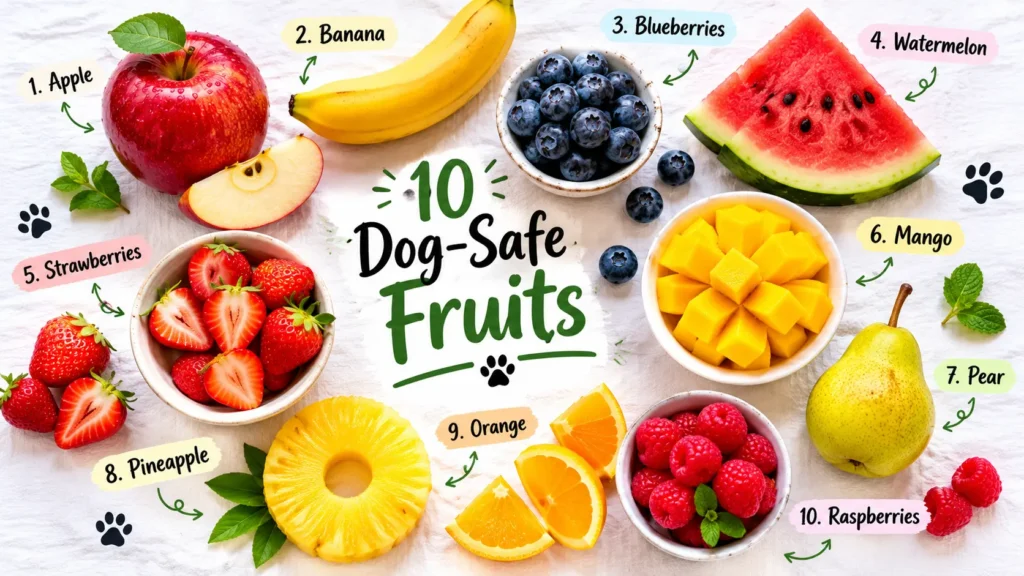
Dogs are primarily carnivores whose foundational nutritional needs are met through animal protein and fat. They do not require fruit to survive or to meet their basic nutritional requirements when eating a complete and balanced diet. However, the right fruits in the right amounts provide genuine supplementary benefits that go beyond what a standard kibble or even a well-designed homemade recipe can fully deliver.
The antioxidants in colorful fruits, particularly the anthocyanins in blueberries and the lycopene in watermelon, neutralize free radicals that contribute to cellular aging, chronic inflammation, and the development of degenerative disease over time. These protective compounds are not present in significant concentrations in most commercial dog foods and are not easily synthesized by the body, making dietary sources meaningfully valuable.
The natural dietary fiber in fruits supports healthy digestion, promotes beneficial gut bacteria that support immune function, and contributes to a feeling of fullness that helps dogs manage their appetite between meals. The water content of high-moisture fruits like watermelon and cucumber provides hydration support that is particularly valuable for dogs that do not drink enough water on their own or that are dealing with the dehydrating effects of summer heat or illness.
The vitamins in various fruits fill micronutrient gaps and support specific physiological functions: vitamin C from strawberries and blueberries supports immune function and collagen synthesis, vitamin A from mango and cantaloupe supports eye health and skin integrity, potassium from banana supports heart and muscle function, and the B vitamins in various fruits support energy metabolism and neurological health.
As natural, whole-food treats, fruits replace commercial treat calories with something genuinely nutritious, low in fat, free from artificial additives, and enjoyed by the vast majority of dogs with genuine enthusiasm. When used within appropriate portion guidelines, the best fruits for dogs represent one of the simplest and most rewarding nutritional upgrades available to any dog owner.
The 10 Best Fruits for Dogs
Blueberries
Blueberries are consistently ranked among the very best fruits for dogs by veterinarians and animal nutritionists, and the reasons are compelling. These small berries are extraordinarily rich in antioxidants, particularly anthocyanins that give them their distinctive deep purple-blue color and that have been extensively studied for their role in reducing oxidative stress, supporting cognitive function, and providing anti-inflammatory protection throughout the body.
For senior dogs whose cells are under increasing oxidative pressure from the natural aging process, regular blueberry consumption provides consistent antioxidant support that may meaningfully slow age-related cellular deterioration. The lutein and zeaxanthin in blueberries specifically support retinal health and visual acuity, making them particularly valuable for aging dogs experiencing early eye changes. Their fiber content supports digestive regularity and their vitamin C and K contributions support immune function and blood health respectively.
Blueberries are also one of the most practical fruit treats available because their small size makes them immediately appropriate for dogs of all sizes without any preparation beyond washing. They can be given fresh as individual treats, scattered across food as a topper, mashed into homemade treat dough, or frozen as simple cooling snacks during warm weather.
How to serve: Fresh, frozen, or thawed. No preparation needed beyond rinsing. Give one at a time to small dogs, or a small handful to larger breeds.
Serving guideline: A small handful, approximately 10 berries for small dogs and up to a quarter cup for large breeds, two to three times per week.
Apples
Apples are one of the most nutritionally well-rounded fruits for dogs, providing vitamin A for eye and skin health, vitamin C for immune support, and dietary fiber for digestive health in a satisfying crunchy package that most dogs enjoy enormously. The natural malic acid in apples contributes to fresher breath, and the fibrous texture of raw apple flesh provides a mild mechanical cleaning action on tooth surfaces that complements regular dental care.
The preparation rule for apples is non-negotiable: always remove the core, stem, and all seeds before giving apple to your dog. Apple seeds contain amygdalin, a compound that releases hydrogen cyanide when metabolized. While a single seed poses minimal acute risk, regular consumption of apple seeds over time accumulates cyanogenic compounds that cause genuine harm. Removing seeds entirely eliminates this concern with no loss of the apple’s nutritional benefits.
Apple skin is safe and nutritious for most dogs and contains a significant concentration of the fiber and phytonutrients that make apples valuable, so there is no need to peel the apple before serving unless your dog has a particularly sensitive digestive system.
How to serve: Core removed, seeds removed, cut into thin slices or small cubes appropriate for your dog’s size. Raw apple provides the most fiber and crunch. Unsweetened plain applesauce with no added sugar or xylitol is an excellent alternative for puppies, senior dogs, or dogs that prefer softer textures.
Serving guideline: One to two thin slices for small dogs, three to four slices for medium dogs, and up to half a small apple for large breeds, two to three times per week.
Watermelon
Watermelon is the ultimate summer fruit for dogs, and its benefits go far beyond refreshment. At over 90 percent water by weight, watermelon is one of the most powerfully hydrating foods available for dogs during warm weather when dehydration risk is highest. It provides vitamins A, B6, and C alongside potassium for heart and muscle health and lycopene, a powerful antioxidant with documented benefits for cardiovascular health and cancer prevention in multiple species.
The rind and seeds must always be removed before giving watermelon to a dog. The rind is fibrous and difficult to digest, potentially causing intestinal blockage or significant digestive upset. The seeds, like apple seeds, contain trace amounts of cyanogenic compounds and can also cause intestinal blockage if consumed in quantity. The pink flesh is entirely safe and nutritious in appropriate amounts.
Watermelon can be served as simple cubes, blended into a smooth puree that can be poured over food or frozen into treats, or used as the base for the watermelon coconut milk frozen pupsicles featured in Article #15 on this site.
How to serve: Remove rind completely and remove all seeds. Cut flesh into cubes appropriate for your dog’s size. Serve fresh or freeze cubes for a cooling treat during hot weather.
Serving guideline: A few cubes for small dogs, a generous handful for medium dogs, and up to a cup for large breeds. Watermelon can be given more freely than higher-sugar fruits due to its very high water and relatively low sugar concentration per serving.
Banana
Banana is one of the gentlest and most easily digestible fruits for dogs, making it a particularly good choice for dogs with sensitive stomachs, puppies, and senior dogs. Its potassium content directly supports healthy heart function, muscle contraction, nerve signaling, and kidney function. The magnesium in banana supports bone development and protein synthesis. Vitamin B6 contributes to brain health and the production of neurotransmitters that regulate mood and behavior. Vitamin C provides immune support and collagen synthesis.
The natural sugar content of banana is higher than many other fruits on this list, which means banana is best given in moderation rather than freely. The ripe sweetness that makes banana so universally appealing to dogs is a product of its natural simple sugars, which provide quick energy but should be portioned carefully for dogs managing their weight or blood sugar levels.
The banana peel is not toxic to dogs but is extremely difficult to digest and should always be removed before serving. Ripe or very ripe bananas are easier to digest and more nutritious than unripe bananas, whose resistant starch content can cause digestive discomfort.
How to serve: Peeled and sliced into rounds appropriate for your dog’s size. Mashed banana blends seamlessly into homemade treat recipes and frozen treat bases. Frozen banana slices make excellent cooling treats on warm days.
Serving guideline: Two to three small slices for small dogs, four to six slices for medium dogs, and half a banana maximum for large breeds, two to three times per week due to natural sugar content.
Strawberries
Strawberries are a vibrant, aromatic, and genuinely nutritious treat for dogs that most dogs accept with immediate enthusiasm. They are rich in vitamin C for immune support, manganese for bone health and energy metabolism, folate for cellular repair and DNA synthesis, and potassium for cardiovascular and muscle health. Strawberries also contain a natural enzyme called malic acid that has been studied for its mild tooth-whitening properties, contributing to oral health alongside their nutritional benefits.
The natural sugar content of strawberries is moderate and manageable for most healthy adult dogs in appropriate portions. Their high water content dilutes the sugar concentration per bite and adds hydration value alongside their vitamin contribution. For small dogs and toy breeds, cutting strawberries into quarters before serving eliminates any choking risk and makes the treat appropriately sized for a small mouth.
How to serve: Remove the stem and leaves. Slice or quarter based on your dog’s size. Serve fresh as treats or mix sliced strawberries into yogurt-based frozen treat recipes.
Serving guideline: One whole strawberry for small dogs, two to three for medium dogs, and up to four to five for large breeds, two to three times per week. More than this amount may cause loose stools in some dogs due to the natural sugar and fiber combination.
Mango
Mango is one of the most nutrient-dense fruits available for dogs, delivering vitamins A, B6, C, and E in a single serving alongside natural fiber and a sweetness that dogs find utterly irresistible. Vitamin E in particular is a fat-soluble antioxidant that is not always present in meaningful concentrations in standard dog diets, and mango provides a delicious and natural source of this important nutrient. The beta-carotene content of mango, which gives the flesh its vibrant orange color, converts to vitamin A in the body and supports eye health, skin integrity, and immune function.
The pit of the mango must always be removed before serving. Mango pits contain small amounts of cyanide compounds and pose a significant choking and intestinal blockage risk if swallowed. The skin, while not toxic, is tough and difficult for dogs to digest and is best removed before serving. The ripe orange flesh is where all the nutritional value and palatability is concentrated.
Mango is higher in natural sugar than most other fruits on this list, making portion control particularly important and making it a special treat rather than a daily addition for dogs managing their weight or blood sugar.
How to serve: Remove the pit and skin completely. Cut flesh into small cubes. Serve fresh or freeze mango cubes for a tropical cooling treat during summer months.
Serving guideline: Two to three small cubes for small dogs, four to six cubes for medium dogs, and up to a quarter cup for large breeds, once or twice per week due to higher natural sugar content.
Pear
Pear is a gentle, mildly sweet fruit that provides vitamin C, vitamin K, copper, and dietary fiber in a soft-textured package that most dogs accept readily. Vitamin K supports healthy blood clotting function and bone metabolism. Copper plays a role in iron absorption, immune function, and the formation of connective tissue. The fiber in pear supports digestive regularity and contributes to a feeling of fullness between meals.
The core and all seeds must be removed before giving pear to a dog, as pear seeds like apple seeds contain amygdalin that releases cyanogenic compounds when metabolized. The skin of ripe pears is safe and nutritious for most dogs. Overripe pears that have become very soft and mushy have a higher fermented sugar content that can cause digestive upset in sensitive dogs, so choose firm, ripe pears for best results.
How to serve: Core and seeds removed. Cut into thin slices or small cubes. Serve fresh as a treat or dice finely to mix into homemade food as a nutritional topper.
Serving guideline: One to two thin slices for small dogs, three to four slices for medium dogs, and up to half a small pear for large breeds, two to three times per week.
Raspberries
Raspberries are a powerhouse of nutrition in a very small package and deserve a place on every list of the best fruits for dogs. They are exceptionally rich in antioxidants including ellagic acid, quercetin, and anthocyanins that together provide broad-spectrum cellular protection and anti-inflammatory support. They provide vitamin C, vitamin K, manganese, B vitamins, and one of the highest fiber contents of any fruit relative to their size, making them outstanding for digestive health and gut microbiome support.
One important note about raspberries: they naturally contain very small amounts of xylitol, the artificial sweetener that is highly toxic to dogs. The amount of naturally occurring xylitol in raspberries is extremely low and is not considered dangerous in normal treat-sized portions. However, dogs should not be given extremely large amounts of raspberries, and dogs with very small body weights should receive correspondingly smaller portions. For average healthy adult dogs of moderate size, a small handful of raspberries several times per week is entirely safe and genuinely beneficial.
How to serve: Fresh or frozen. No preparation needed beyond rinsing. Give whole to medium and large dogs. Halve or mash for small dogs and puppies.
Serving guideline: Three to five raspberries for small dogs, a small handful for medium dogs, and up to a quarter cup for large breeds, two to three times per week.
Cantaloupe
Cantaloupe is an outstanding hydrating fruit for dogs with a nutritional profile that complements its refreshing flavor beautifully. It is rich in beta-carotene that converts to vitamin A for eye and immune health, vitamin C for immune support, B vitamins for energy metabolism, potassium for cardiovascular health, and fiber for digestive support. Its very high water content makes it an excellent hydration supplement during warm weather alongside or in place of watermelon.
The rind of cantaloupe is tough, difficult to digest, and should always be removed before serving. The seeds are safe in small amounts but are best removed to prevent any potential digestive discomfort. The orange flesh is where all the nutrition is concentrated and is entirely safe and beneficial for dogs.
How to serve: Remove rind and seeds completely. Cut flesh into appropriately sized cubes. Serve fresh or freeze for a cooling summer treat.
Serving guideline: Two to three small cubes for small dogs, a small handful for medium dogs, and up to half a cup for large breeds. Cantaloupe is moderate in natural sugar so portioning appropriately prevents unnecessary caloric addition.
Pineapple
Pineapple is a tropical fruit packed with an impressive range of nutrients including vitamin C, vitamin B6, thiamine, riboflavin, folate, manganese, copper, and potassium. It also contains bromelain, a natural enzyme with documented anti-inflammatory properties that has been studied for its role in reducing swelling, supporting immune function, and improving protein digestion. For dogs with mild digestive difficulties, the bromelain in pineapple may provide gentle digestive support alongside the fruit’s other nutritional contributions.
Raw pineapple contains higher levels of bromelain than canned pineapple, making fresh or frozen raw pineapple the nutritionally superior choice. Canned pineapple in syrup must never be given to dogs as the added sugar content is entirely inappropriate. Only plain raw pineapple with no additives is safe and appropriate.
The outer skin and the fibrous core of pineapple are both difficult to digest and should be removed. Only the soft, ripe inner flesh is appropriate for dogs.
How to serve: Remove the outer skin, fibrous core, and tough crown completely. Cut the soft flesh into small cubes appropriate for your dog’s size. Serve fresh or frozen.
Serving guideline: One to two small cubes for small dogs, three to four cubes for medium dogs, and up to a small handful for large breeds, once or twice per week due to natural sugar content.
Fruits to Never Give Your Dog
Understanding which fruits dogs cannot eat is equally important as knowing which ones are beneficial. Several fruits that are perfectly safe and even healthy for humans are genuinely toxic to dogs and must never be given under any circumstances.
Grapes and raisins are the most critically important fruits to exclude from a dog’s diet entirely. Even small amounts of grapes or raisins cause acute kidney failure in dogs through a mechanism that researchers have identified as tartaric acid toxicity. There is no established safe threshold for grapes or raisins in dogs, meaning no amount is considered safe. This prohibition extends to all forms of grapes and raisins including fresh grapes, dried raisins, grape juice, wine, and any baked goods or products containing raisins. The symptoms of grape and raisin toxicity including vomiting, lethargy, abdominal pain, and reduced urination develop within 24 to 72 hours of consumption. If your dog consumes any amount of grapes or raisins, treat it as an immediate veterinary emergency.
Cherries, with the exception of the flesh of ripe Bing cherries in very small amounts, are best avoided entirely for dogs. The pit, stem, and leaves of cherries contain amygdalin that converts to hydrogen cyanide when metabolized, and the pit poses a significant choking and intestinal blockage risk. The flesh of ripe cherries contains natural sugars and mild nutrients but offers no benefit significant enough to justify the risk of managing cherry consumption safely when so many safer fruit alternatives are available.
Avocado contains persin, a fungicidal toxin found in the skin, pit, and flesh of avocados at varying concentrations. While the exact toxicity threshold in dogs is debated and ripe Hass avocado flesh contains relatively lower persin concentrations than other parts of the plant, the overall risk profile of avocado makes it best avoided entirely in favor of the many genuinely safe and nutritious fruits available for dogs.
Unripe tomatoes and tomato plant parts including the leaves, stem, and roots contain solanine and tomatine at levels that are toxic to dogs. Ripe red tomato flesh in very small amounts is considered low risk but provides no meaningful benefit and the toxicity of unripe tomatoes and tomato plant material makes the entire tomato family best treated with significant caution.
Citrus fruits including lemons, limes, and grapefruit contain high concentrations of citric acid and essential oils that cause significant digestive upset in dogs ranging from mild nausea and drooling to vomiting and diarrhea. While a small amount of orange flesh is not acutely toxic, citrus fruits offer no benefits for dogs that are not more safely and palatably obtained from the other fruits on this list, and their digestive disruption potential makes them a poor choice for any dog regardless of size.
How Much Fruit Is Safe Per Day
The ten percent rule governs fruit portions just as it governs all supplementary food additions to a dog’s diet. Fruit, treats, and all additions to the main diet combined should make up no more than ten percent of your dog’s total daily caloric intake. Because most dog-safe fruits are relatively low in calories due to their high water content, this translates to a more generous actual physical volume than the ten percent figure might initially suggest.
Practical daily fruit amount guidelines for healthy adult dogs:
A dog weighing under 15 pounds should receive no more than one to two tablespoons of chopped fruit per day across all servings. A dog weighing 15 to 35 pounds can receive two to four tablespoons of fruit per day. A dog weighing 35 to 65 pounds can receive four to six tablespoons per day. A dog weighing over 65 pounds can receive up to half a cup of fruit per day combined across all servings.
These are total daily amounts across all fruit given throughout the day, not per serving amounts. Dogs with diabetes, weight management goals, or kidney disease should have fruit portions reviewed specifically with their veterinarian, as the natural sugar and potassium content of certain fruits requires individual assessment in dogs managing these conditions.
How to Prepare Fruit Safely for Your Dog
Safe fruit preparation for dogs follows a simple set of rules that protect against the specific risks associated with different fruits while maximizing the nutritional benefit your dog receives from each serving.
Always remove seeds, pits, cores, and stems from every fruit before serving. These parts of fruits contain either toxic compounds, are indigestible and potentially obstructive, or pose choking risks regardless of the fruit’s overall safety profile for dogs.
Always remove rinds and tough outer skins from fruits like watermelon, cantaloupe, mango, and pineapple. These outer layers are difficult to digest and can cause intestinal distress or blockage when consumed in significant amounts.
Cut all fruit into appropriately sized pieces for your dog’s breed and body size. A piece of fruit that is safe for a Labrador Retriever to swallow whole may be a choking hazard for a Chihuahua. As a general rule, fruit pieces should be no larger than the size of a blueberry for toy and small breeds, and no larger than the size of a grape for medium and large breeds.
Always serve fruit plain, without any added sugar, syrup, seasoning, salt, or flavoring. Canned fruits in syrup, dried fruits with added sugar, and fruit-flavored products are never appropriate for dogs as their high sugar concentration and often-present artificial additives are inappropriate for canine consumption. Fresh, frozen without added sugar, or plain unsweetened puree are the only appropriate forms of fruit for dogs.
Never mix fruit with xylitol-containing products. If you are making a fruit and yogurt combination for your dog, always confirm the yogurt label shows no xylitol before using it alongside any fruit ingredient.
Introducing Fruit to a Dog for the First Time
Introduce one new fruit at a time and begin with a very small amount, approximately one quarter of the suggested serving size, to allow your dog’s digestive system to adjust and to observe any reaction to the new ingredient.
After giving a new fruit for the first time, monitor your dog for the following 24 hours for any signs of digestive upset including loose stools, vomiting, increased gas, or reduced appetite. If your dog tolerates the fruit without any reaction, gradually increase to the full serving size over the following two to three days.
If your dog shows any adverse reaction to a particular fruit, remove it from the rotation and wait one week before trying again with a smaller amount. Some dogs have individual sensitivities to specific fruit compounds that do not reflect the fruit’s general safety for dogs and that resolve at lower portion sizes.
For dogs that show no initial interest in fruit, try mashing or pureeing the fruit and mixing a tiny amount through their regular food. The aroma of fruit mixed through their familiar food often sparks interest that a piece of raw fruit offered as a standalone treat does not.
Creative Ways to Use Fruit in Your Dog’s Daily Routine
The recipes on this site already incorporate many of the best fruits for dogs in various contexts, and the following additional ideas expand those uses further into your dog’s daily nutrition and enrichment routine.
Fruit toppers transform any standard meal into something more aromatic and appealing. A tablespoon of mashed blueberries or diced strawberries stirred through a dog’s regular food at mealtime adds antioxidants, vitamins, and a fresh aroma that particularly benefits dogs with reduced appetite due to age, illness, or dietary transition.
Fruit-based training treats made from freeze-dried blueberries or dehydrated apple slices provide high-value training rewards with dramatically lower caloric content than most commercial training treats. Their concentrated flavor and aroma maintain training motivation while contributing meaningful antioxidants and vitamins to each reward.
Seasonal fruit rotation provides variety, freshness, and year-round nutritional diversity. Blueberries, strawberries, and watermelon in summer. Apples and pears in autumn. Banana and mango as year-round tropical additions. Cantaloupe and raspberries in early summer. This seasonal approach keeps your dog’s treat routine interesting and ensures they benefit from the different antioxidant and micronutrient profiles of fruits at their seasonal peak.
Fruit-enriched bone broth ice cubes combine the joint and digestive benefits of the bone broth recipe featured in Article #5 of this site with the antioxidant benefits of blueberries or raspberries by adding a small handful of berries to the broth before freezing into ice cubes. The result is a nutrient-dense, antioxidant-enriched, naturally flavored frozen treat that serves hydration, joint support, digestive health, and cellular protection simultaneously in a single enjoyable lick.
Final Thoughts
The best fruits for dogs are a genuinely meaningful addition to any dog’s nutrition routine when chosen carefully, prepared properly, and portioned appropriately. Blueberries for antioxidant and cognitive support, apple for fiber and vitamins, watermelon for summer hydration, banana for potassium and digestive gentleness, strawberries for vitamin C and oral health, mango for vitamin E and beta-carotene, pear for vitamin K and copper, raspberries for anti-inflammatory ellagic acid, cantaloupe for beta-carotene and hydration, and pineapple for bromelain and B vitamins.
Each of these fruits brings something specific and valuable to your dog’s health in a form that is natural, affordable, widely available, and enthusiastically received at treat time. Start with blueberries and apples, introduce one new fruit per week, follow the preparation and portioning guidelines in this article, and build a rotating fruit treat routine that keeps your dog’s snack time nutritious, varied, and genuinely joyful every single day.