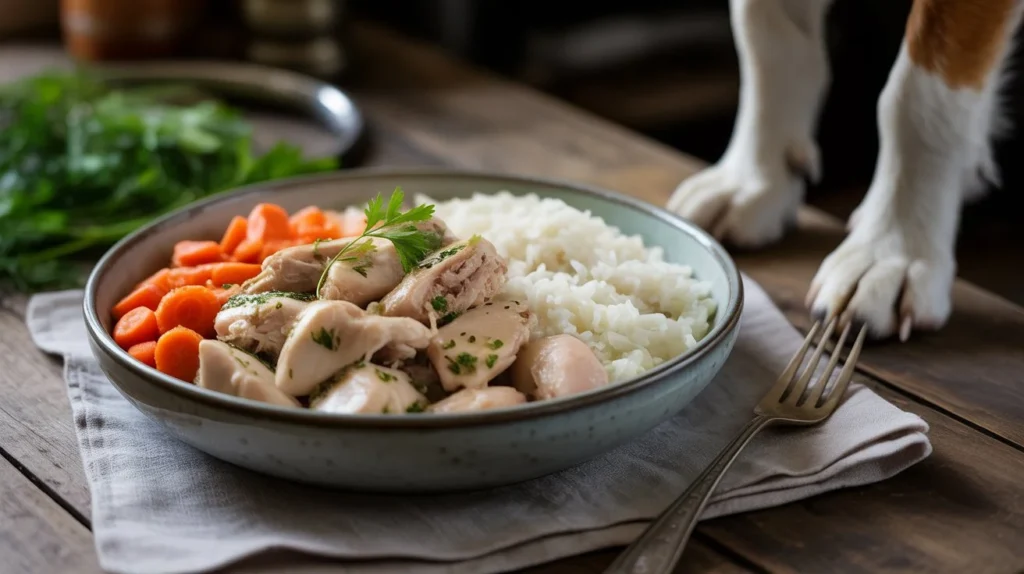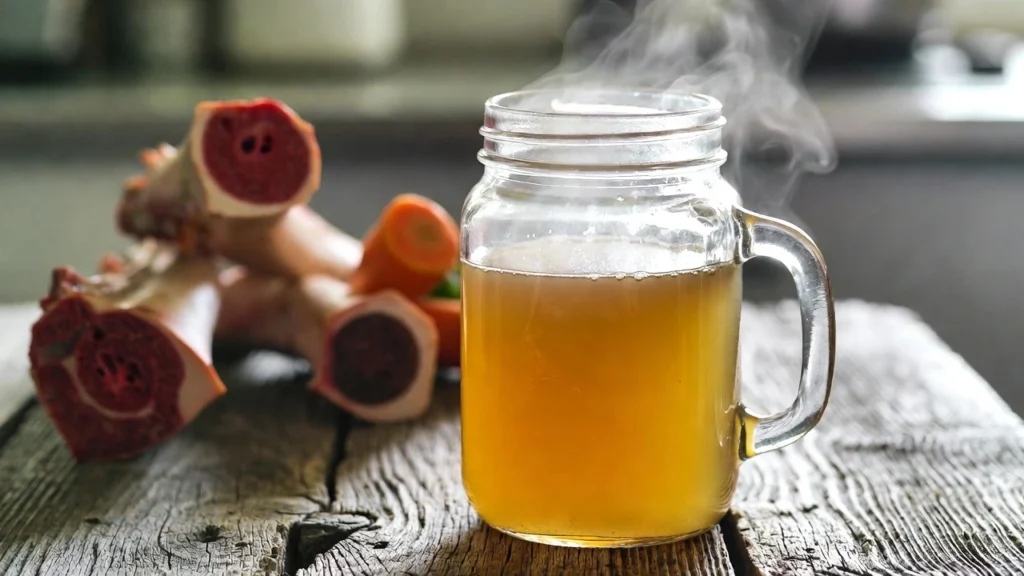

This bone broth bowl recipe for dogs has been going viral for a good reason — it’s simple, budget-friendly, and packed with real nutritional benefits. This isn’t just a pretty food trend — it’s one of the simplest, most nutrient-dense meals you can make for your dog at home, and it takes less effort than you’d think.
In this guide, we’ll walk through exactly why this bowl works, what it does for your dog’s health, and how to make it step by step — safely and correctly.
Why Bone Broth Is a Big Deal for Dogs
Bone broth isn’t just a garnish. When made properly, it’s packed with:
- Collagen and gelatin — support joint health and mobility, especially helpful for senior dogs or active breeds
- Glucosamine and chondroitin (naturally released from simmered bones) — help cushion joints over time
- Amino acids like glycine and proline — support gut lining repair and healthy digestion
- Minerals — calcium, magnesium, and phosphorus leached from the bones during slow cooking
- Hydration — a great way to encourage dogs who don’t drink enough water, especially picky eaters or seniors
Veterinary sources back this up too. According to VCA Animal Hospitals, bone broth can be a helpful addition to a dog’s diet, offering hydration and nutrients that support joint and digestive health, especially in senior dogs or those recovering from illness.
Paired with sweet potato, which brings fiber, beta-carotene, and slow-release energy, this bowl becomes a genuinely balanced, gut-friendly meal topper — not just a treat.
Important Safety Notes Before You Start
A few non-negotiables to keep this recipe safe:
- No onion or garlic. Both are toxic to dogs, even in small amounts, and are common in human bone broth recipes. Skip them entirely.
- No added salt. Dogs process sodium very differently than humans — keep this broth unsalted.
- Always remove cooked bones before serving. Cooked bones can splinter and pose a choking or internal injury risk. The bones are for flavor and nutrients during cooking only — never let your dog chew on them afterward.
- Introduce gradually. If your dog hasn’t had bone broth before, start with a small amount to make sure it agrees with their stomach.
- Check with your vet if your dog has kidney issues, pancreatitis, or is on a specific prescription diet, since broth and organ meats can affect certain conditions.
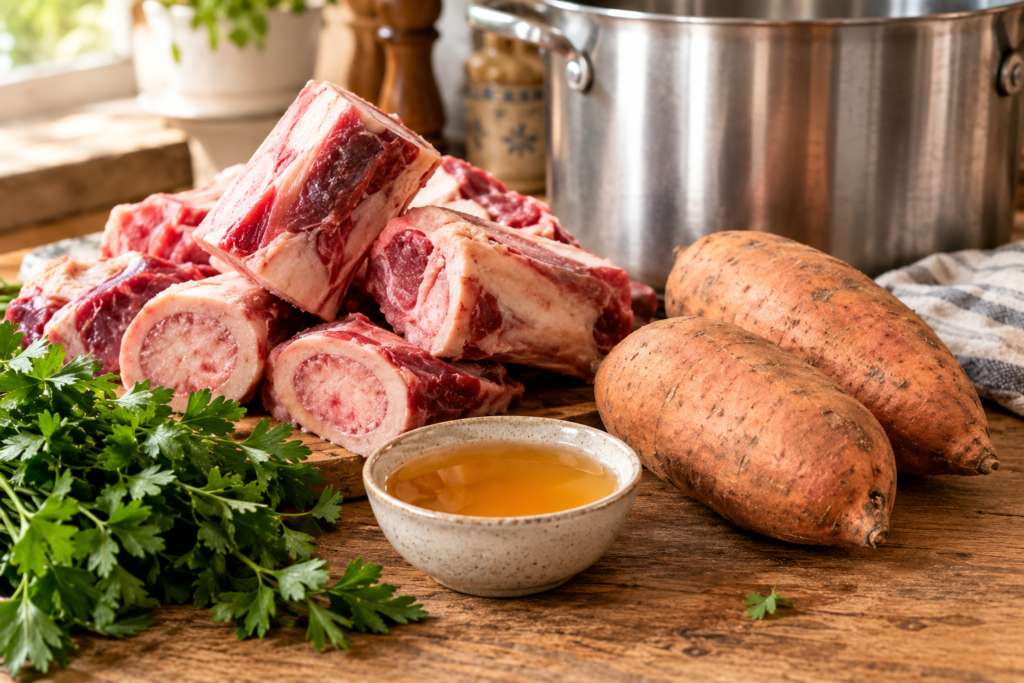
Beef & Sweet Potato Bone Broth Bowl Recipe for Dogs
Ingredients
- 2–3 lbs beef marrow bones or knuckle bones (ask your butcher for “soup bones”)
- 2 medium sweet potatoes, peeled and diced
- 1 tablespoon apple cider vinegar (helps draw minerals out of the bones)
- 8–10 cups filtered water
- Optional: a handful of chopped carrots or a few sprigs of fresh parsley (safe for dogs, adds nutrients and freshens breath)
Equipment
- Large stockpot or slow cooker
- Fine mesh strainer
- Storage containers or ice cube trays for freezing
Instructions
Step 1 — Prep the bones Rinse the beef bones under cold water to remove any bone dust or debris. If you want a richer flavor, roast the bones in the oven at 400°F (200°C) for 20–25 minutes before simmering — this step is optional but adds depth.
Step 2 — Start the broth Place the bones in your stockpot or slow cooker and cover with filtered water, leaving about an inch of space at the top. Add the apple cider vinegar and let the mixture sit for 20–30 minutes before turning on the heat — this helps release more minerals from the bones.
Step 3 — Simmer low and slow
- Stovetop: bring to a boil, then reduce to the lowest simmer, cover partially, and cook for 12–24 hours.
- Slow cooker: set to low and cook for 18–24 hours.
Skim off any foam or fat that rises to the top during the first hour of cooking. The longer it simmers, the more collagen and minerals are extracted — this is what gives the broth its signature gel-like texture once cooled.
Step 4 — Add the sweet potato About 30–40 minutes before the broth is done, add your diced sweet potato (and carrots, if using) directly into the pot so they cook through and soften in the broth.
Step 5 — Strain and cool Once done, remove the bones and strain the broth through a fine mesh strainer to catch any small bone fragments. Set the cooked sweet potato aside separately — you’ll layer it back in when serving.
Let the broth cool completely at room temperature before refrigerating. It should turn into a soft, jelly-like consistency once chilled — that’s the collagen doing its job.
Step 6 — Assemble the bowl To serve, scoop a portion of the cooled broth (it will be gel-like from the fridge) into your dog’s bowl, top with a few cubes of the cooked sweet potato, and add shredded cooked beef if you want to turn it into a full meal rather than a topper.
Storage
- Refrigerator: up to 5 days in an airtight container
- Freezer: up to 3 months — ice cube trays are perfect for portioning single servings
- Always thaw in the fridge, not on the counter, and never microwave in plastic containers
Serving Size Guidelines
This bowl works two ways:
- As a food topper — a few spoonfuls of broth and sweet potato mixed into your dog’s regular kibble or wet food
- As a full meal — combined with a lean protein source, under vet guidance, for dogs who need extra hydration or GI support
As a general starting point, small dogs can have 2–3 tablespoons of broth per serving, medium dogs 1/4 cup, and large dogs up to 1/2 cup — always adjust based on your vet’s recommendation and your dog’s size, activity level, and any health conditions.
Why This Recipe Went Viral
Beyond how good it looks in a bowl, this recipe checks every box dog owners are searching for right now: it’s homemade, it’s simple, it’s budget-friendly compared to store-bought bone broth, and it actually delivers visible benefits — shinier coat, better digestion, and dogs who genuinely get excited at mealtime. That combination of simple to make and visibly effective is exactly what makes content like this spread.
Final Thoughts
The Beef & Sweet Potato Bone Broth Bowl isn’t a fad — it’s a genuinely useful addition to your dog’s routine when made safely, without onion, garlic, or added salt. Batch-cook it once, freeze it in portions, and you’ve got weeks of an easy, nutrient-packed boost ready to go anytime your dog needs a little extra care in their bowl.
Always consult your veterinarian before making significant changes to your dog’s diet, especially if they have existing health conditions.
Looking for more homemade recipes? Check out our full collection of Homemade Dog Meals for more vet-informed ideas.