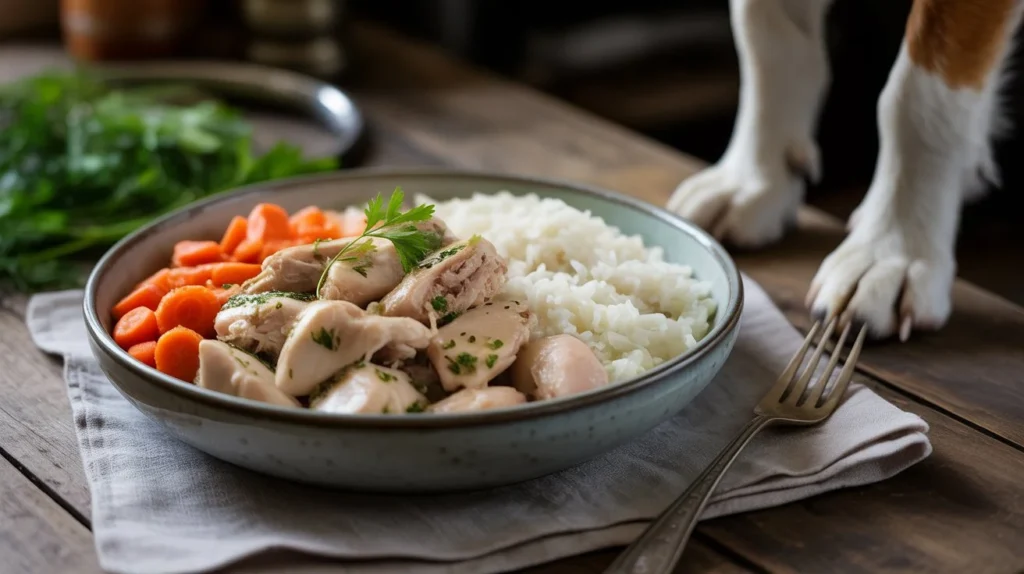
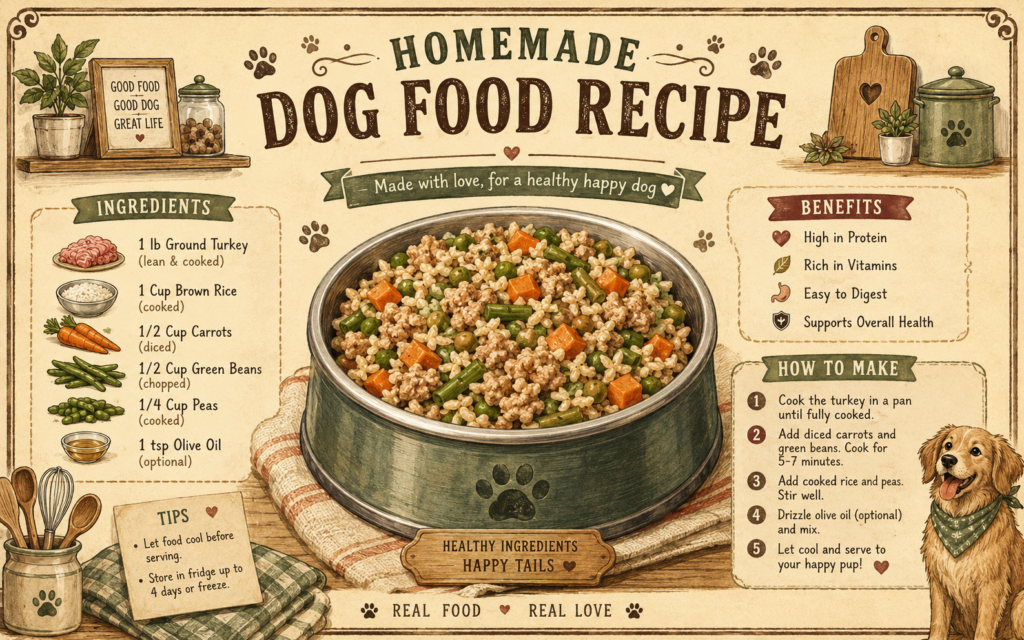
A good homemade dog food recipe can completely change your dog’s health, energy, and happiness — and it’s a lot easier to make than most people think. Whether your dog has food allergies, you’re worried about the quality of commercial kibble, or you simply want to know exactly what’s going into your dog’s bowl, learning to cook for your dog at home is one of the best decisions you can make as a pet owner.
In this guide, you’ll get a complete, easy-to-follow homemade dog food recipe, along with everything you need to know about ingredients, ratios, portion sizes, storage, and the mistakes to avoid so your dog gets a truly balanced meal.
Why Switch to a Homemade Dog Food Recipe?
More and more dog owners are turning to a homemade dog food recipe instead of relying only on store-bought kibble. Here’s why:
- Full ingredient control. You know exactly what’s in every bowl — no mystery meat, fillers, or artificial preservatives.
- Better for dogs with allergies. A homemade dog food recipe lets you avoid specific proteins or grains that trigger reactions.
- Freshness. Homemade meals are made in small batches, so your dog is eating fresh food, not something that’s been sitting in a bag for months.
- Customizable for your dog’s needs. Puppies, seniors, and dogs with health conditions all benefit from a recipe tailored to them.
That said, not every homemade dog food recipe is nutritionally complete on its own. The recipe below is designed to be balanced, but if you plan to feed it long-term, it’s worth reviewing the ratios with your veterinarian or a canine nutritionist.
The Best Homemade Dog Food Recipe for Beginners
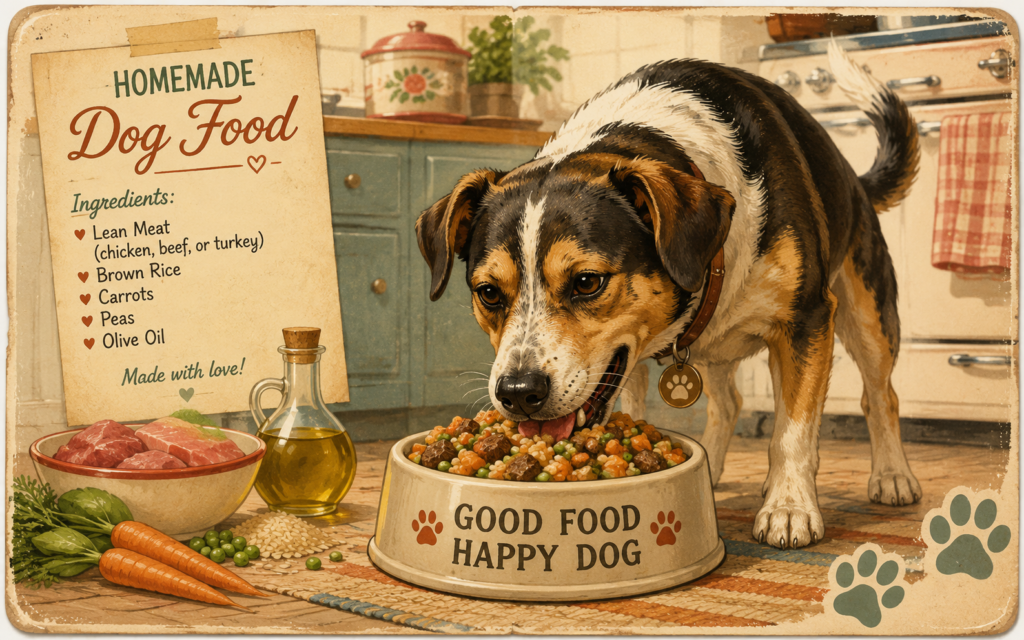
This homemade dog food recipe is simple, affordable, and uses ingredients you can find at any grocery store. It makes roughly 5–6 days of food for a medium-sized dog (around 40 lbs), and you can easily scale it up or down.
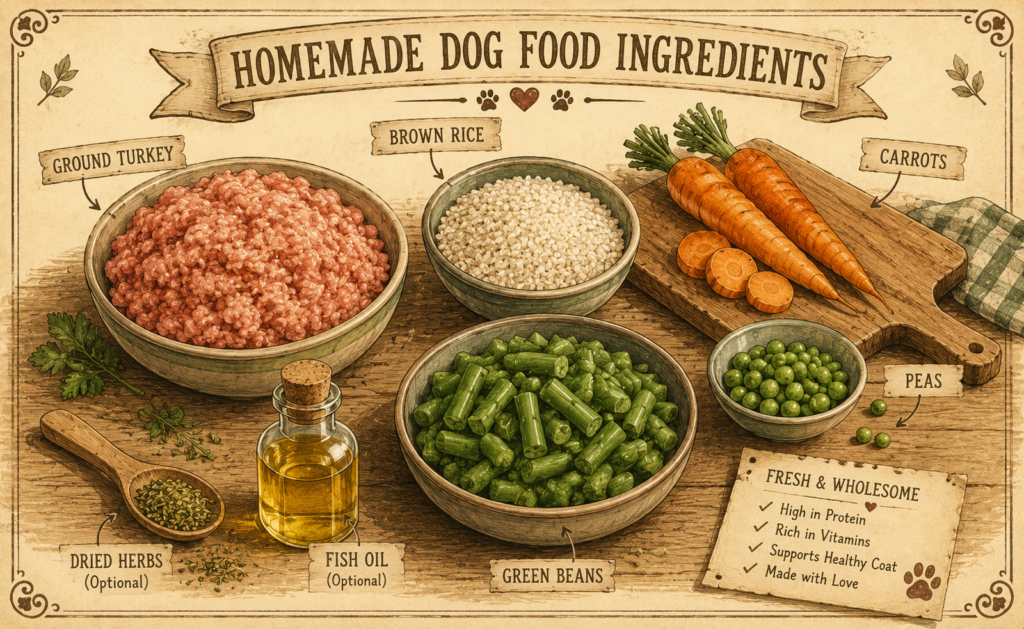
Ingredients
- 2 lbs ground turkey or chicken (lean)
- 2 cups brown rice or white rice
- 1 cup carrots, diced
- 1 cup green beans, chopped
- 1/2 cup peas
- 2 tablespoons fish oil or olive oil
- 1 teaspoon ground eggshell (calcium source) or a vet-approved calcium supplement
- 4 cups water or low-sodium chicken broth (no onion or garlic)
Step-by-Step Instructions
- Cook the rice. Combine the rice with water or broth and cook according to package instructions until soft.
- Cook the protein. In a separate pan, brown the ground turkey or chicken over medium heat until fully cooked, breaking it into small crumbles.
- Steam the vegetables. Lightly steam the carrots, green beans, and peas until soft enough to mash slightly, making them easier to digest.
- Combine everything. Mix the cooked rice, protein, and vegetables together in a large bowl.
- Add the extras. Stir in the oil and calcium source, making sure everything is evenly distributed throughout the mixture.
- Cool completely. Let the homemade dog food recipe cool to room temperature before serving or storing.
How to Make Sure Your Homemade Dog Food Recipe Is Balanced
A truly balanced homemade dog food recipe needs more than just protein and carbs. Here’s what to keep in mind:
Protein
Protein should make up roughly 40–50% of the meal. Lean meats like turkey, chicken, or beef work well, and you can rotate proteins weekly for variety.
Carbohydrates
Rice, sweet potatoes, or oats provide energy and are gentle on digestion. They typically make up around 25–30% of the recipe.
Vegetables
Vegetables add fiber, vitamins, and minerals. Safe options include carrots, green beans, peas, and pumpkin. Avoid onions, garlic, grapes, and mushrooms, which are toxic to dogs.
Fats and Supplements
Healthy fats like fish oil support skin and coat health, while a calcium source (like ground eggshell) is essential since homemade meals lack the added minerals found in commercial food.
Portion Guide by Dog Size
| Dog Size | Daily Amount |
|---|---|
| Small (under 20 lbs) | 3/4 to 1 cup |
| Medium (20–50 lbs) | 1.5 to 2.5 cups |
| Large (50+ lbs) | 3 to 4 cups |
Split the daily portion into two meals, and adjust based on your dog’s activity level, age, and weight goals.
Homemade Dog Food Recipe Variations
Once you’re comfortable with the base recipe, you can adjust it for different needs:
- For sensitive stomachs: Use plain white rice and remove the vegetables temporarily until symptoms improve.
- For weight management: Reduce the rice slightly and increase the vegetable portion for a lower-calorie meal.
- For senior dogs: Add pumpkin puree for digestion and consider a joint supplement like glucosamine.
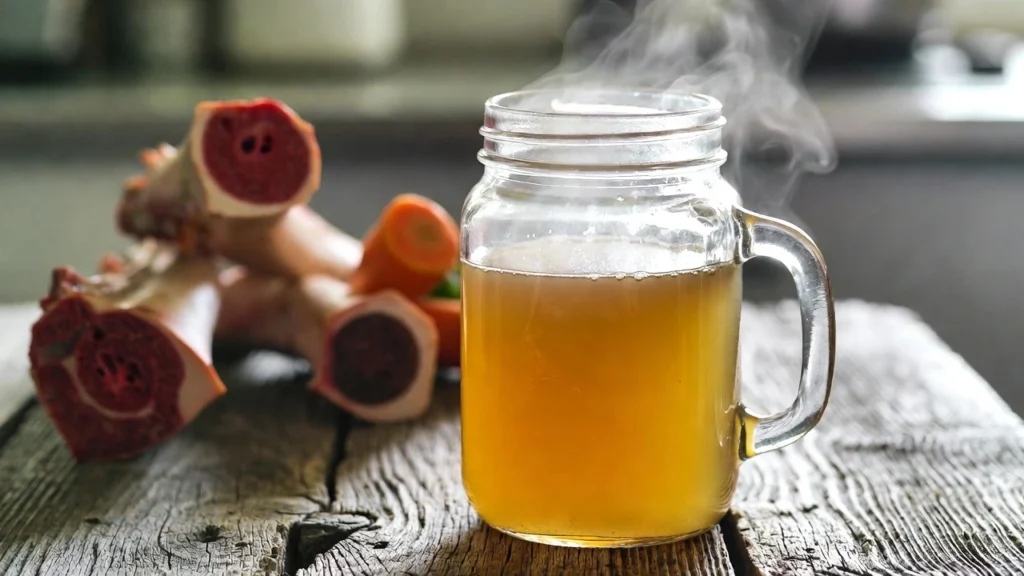
- For picky eaters: A small amount of low-sodium bone broth mixed in often makes the meal more appealing.
Storing Your Homemade Dog Food Recipe
- Refrigerator: Store in an airtight container for up to 4 days.
- Freezer: Portion into daily or weekly containers and freeze for up to 2 months.
- Thawing: Thaw overnight in the fridge and never microwave directly in plastic containers.
Meal-prepping a homemade dog food recipe once a week saves time and makes the transition from kibble much easier to stick with.
Common Mistakes to Avoid
- Skipping the calcium source. Meat and vegetables alone don’t provide enough calcium, which can lead to deficiencies over time.
- Adding toxic ingredients. Onion, garlic, grapes, raisins, and xylitol (found in some peanut butters) are all dangerous for dogs.
- Feeding an unbalanced recipe long-term. An occasional homemade meal is fine without much planning, but a daily homemade dog food recipe should be reviewed by a vet or nutritionist.
- Changing food too quickly. Transition gradually over 5–7 days, mixing the new food with the old to avoid stomach upset.
Frequently Asked Questions
Is a homemade dog food recipe healthier than kibble? It can be, since you control the quality and freshness of every ingredient. However, it needs to be properly balanced to match the nutritional standards of a good commercial diet.
How often should I feed my dog a homemade meal? You can feed it daily if the recipe is nutritionally balanced, or use it a few times a week alongside your dog’s regular food.
Can puppies eat a homemade dog food recipe? Puppies have different nutritional needs than adult dogs, especially for calcium and phosphorus ratios. Always consult your vet before feeding puppies a homemade diet.
What’s the easiest homemade dog food recipe for beginners? The turkey, rice, and vegetable recipe in this guide is one of the simplest starting points, since it uses common ingredients and requires no special equipment.
Do I need supplements with homemade dog food? In most cases, yes. Calcium and certain vitamins are missing from a basic meat-and-vegetable recipe, so a supplement or added calcium source is recommended.
Final Thoughts
A well-made homemade dog food recipe is one of the most rewarding things you can do for your dog’s health. Start with the simple recipe above, adjust it based on your dog’s needs, and don’t hesitate to check in with your vet to make sure the nutrition is fully balanced. Once you find a homemade dog food recipe that works, your dog’s coat, energy, and digestion will thank you.
Have you tried making your own dog food at home? Tell us which recipe worked best for your dog in the comments, and follow us for more homemade dog meal ideas!