
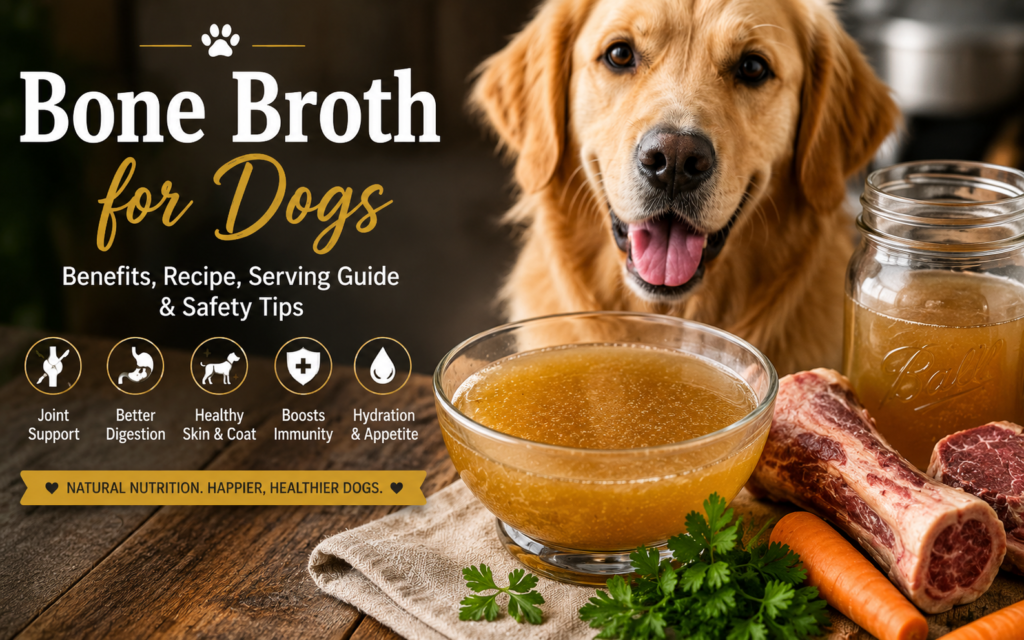
Bone broth for dogs has become one of the most popular natural supplements among pet owners in the United States—and for good reason. Packed with collagen, amino acids, minerals, and essential nutrients, bone broth can support your dog’s joints, digestion, immune system, skin, and overall health.
Whether you have a playful puppy, an active adult dog, or a senior companion slowing down with age, adding bone broth to your dog’s diet can provide a simple yet powerful nutritional boost.
Unlike many commercial supplements filled with artificial ingredients, homemade bone broth is made from wholesome ingredients that many dog owners already have in their kitchen. It is affordable, easy to prepare, and loved by even the pickiest eaters.
In this guide, you’ll learn everything you need to know about bone broth for dogs, including its health benefits, how to make it at home, how much to serve, potential risks, and answers to the most common questions dog owners ask.
💡 Short on Time? (Our Vet-Approved Quick Alternative)
If you don’t have 12–24 hours to simmer bones at home, we recommend Native Pet Organic Bone Broth Powder. It’s human-grade, dog-formulated, and 100% free of onions, garlic, and added sodium. Just add warm water and pour!
Table of Contents
- What Is Bone Broth for Dogs?
- Is Bone Broth Good for Dogs?
- Top Health Benefits of Bone Broth for Dogs
- Nutritional Value
- Which Dogs Benefit the Most?
- Homemade Bone Broth Recipe
- How Much Bone Broth Should Dogs Drink?
- Safety Tips
- Frequently Asked Questions
- Final Thoughts
What Is Bone Broth for Dogs?
Bone broth is a nutrient-rich liquid made by slowly simmering animal bones and connective tissues for an extended period, usually between 12 and 24 hours. During this process, valuable nutrients such as collagen, gelatin, glucosamine, chondroitin, amino acids, and minerals are released into the broth.
Unlike regular meat broth, bone broth is specifically prepared to extract nutrients from the bones themselves. These nutrients are believed to support many aspects of canine health.
Dog owners commonly make bone broth using:
- Beef bones
- Chicken carcasses
- Turkey bones
- Lamb bones
- Duck bones
For dogs, the broth should always be plain. Avoid adding onions, garlic, excessive salt, or spicy seasonings, as these ingredients can be harmful to dogs.
A properly prepared bone broth should contain only dog-safe ingredients and should never include cooked bones, which can splinter and become dangerous if eaten.
Is Bone Broth Good for Dogs?
Yes. Bone broth can be an excellent addition to a balanced diet when prepared correctly and served in moderation.
Veterinarians often recommend bone broth for dogs recovering from illness, surgery, digestive upset, or dehydration because it is easy to digest and highly palatable.
Many owners also use bone broth as a daily food topper to encourage picky eaters or to add moisture to dry kibble.
While bone broth is not a complete meal or a cure for medical conditions, it can provide valuable nutrients that support overall wellness.
Think of it as a nutritious supplement rather than a replacement for a balanced dog food.
Top 10 Benefits of Bone Broth for Dogs
1. Supports Healthy Joints
One of the biggest reasons dog owners choose bone broth is its natural joint-supporting compounds.
Bone broth naturally contains:
- Collagen
- Gelatin
- Glucosamine
- Chondroitin
These nutrients help maintain healthy cartilage, support mobility, and may reduce everyday joint discomfort, particularly in senior dogs and large breeds.
Dogs with arthritis or age-related stiffness often enjoy improved comfort when bone broth is included as part of an overall wellness plan.
2. Improves Digestive Health
Bone broth is gentle on the stomach.
The gelatin found in bone broth helps support the digestive tract by promoting healthy gut function and assisting with nutrient absorption.
Many owners find that bone broth is helpful for dogs recovering from diarrhea, upset stomachs, or temporary digestive issues.
Its soothing texture also makes it easier for dogs with reduced appetites to consume fluids and nutrients.
3. Encourages Hydration
Some dogs simply do not drink enough water.
Adding bone broth to meals increases moisture intake while making food much more appealing.
This can be especially beneficial during:
- Hot summer months
- Recovery from illness
- Travel
- After exercise
- For senior dogs
Better hydration supports kidney health, digestion, and overall bodily function.
4. Supports Healthy Skin and a Shiny Coat
Collagen is one of the building blocks of healthy skin.
As collagen breaks down into gelatin during cooking, it provides amino acids that help support:
- Skin elasticity
- Healthy fur growth
- Reduced dry skin
- Coat shine
Many pet owners notice healthier-looking coats after consistently adding bone broth to their dog’s meals.
5. Boosts Appetite
If your dog has become a picky eater, bone broth can be a game changer.
Its rich aroma makes dry kibble much more attractive.
Many veterinarians recommend warming bone broth slightly and pouring it over food to encourage dogs recovering from illness or surgery to eat.
6. Supports Immune Health
Bone broth contains amino acids such as glycine, proline, and glutamine.
These nutrients play important roles in maintaining healthy tissues and supporting normal immune function.
Although bone broth should never replace veterinary treatment, it can complement a healthy diet and contribute to overall wellness.
7. Helps Senior Dogs Stay Comfortable
Older dogs naturally lose muscle mass and joint flexibility.
Bone broth provides easily digestible nutrients that support aging bodies without placing extra stress on digestion.
Many senior dogs enjoy the softer texture created when bone broth is mixed with dry food.
8. Excellent During Recovery
After surgery or illness, many dogs have reduced appetites.
Bone broth offers hydration, nutrients, and a tempting flavor that encourages eating while being gentle on the stomach.
Always follow your veterinarian’s recommendations during recovery.
9. Natural Source of Protein
Although bone broth is not extremely high in protein, it still contains valuable amino acids that contribute to tissue repair and maintenance.
These amino acids help support healthy muscles and connective tissues.
10. Makes Everyday Meals More Exciting
Sometimes the simplest benefit is the most practical.
Many dogs simply love the taste.
Adding a small amount of warm bone broth transforms ordinary kibble into a meal that most dogs eagerly enjoy, making feeding time easier for owners.
Nutritional Value of Bone Broth for Dogs
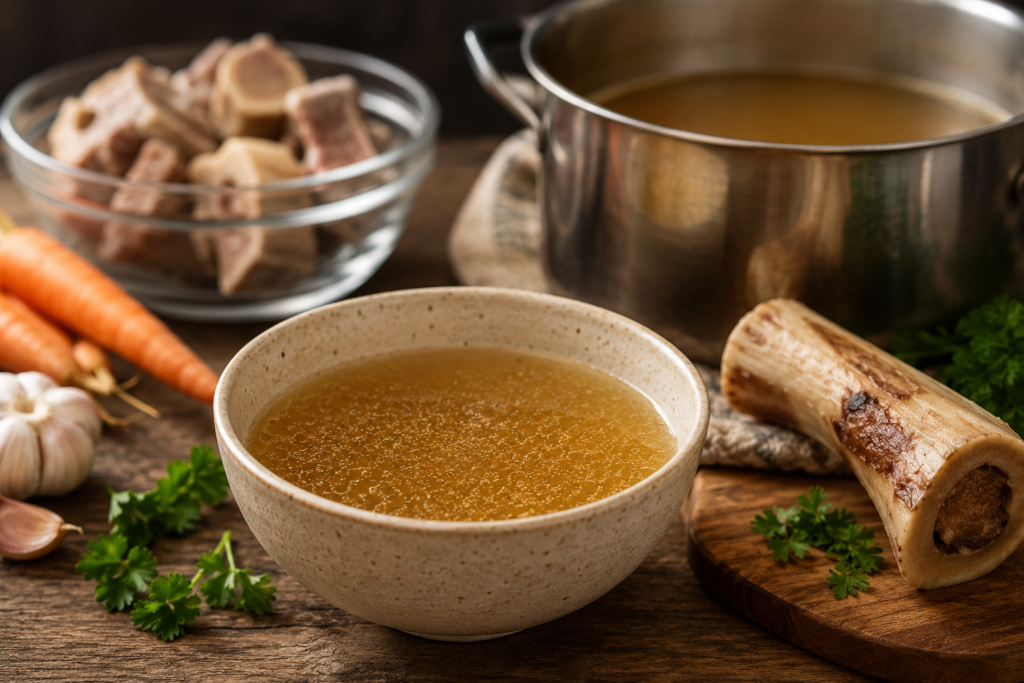
Bone broth is valued less for calories and more for the nutrients released during the slow cooking process. While the exact nutritional profile varies depending on the bones used and cooking time, homemade bone broth commonly contains:
- Collagen
- Gelatin
- Glucosamine
- Chondroitin
- Glycine
- Proline
- Glutamine
- Calcium (in small amounts)
- Magnesium
- Phosphorus
- Potassium
- Trace minerals
These nutrients work together to support healthy joints, connective tissues, digestion, and hydration.
Because homemade recipes differ, bone broth should be viewed as a nutritional supplement rather than a complete source of vitamins and minerals.
Which Dogs Benefit the Most from Bone Broth?
Almost every healthy dog can enjoy bone broth in moderation, but some dogs may benefit more than others.
Senior Dogs
As dogs age, they often experience stiffness, reduced mobility, and slower recovery after exercise. The naturally occurring collagen and gelatin in bone broth can help support joint health while making meals softer and easier to eat.
Puppies
Growing puppies require balanced nutrition, and bone broth can be a healthy addition when served in small amounts. It can help increase hydration and make dry puppy food more appealing.
Always introduce new foods gradually and monitor your puppy for digestive changes.
Active and Sporting Dogs
Working dogs, hiking companions, agility competitors, and highly active breeds place more stress on their joints and muscles.
Bone broth can provide extra hydration after exercise while supplying amino acids that support recovery.
Dogs Recovering from Illness
If your veterinarian approves, bone broth can encourage eating and drinking during recovery. Its savory aroma often tempts dogs that have temporarily lost their appetite.
Picky Eaters
Many owners discover that simply pouring a few tablespoons of warm bone broth over kibble turns a reluctant eater into an enthusiastic one.
Homemade Bone Broth for Dogs Recipe
Making bone broth at home is surprisingly simple, and it gives you complete control over the ingredients.
Ingredients
- 2–4 pounds beef marrow bones, knuckle bones, or chicken carcasses
- 10–12 cups water
- 1 tablespoon apple cider vinegar
- Optional: dog-safe vegetables such as carrots or celery (remove before serving)
Do NOT add:
- Onions
- Garlic
- Salt
- Pepper
- Spicy seasonings
- Artificial flavorings
These ingredients may be harmful to dogs.
Step-by-Step Instructions
Step 1
Place the bones in a large stockpot or slow cooker.
Step 2
Cover completely with water.
Step 3
Add the apple cider vinegar.
The vinegar helps release nutrients from the bones during cooking.
Step 4
Bring to a boil.
Reduce to a gentle simmer.
Cook:
- Chicken bones: 12–18 hours
- Beef bones: 18–24 hours
Long, slow cooking extracts collagen and gelatin.
Step 5
Allow the broth to cool completely.
Step 6
Strain out every bone and small fragment.
Never allow your dog to chew or eat cooked bones.
Step 7
Refrigerate overnight.
The fat will harden on top.
Remove most of the fat before serving.
Best Bones to Use
Some bones produce richer broth than others.
Excellent choices include:
- Beef marrow bones
- Beef knuckle bones
- Oxtail
- Chicken backs
- Chicken carcasses
- Turkey necks
- Lamb bones
Avoid heavily smoked, seasoned, or processed bones sold for human meals.
How Much Bone Broth Should Dogs Have?
Bone broth should complement your dog’s regular diet, not replace it.
A general serving guide is:
| Dog Size | Daily Amount |
|---|---|
| Under 20 lbs | 1–2 tablespoons |
| 20–50 lbs | ¼ cup |
| 50–80 lbs | ½ cup |
| Over 80 lbs | Up to 1 cup |
If your dog has never had bone broth before, start with a smaller amount and gradually increase over several days.
Can Dogs Have Bone Broth Every Day?
Yes—many healthy dogs can enjoy bone broth daily as part of a balanced diet.
Daily use is especially common for:
- Senior dogs
- Dogs with arthritis
- Highly active dogs
- Dogs eating dry kibble
- Picky eaters
However, moderation is important. Bone broth should be viewed as a supplement rather than a meal replacement.
Can Puppies Have Bone Broth?
Yes.
Puppies can safely enjoy plain, homemade bone broth after they begin eating solid food.
Serve only small amounts and avoid recipes containing onions, garlic, excess sodium, or other unsafe ingredients.
Because puppies have sensitive digestive systems, introduce bone broth slowly.
Is Store-Bought Bone Broth Safe for Dogs?
Some commercial bone broths are specifically formulated for dogs and can be convenient options.
However, many products made for people contain ingredients that are not suitable for dogs.
Before purchasing, check the ingredient list carefully and avoid products containing:
- Onion
- Garlic
- High sodium levels
- Artificial preservatives
- Added sugars
- Flavor enhancers
Whenever possible, choose bone broth labeled specifically for pets or prepare your own at home.
How to Store Bone Broth
Homemade bone broth stores well and can be prepared in large batches.
Refrigerator:
- Store in an airtight container.
- Use within 4–5 days.
Freezer:
- Freeze in silicone molds or ice cube trays.
- Store for up to 3 months.
Frozen cubes make convenient single servings that can be thawed as needed.
Common Mistakes to Avoid
To keep bone broth safe and beneficial, avoid these common errors:
- Feeding cooked bones to your dog.
- Adding onions or garlic.
- Using heavily salted broth.
- Serving large amounts to a dog that has never tried it before.
- Forgetting to remove excess fat after refrigeration.
- Using spoiled broth.
- Assuming bone broth replaces complete and balanced dog food.
A little preparation goes a long way in keeping this nutritious addition safe for your pet.