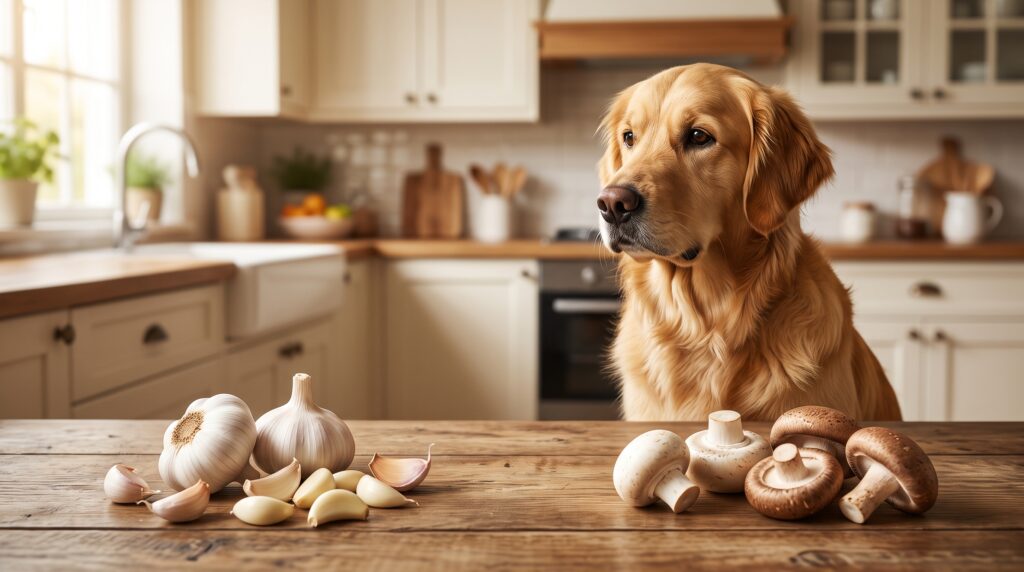
Can dogs eat garlic or mushrooms? It is a common question among dog owners, especially when conflicting advice appears online. Some sources claim that a little garlic is harmless or that certain “exotic” mushrooms are safe for dogs. But veterinary research shows that the answer is more nuanced: garlic can cause oxidative damage to canine red blood cells, while mushroom safety depends heavily on the exact species and whether the mushroom has been reliably identified.
If you have ever searched “Can dogs eat garlic?” or “Can dogs eat mushrooms?”, you have probably encountered conflicting answers.
Some websites say that a small amount of garlic is harmless. Others recommend avoiding garlic completely. You may also have seen claims that certain “exotic” mushrooms are safe for dogs.
So, what does veterinary research actually tell us?
The answer is more nuanced than a simple “safe” or “toxic.” Garlic and mushrooms are two very different cases, and the amount, preparation, species, and circumstances of exposure can all matter.
In this article, we look at published veterinary research to explain what is currently known about garlic toxicity in dogs and mushroom poisoning in dogs.
If you’re also learning which foods are safe for dogs, our guide to the best vegetables for dogs can help you choose nutritious options.
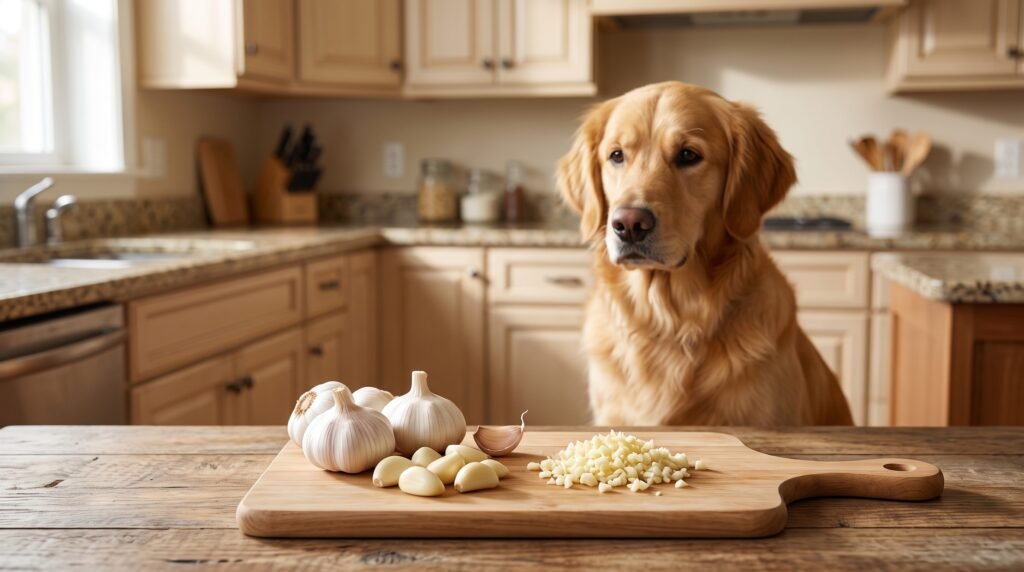
Can Dogs Eat Garlic?
When people ask can dogs eat garlic or mushrooms? What the Research Says
The safest practical answer is:
Garlic should not be routinely added to a dog’s food.
Garlic (Allium sativum) belongs to the Allium family, which also includes onions, chives and leeks. These plants contain sulfur-containing compounds capable of causing oxidative damage to red blood cells in dogs.
This is important because red blood cells are particularly vulnerable to oxidative injury.
When red blood cells are damaged, abnormal structures such as Heinz bodies and eccentrocytes can appear. In more severe cases, destruction of red blood cells can lead to hemolytic anemia.
What does the research show?
One of the important experimental studies was published in the American Journal of Veterinary Research in 2000.
Researchers administered garlic extract to four healthy adult dogs for seven consecutive days, while another four dogs served as controls.
The dogs receiving garlic extract developed measurable changes in their blood. Their erythrocyte count, hematocrit and hemoglobin decreased, and Heinz bodies and eccentrocytes appeared.
The researchers concluded that constituents of garlic have the potential to oxidize canine red blood cell membranes and hemoglobin. They therefore recommended that foods containing garlic should not be fed to dogs.
View the 2000 garlic study on PubMed
Does Cooking Garlic Make It Safe for Dogs?
This is another common misconception.
Cooking can change the chemical composition of garlic, but it does not mean that garlic automatically becomes safe for dogs.
Researchers identified a compound in boiled garlic that was able to increase methemoglobin and Heinz body formation when canine red blood cells were exposed to it in laboratory experiments.
The researchers suggested that this compound may contribute to garlic-induced hemolysis in dogs.
Read the boiled-garlic research on PubMed
There are also published clinical reports involving dogs that developed severe Heinz body hemolytic anemia following ingestion of foods containing garlic and other Allium plants.
This is why simply saying “cooked garlic is safe for dogs” is not supported by the available evidence.
What About “Just a Little Garlic”?
This is where online discussions often become misleading.
It is important to distinguish between two statements:
“A small accidental exposure does not necessarily mean a dog will become seriously ill.”
and
“A small amount of garlic is safe to add regularly to a dog’s food.”
These are not the same claim.
The published studies do not justify treating garlic as a routinely safe ingredient in canine diets.
At the same time, it would also be inaccurate to suggest that every dog will develop severe poisoning after eating a tiny amount once.
Toxicity is influenced by factors such as dose, preparation, frequency of exposure and individual susceptibility.
Therefore, the responsible practical recommendation is to avoid deliberately adding garlic to a dog’s meals, rather than trying to establish a “safe amount” for home feeding.

Is Garlic Toxic in Every Form?
Different preparations can behave differently.
A 2025 laboratory study examined fresh, dried and granulated garlic using canine erythrocytes in vitro. All tested garlic preparations caused hemolysis, although the degree varied according to the form and concentration. Dried and granulated preparations produced more Heinz bodies and eccentrocytes in the experimental conditions.
However, this study was performed in vitro, meaning that canine blood cells were studied outside the body. It should not be interpreted as a direct feeding trial establishing the toxicity of a particular serving size in living dogs.
Read the 2025 garlic erythrocyte study on PubMed
This distinction matters when interpreting scientific research.
An Important Exception: Aged Garlic Extract
There is also research that deserves attention because it shows why the subject should not be oversimplified.
A study examined aged garlic extract (AGE) in Beagles. Dogs received 45 or 90 mg/kg of the extract daily for 12 weeks.
At the studied doses, researchers did not observe adverse changes in clinical signs, complete blood counts, serum biochemical parameters, Heinz bodies or eccentrocytes.
Read the aged garlic extract study on PubMed
This does not mean that ordinary fresh garlic is safe for dogs.
Aged garlic extract is a specific preparation with a different chemical profile and was administered under controlled experimental conditions at defined doses.
This is an excellent example of why we should not take one scientific finding and apply it to every form of garlic.
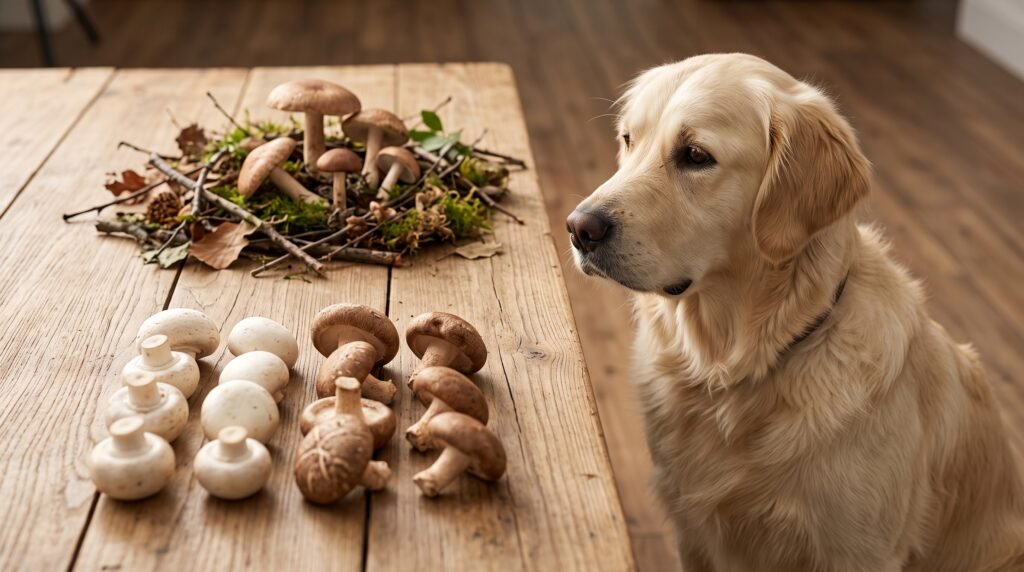
Can Dogs Eat Mushrooms?
The answer is more complicated than it is with garlic.
Not all mushrooms are poisonous to dogs.
But that does not mean that an unidentified mushroom is safe.
The biggest problem is that mushroom toxicity depends heavily on the species and the toxins it contains.
The word “exotic” does not automatically mean “safe.”
A Study of 421 Mushroom Ingestions in Dogs
A particularly useful study evaluated 421 cases of mushroom ingestion in dogs in Norway between 2011 and 2022.
The mushrooms were identified by mycologists or certified mushroom experts.
Researchers found that:
- 45% of the mushrooms were identified as non-poisonous.
- Different toxic groups caused different clinical effects.
- Some cases involved gastrointestinal toxicity.
- Others involved neurological or systemic toxicity.
- Dogs died after ingestion of several toxic mushroom species.
The study reported deaths associated with species including Amanita muscaria, Cortinarius rubellus, Amanita virosa, Clitocybe rivulosa and Inocybe species.
The researchers emphasized the importance of rapid and accurate mushroom identification because treatment and prognosis can depend on the specific mushroom involved.
Read the 421-dog mushroom study on PubMed
This study gives us an important message:
Mushrooms cannot all be placed into one category. Species identification matters.
Why Are Some Wild Mushrooms Dangerous to Dogs?
Some mushrooms contain powerful toxins that can damage the gastrointestinal system, nervous system, liver or other organs.
One particularly dangerous toxin is α-amanitin, found in certain Amanita mushrooms.
These mushrooms can cause severe poisoning and potentially life-threatening liver injury.
A 2021 study examined 59 dogs with confirmed α-amanitin toxicosis.
Among these dogs:
- 56 showed clinical signs such as vomiting, diarrhea, loss of appetite, weakness or lethargy.
- 97% had increased ALT activity, a marker associated with liver injury.
- 78% developed hypoglycemia.
- 91% had prolonged coagulation times.
Some dogs survived with intensive treatment, while others died. The researchers emphasized that early recognition and treatment are important.
Read the α-amanitin study on PubMed
What About “Exotic Mushrooms”?
This is where terminology can cause confusion.
“Exotic mushroom” is not a scientific toxicity category.
A mushroom can be unusual, expensive or unfamiliar without being poisonous. Conversely, a mushroom that looks harmless can contain dangerous toxins.
Therefore, the important question is not:
“Is this an exotic mushroom?”
The better question is:
“What species is it, and is its safety established for dogs?”
For mushrooms intended as food, the situation is different from an unidentified mushroom found outdoors.
But from a practical dog-safety perspective, wild or unidentified mushrooms should never be deliberately fed to a dog.
Garlic vs. Mushrooms: Why the Advice Is Different
These two foods should not be treated identically.
| Food | Main concern | What research shows | Practical approach |
|---|---|---|---|
| Garlic | Oxidative damage to red blood cells | Experimental and clinical evidence exists | Avoid deliberately adding it to dog food |
| Wild mushrooms | Species-specific toxins | Documented cases of serious poisoning | Avoid unidentified/wild mushrooms |
| Known edible mushrooms | Depends on species and preparation | Not all mushrooms are toxic | Use only clearly identified, food-grade varieties if included |
| Aged garlic extract | Different chemical preparation | Specific controlled studies found no adverse effects at studied doses | Do not equate with ordinary garlic |
The key point is that “mushrooms” are not one toxic substance, while garlic belongs to a plant group with documented oxidative effects on canine erythrocytes.
Does Garlic Repel Fleas?
Another claim frequently seen online is that feeding dogs garlic can help repel fleas.
This is an area where anecdotal advice is much more common than strong clinical evidence.
The fact that garlic contains biologically active sulfur compounds does not establish that feeding garlic provides reliable flea prevention.
More importantly, deliberately feeding garlic to a dog introduces a potential toxic exposure without providing a proven substitute for veterinary flea-control products.
For dogs with flea problems, it is better to discuss evidence-based parasite prevention with a veterinarian rather than relying on garlic as a home remedy.
What Should Dog Parents Do?
If you are preparing homemade food for your dog, there is no nutritional need to take unnecessary risks with questionable ingredients.
A practical approach:
Avoid:
- Raw garlic
- Cooked garlic
- Garlic powder
- Garlic-containing seasoning mixes
- Foods heavily seasoned with garlic
- Wild mushrooms
- Unidentified mushrooms
Be cautious with:
- Human foods containing garlic as an ingredient
- Mushroom products where the exact species or preparation is unclear
- Supplements containing garlic unless they are specifically formulated for dogs and discussed with a veterinarian
If your dog eats an unknown mushroom:
Do not wait for symptoms before seeking advice.
Try to safely preserve a sample or photograph of the mushroom if possible, without putting yourself at risk. Accurate identification can help veterinarians determine the appropriate response.
If your dog develops vomiting, diarrhea, weakness, unusual breathing, dark urine, collapse or other concerning symptoms after eating garlic, mushrooms or another potentially toxic food, contact a veterinarian or emergency veterinary service promptly.
The Bottom Line
The internet often reduces complicated nutrition questions to simple statements:
❌ “A little garlic is always safe.”
❌ “All mushrooms are poisonous.”
❌ “Exotic mushrooms are safe.”
The scientific evidence does not support these blanket statements.
Instead:
Garlic has documented potential to cause oxidative damage to canine red blood cells, and we do not recommend deliberately adding it to a dog’s regular diet.
Mushroom safety depends heavily on species. Not every mushroom is poisonous, but wild or unidentified mushrooms can cause severe illness and even death.
And perhaps the most important lesson is this:
When feeding our dogs, “natural” does not automatically mean “safe.”
Understanding the evidence — rather than following an isolated social-media claim — is one of the best ways to make responsible choices for our dogs.
Frequently Asked Questions
Can dogs eat a small amount of garlic?
A small accidental exposure does not necessarily mean a dog will develop severe poisoning, but that is different from saying that garlic is a safe ingredient to add regularly. Because garlic has documented oxidative effects on canine red blood cells, deliberately feeding it is not recommended.
Are cooked garlic and raw garlic equally dangerous?
Cooking changes garlic’s chemical composition, but research has identified compounds in boiled garlic capable of causing oxidative changes in canine erythrocytes. Therefore, cooking should not be considered a guarantee of safety.
Can dogs eat mushrooms?
Some identified edible mushrooms are not inherently poisonous to dogs, but mushroom safety depends on the species and preparation. Wild or unidentified mushrooms should be treated as potentially dangerous.
Are exotic mushrooms safe for dogs?
“Exotic” is not a scientific safety classification. The exact mushroom species matters much more than whether it is described as exotic.
What should I do if my dog eats a wild mushroom?
Contact a veterinarian or emergency veterinary service as soon as possible. If it can be done safely, preserve a sample or photograph for identification. Do not wait for symptoms to develop.
Is garlic a natural flea treatment for dogs?
There is not sufficient evidence to recommend feeding garlic as a reliable flea-control method, and garlic has documented potential for oxidative injury to canine red blood cells. Veterinary-approved parasite prevention is a safer approach.
Scientific References
- Lee KW, Yamato O, Tajima M, et al. Hematologic changes associated with the appearance of eccentrocytes after intragastric administration of garlic extract to dogs. American Journal of Veterinary Research. 2000;61(11):1446–1450. PMID: 11108195.
- Sato R, et al. Isolation and identification of sodium 2-propenyl thiosulfate from boiled garlic that oxidizes canine erythrocytes. Bioscience, Biotechnology, and Biochemistry. PMID: 12913309.
- Yamato O, et al. Heinz body hemolytic anemia with eccentrocytosis from ingestion of Chinese chive and garlic in a dog. Journal of the American Animal Hospital Association. 2005. PMID: 15634869.
- Sano M, et al. Safety and efficacy of aged garlic extract in dogs. 2018. PMID: 30497454.
- Beleć K, Barć J, Lasek O. The Effect of the Type and Concentration of Garlic on Heinz Body Concentrations in Canine Erythrocytes — An In Vitro Study. 2025. PMID: 41227518.
- Seljetun KO, Kragstad HR. A retrospective evaluation of mushroom ingestions in 421 dogs in Norway (2011–2022). Veterinary Record Open. 2023;10. PMID: 37057032.
- Kaae JA, Poppenga RH, Hill AE. Physical examination, serum biochemical, and coagulation abnormalities, treatments, and outcomes for dogs with toxicosis from α-amanitin-containing mushrooms: 59 cases (2006–2019). Journal of the American Veterinary Medical Association. 2021;258(5):502–509. PMID: 33620242.
Medical disclaimer: This article is intended for general educational purposes and does not replace diagnosis or treatment from a licensed veterinarian. If you suspect that your dog has eaten a potentially toxic food or mushroom, contact a veterinarian promptly.